Add 1 (8.8 ounces) Biscoff cookie package to a blender or food processor and pulse until finely ground. Add the crumbs, 1/4 cup brown sugar, and 1 pinch salt to a medium bowl.: The scent when those cookies break down is warm and toasty, almost like caramel candy. You should hear a steady pulsing sound until the crumbs look like coarse sand, then finer, until there are no large pieces left. This matters because large chunks will prevent the crust from packing together cleanly. A common mistake is overprocessing into a paste, which can make the crust greasy; pulse in short bursts to control texture. If you notice clumps, stop and shake the bowl to redistribute before pulsing again.
Add the melted 5 tablespoons unsalted butter, and stir until all the crumbs are moistened and resemble very wet sand.: The moment you combine crumbs with brown sugar and salt you’ll smell that warm molasses note coming forward. Use your hands or a spatula to toss them so the sugar coats all the crumbs evenly, which ensures uniform sweetness throughout the crust. This step matters because even distribution prevents pockets that are too sweet or too plain. Avoid adding too much salt, and if the mixture feels dry, check your crumb fineness again.
Spray a 9-inch springform pan with pan spray and then press the crumb crust into the bottom and up the sides.: As the melted butter hits the crumbs you’ll notice a glossy sheen, and the texture should change to that wet sand consistency. That visual cue tells you the crust will hold together when pressed. Overworking can make the crumbs greasy, so stir gently until coated. If you pack a small handful and it holds, you’re ready. If it falls apart, add a touch more melted butter, but do so sparingly.
Place the crust in the refrigerator to chill while you prepare the filling.: Pressing the crust firmly creates a stable base and attractive edge. I use the bottom of a measuring cup to press evenly and achieve a compact surface. The tactile feedback is important, you should feel the crust compress and hold together. A common error is pressing unevenly, which causes cracks when slicing; take a moment to even out thickness and edges before chilling.
In a large bowl, whip 1 cup heavy cream until you reach stiff peaks. Cover the bowl and place it in the refrigerator to chill until you are ready to use it.: Chilling firms the butter and sets the shape, which prevents the crust from crumbling when you add the filling. After 10 to 15 minutes it will be noticeably firmer and easier to work with. Skipping this step often leads to a soggy or loose crust, so give it that short chill for best structure.
In another large bowl, use a stand mixer fitted with the paddle attachment or hand mixer to beat 20 ounces cream cheese until smooth. Scrape down the sides and bottom of the bowl once or twice as you beat it to be sure it is smooth. Add 1/3 cup granulated sugar, 1/3 cup brown sugar, and 1 1/4 cup pumpkin purée and beat again until smooth.: As you whip, the cream will first become foamy, then soft peaks, and finally stiff peaks where the peaks stand upright. Stiff peaks are crucial because they provide volume and stability to the filling. Listen for a change in the motor pitch and watch the cream gain body; overwhipping turns it grainy, so stop as soon as peaks hold. If you accidentally overwhip, you can rescue it by adding a tablespoon of fresh cream and gently whisking to smooth.
Add 1 teaspoon vanilla extract, 2 1/4 teaspoon pumpkin pie spice, and 1/4 teaspoon salt. Mix until combined.: The cream cheese should be at room temperature so it becomes silky without lumps. Beat until completely smooth and scrape the sides to incorporate hidden pockets. Smoothness here prevents grainy texture in the final filling. A common pitfall is beating too fast with cold cream cheese, which leads to lumps; if that happens, stop and let it soften or beat longer at low speed.
Remove the whipped cream from the refrigerator and gently fold it into the cream cheese mixture until no streaks of white remain.: This careful scraping ensures all ingredients are fully incorporated and no stiff bits remain. You’ll notice the mixture becoming glossy and homogenous, which is the cue to proceed. Missing this step often leaves uneven texture and small pockets of unmixed cream cheese , so take those extra seconds to scrape thoroughly.
Add the filling to the chilled crust and smooth the top. Cover and chill for 6-8 hours or overnight before serving.: Once the sugars and pumpkin purée join the bowl, the aroma becomes distinctly autumnal, and the color turns a warm orange. Beat until absolutely smooth to avoid streaks of color or lumps of pumpkin. This ensures even sweetness and spice distribution. A too slow incorporation can leave specks of pumpkin, so increase speed briefly until uniform.
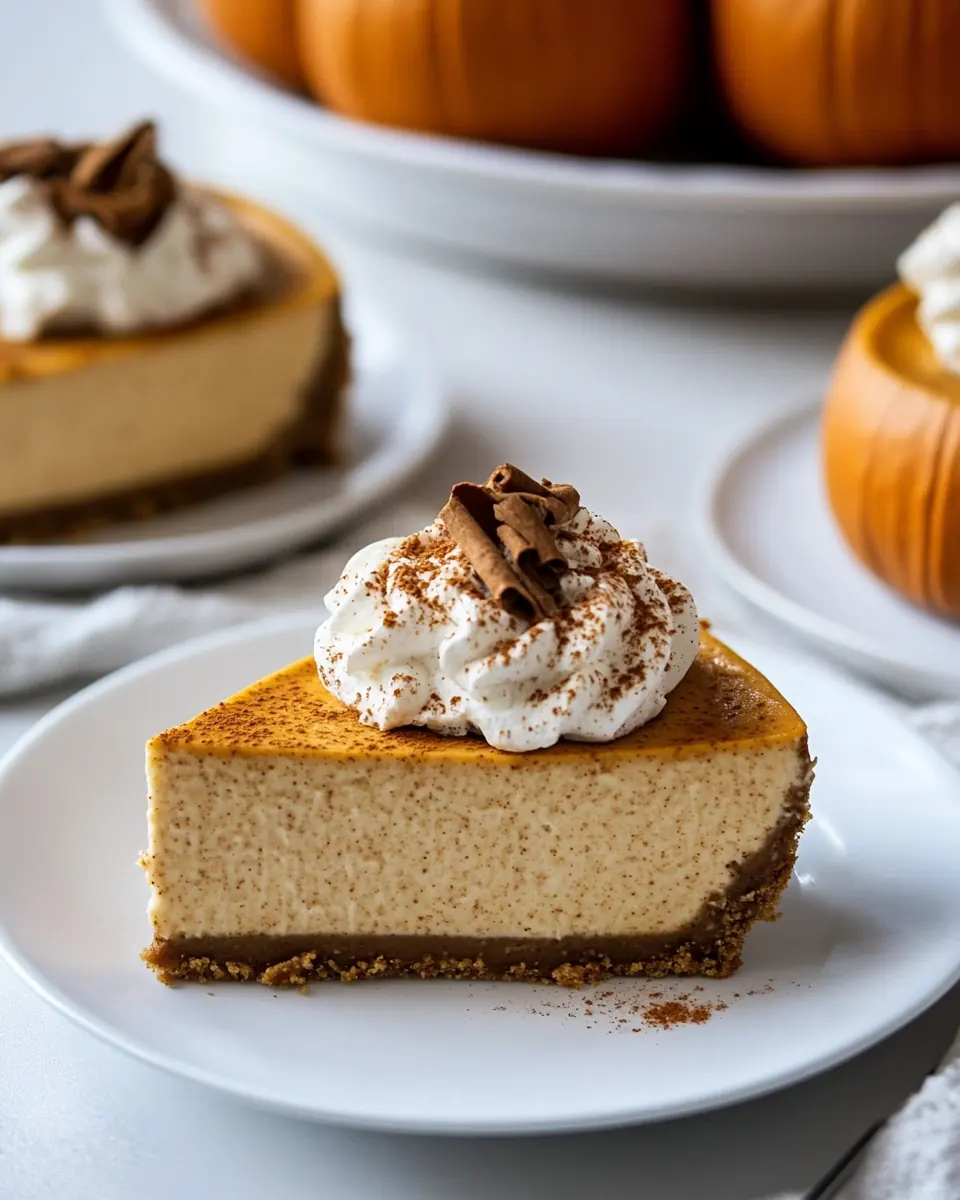
Serve straight from the refrigerator. For the best slices, run a large knife under very hot water, dry it with a clean kitchen towel, and slice. Rinse the knife clean and heat again between each cut for the cleanest results.: These aromatics and seasoning deepen the flavor and balance the sweetness. Mixing them in releases fragrant oils from the spices and ties the filling together. Even small measuring errors are noticeable in desserts, so level your teaspoons carefully. If the spice becomes overpowering, you can soften it by folding in slightly more whipped heavy cream .
Mix until combined: At this stage the filling should be velvety and consistent, with the spices fully dispersed. The texture should be smooth when you run a spatula through it, and the smell should be rich and spiced. This step matters because it ensures uniform flavor in every slice. Avoid overmixing which can incorporate too much air and affect set, and if you see any lumps, stop and scrape to blend them out.
Remove the whipped cream from the refrigerator and gently fold it into the cream cheese mixture until no streaks of white remain: Folding preserves the air you incorporated while whipping the cream, giving the filling its light lift. Use a wide spatula and a gentle quarter turn, scraping the bottom and folding through the center. The final mixture should be homogeneous but airy. A common mistake is stirring vigorously which deflates the cream, so fold patiently until blended.
Add the filling to the chilled crust and smooth the top: As you spread the filling it should glide smoothly and settle evenly, with a glossy surface. Tap the pan gently on the counter to release any trapped air bubbles. Smoothing matters for presentation and slice quality. If you see air pockets, use a small offset spatula to even them out before chilling.
Cover and chill for 6-8 hours or overnight before serving: Extended chilling allows the filling to set firmly and the flavors to meld. I find overnight chilling yields the cleanest slices and best texture. Rushing this step often results in a runny center, so plan ahead and be patient. If you must serve sooner, chill for at least 6 hours and handle slices gently.
Serve straight from the refrigerator: For the cleanest slices, run a large knife under very hot water, dry it with a clean kitchen towel, and slice : Heating the knife between cuts creates smooth, pristine slices and minimizes crumbling. The contrast between the cold filling and warm knife gives the best edges. Rinse and reheat the knife each cut for optimal results. A common oversight is using a cold knife which drags and tears; take the extra seconds to warm it properly.