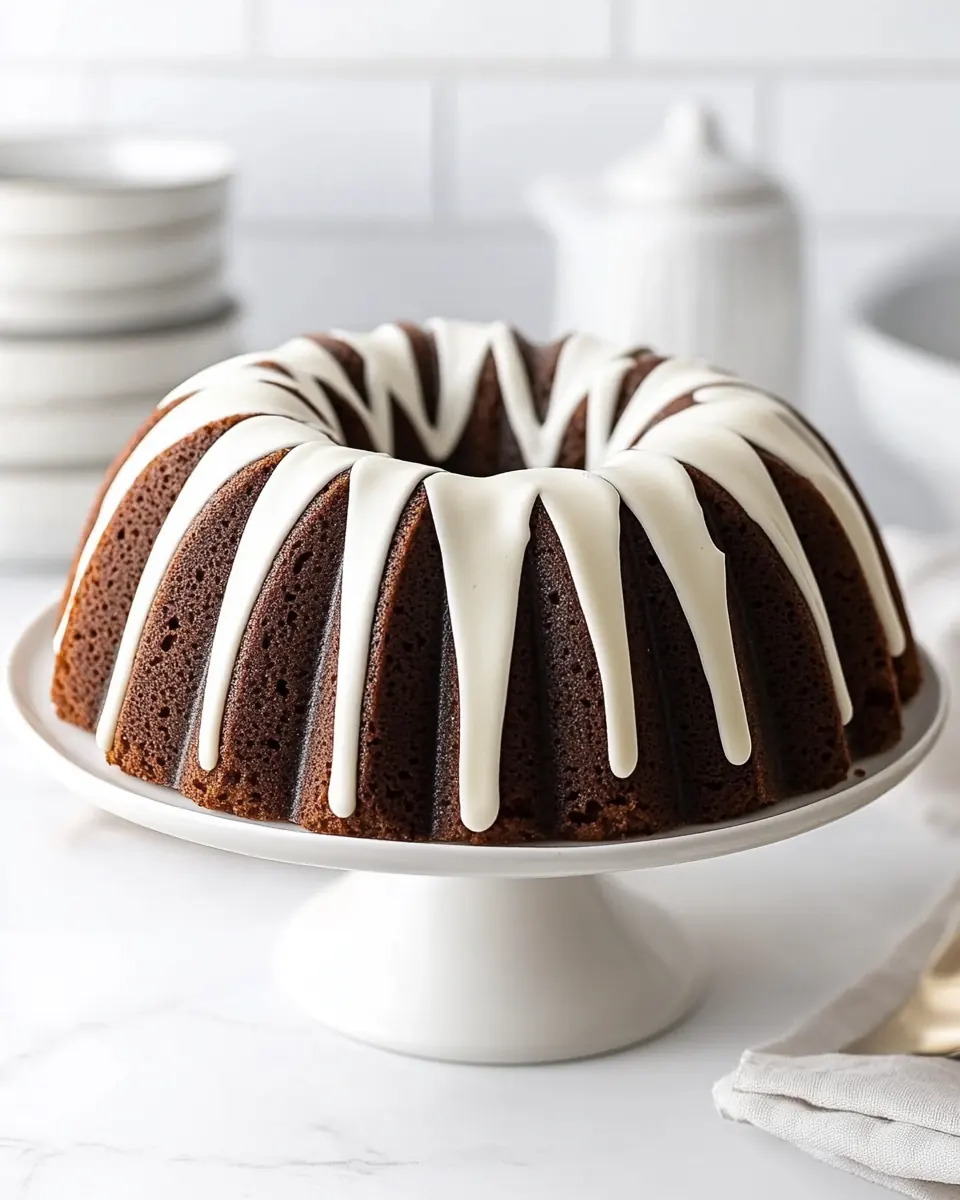
Preheat oven to 325°F. Spray a bundt pan with non stick spray.: When the oven warms, you should smell a faint dry heat and feel an even temperature that will encourage steady rising, while the bundt pan will respond best to a preheated environment. Preheating ensures immediate activation of leavening so the crumb sets with a tender structure, not a dense center. A common mistake is putting batter into a cold oven which can cause uneven rise. Also, spray a bundt pan with non stick spray so the cake releases cleanly, and wipe any excess oil from the ridges to avoid dark spots.
In a large bowl, combine the cake mix and chocolate pudding. Add the 1 1/4 cups chocolate chips in with the dry ingredients (this will prevent them from sinking) and stir until combined. Next mix in 4 eggs, 2/3 cup canola oil, and 2/3 cup water. Then stir in 8 ounces sour cream, being careful not to over mix.: The dry powders should blend into a uniform, slightly darker chocolate base, and you will notice a fine, silky texture as they combine. Adding the chocolate chips with the dry ingredients helps coat them so they do not sink, which is why I add them now rather than later. If lumps of pudding persist, break them apart with your fingers or a fork before adding liquid. Avoid vigorous beating once liquids are added, which can create a dense crumb.
Pour into bundt pan. Bake for 45-55 minutes or until a toothpick comes clean. Do not overcook.: At this stage, the chips should be evenly distributed within the dry mix and look like little dark specks against the cocoa powder. Coating them helps suspend them in batter during baking. If chips start to clump, separate them with a spoon so they spread out. A common error is adding chips to wet batter where they quickly sink; this technique avoids that.
Remove from oven and allow to cool in pan for 10 minutes. Then flip over on a cooling rack. Wait to frost until cooled completely.: As the eggs and liquids incorporate, the batter will transform from dusty powder to a glossy, cohesive mixture that flows from the spoon with a thick ribbon. The warm water helps the pudding dissolve, and the oil contributes to moistness. Be mindful not to over mix, as that will make the cake tough. If the batter seems lumpy after adding liquids, gently fold until smooth instead of beating aggressively.
To make the frosting, in a medium bowl beat the cream cheese, butter and vanilla until smooth. Add in powdered sugar until you have a smooth frosting.: Adding the sour cream will make the batter creamier and denser, and you may sense a slight tang in the aroma that hints at the finished cake's depth. Fold it in until streaks disappear, keeping some air in the batter for lift. Over mixing at this point is a frequent mistake, leading to a tighter crumb. If the batter looks overly slack, rest it for five minutes before pouring.
Transfer the frosting to a piping bag fitted with a large round tip (I used size 808). Pipe 1/2-inch beads of frosting in arches from the outer edge inward rotating the cake and repeating until you’ve encircled the cake with evenly spaced lines for that classic Nothing Bundt Cakes finish.: The batter should pour smoothly and nestle into each curve of the pan, creating visible swirls of chocolate chips. Tap the pan gently on the counter once or twice to release large air bubbles and settle the batter into the ridges. Do not overfill, leave room for rise. A common issue is uneven surface and cavities from trapped large air pockets, so tapping is key.
Bake for 45 to 55 minutes or until a toothpick comes clean: As the cake bakes, the kitchen fills with a deep chocolate scent that becomes more pronounced as the outer edges set and lightly crack. The top will turn firm and begin to pull away slightly from the pan ridges. Use a toothpick in the center to check doneness, and avoid overcooking which dries the crumb. If the edges brown too quickly, tent loosely with foil for the last portion of baking.
Remove from oven and allow to cool in pan for 10 minutes: During this brief cool period the cake continues to set and the internal steam redistributes, softening the crumb slightly. You will notice the cake contracting from the pan edges which helps with release. Flipping too soon can cause the cake to break, while waiting too long may make it stick, so aim for about ten minutes. If it seems stubborn, gently run a thin knife around the edges before inverting.
Then flip over on a cooling rack: Once inverted, the cake should sit proudly on the rack and the bottom will reveal the bundt pattern. You should feel a slight warmth and smell the concentrated chocolate aroma, a cue that the cake is structurally ready to be cooled fully. Let the cake cool completely before frosting, as warm cake will melt the frosting and cause slippage. A frequent misstep is frosting too early, producing a runny finish.
Wait to frost until cooled completely: Cooling fully ensures the crumb firms and the frosting holds shape, so be patient and resist the urge to decorate hot cake. You may notice the aroma mellow and the surface dry slightly, signals it is ready. If time is short, cool in the refrigerator briefly, but avoid chilling so long that condensation forms when it returns to room temperature. Moisture on the surface can prevent proper adhesion of the frosting.
To make the frosting, in a medium bowl beat the cream cheese, butter and vanilla until smooth: The bowl will become glossy and the texture will smell rich and tangy, a combination that signals a light, spreadable frosting. Ensure both the cream cheese and butter are properly softened so they emulsify smoothly. If lumps remain, continue beating on medium speed until they disappear. Over beating can warm the mixture and make it too loose, so pause and scrape down the bowl as needed.
Add in powdered sugar until you have a smooth frosting: Powdered sugar will thicken the mixture and sweeten it, transforming the tangy base into a silky pipeable frosting. Add it gradually and taste as you go to reach the sweetness you prefer. If the frosting becomes too stiff, add a teaspoon of milk to relax it, but don't add too much or piping becomes difficult. A common error is dumping all the sugar at once, which can create a dust cloud and uneven texture.
Transfer the frosting to a piping bag fitted with a large round tip (I used size 808): The frosting should flow smoothly from the tip without air pockets that cause sputtering. If you feel resistance, press gently to encourage movement, and tap the bag to settle the frosting toward the tip. Using the correct tip size creates the signature bead size that complements the bundt ridges. Uneven pressure or air in the bag can produce inconsistent beads, so practice a few test lines on parchment.
Pipe 1/2-inch beads of frosting in arches from the outer edge inward rotating the cake and repeating until you’ve encircled the cake with evenly spaced lines for that classic Nothing Bundt Cakes finish: As you pipe, the frosting will form small glossy beads that catch the light, and the repetitive motion will create a rhythmic confidence. Rotate the cake slowly to maintain even spacing and consistent bead size. The visual payoff is a ringed pattern that highlights the bundt form. If beads are uneven, pause and adjust pressure, and remember that practice makes the lines neater each time.