Preheat the oven to 375 degrees Fahrenheit. Spray a 9 x 13 x 2-inch baking pan with nonstick cooking spray and set aside.: As the oven warms you will notice the room air change slightly, and the anticipatory heat helps you time the dough rise. Preheating ensures the pan is ready for the caramel glaze and that the buns begin baking immediately, which supports good oven spring. A common mistake is not preheating which lengthens bake time and can alter texture; also make sure the pan is fully dry after spraying, because moisture can interfere with the caramel adhering properly.
Add 3/4 cup milk and 1/3 cup softened unsalted butter to a small saucepan and heat over medium-low heat. Stir until the butter has melted, then remove it from the heat. Set it aside to cool until it is lukewarm.: You'll see the butter dissolve into the warm milk , creating a glossy, fragrant liquid; lukewarm means it should feel just warm to the touch and not hot, which helps activate the yeast without killing it. This warmed dairy mixture yields a softer dough and better crumb. A typical error is overheating, which can denature the yeast and stop rising, so test the milk on your wrist before mixing.
Add 2 1/4 of the 3 1/4 cups all-purpose flour, 2 teaspoons instant yeast, 1/4 cup granulated sugar, and 1/2 teaspoon salt to the bowl of a stand mixer and whisk to combine. Fit the mixer with the dough hook attachment and add 1 large egg and 1/4 cup water. Mix just until it is starting to come together.: At this stage, the dry mix should smell slightly sweet with a faint yeasty note when you fold it, and the initial mixing pulls the ingredients into a shaggy mass rather than a smooth ball. Starting with most of the flour lets you judge hydration when you add liquids. Avoid over mixing now, because that can develop gluten too quickly and make the final rolls tight instead of tender.
Slowly add the milk mixture and remaining 1 cup of flour to the mixer until the dough starts to form and become smooth. Let the dough rest for 10 minutes.: As the warm dairy is incorporated, you will notice the dough transform from sticky to supple; it will become glossy and elastic as the gluten relaxes. The 10 minute rest, sometimes called an autolyse, allows the flour to hydrate fully which improves extensibility for rolling. Skipping the rest often leads to dough that snaps back when you try to roll it out.
Add 1/2 cup salted butter to a medium saucepan and melt it over medium heat.: The melted salted butter will foam gently then calm as it melts, releasing a toasty aroma that signals you are ready to build the caramel. Melting first concentrates the flavors and makes it easy to whisk with the sugars. Do not let the butter brown unless you want a nuttier caramel, because burning will introduce bitter notes.
Stir in 3/4 cup packed brown sugar, 1/4 cup light corn syrup, and 3 tablespoons heavy whipping cream. Stir in 1 1/2 cups chopped pecans. Spread the caramel glaze evenly in the bottom of the prepared baking pan.: The mixture will bubble and thicken as you stir, and it should be glossy with a ribbon like fall from the spoon when ready. Adding chopped pecans distributes crunch throughout the pan so each bun gets nuts on top. Pour carefully into the pan and tilt to coat evenly, because uneven glazing leads to buns with inconsistent caramel coverage; also avoid overcooking the glaze or it will become too firm once cooled.
On a lightly floured surface, roll the dough into a large 9 × 15-inch square, about 1/4-1/2-inch thick.: You will feel the dough become silky as you roll, and it should spread easily under light pressure. Aim for an even thickness so the spirals bake uniformly. If the dough resists, let it rest a couple more minutes to relax the gluten; forcing it thin can tear the dough and let the filling seep out.
Add 3/4 cup packed brown sugar, 2 tablespoons ground cinnamon, and 5 tablespoons melted salted butter to a small bowl and mix to combine. Spread the filling evenly on the dough, keeping it about 1/2 inch away from the edges.: The filling should look moist and granular when spread, releasing a warm cinnamon perfume. Leaving a border prevents the filling from spilling when you roll. Press it gently to adhere, not hard, because pressing too firmly squeezes out moisture and makes the spiral dry in spots.
Roll up the dough on the 15-inch side into a tight log and pinch the seam closed. Slice the log into 12 even pieces and place them in the baking pan on top of the caramel glaze. Cover with a damp cloth and set the rolls aside to rise for 15 minutes.: Rolling tightly yields neat spirals with distinct layers, and pinching seals the seam to keep the rolls intact. Slicing evenly ensures consistent bake times, and placing them snugly in the pan lets them rise into each other for soft sides. Avoid pressing the slices into the glaze, which can cause the caramel to seep up and burn during baking.
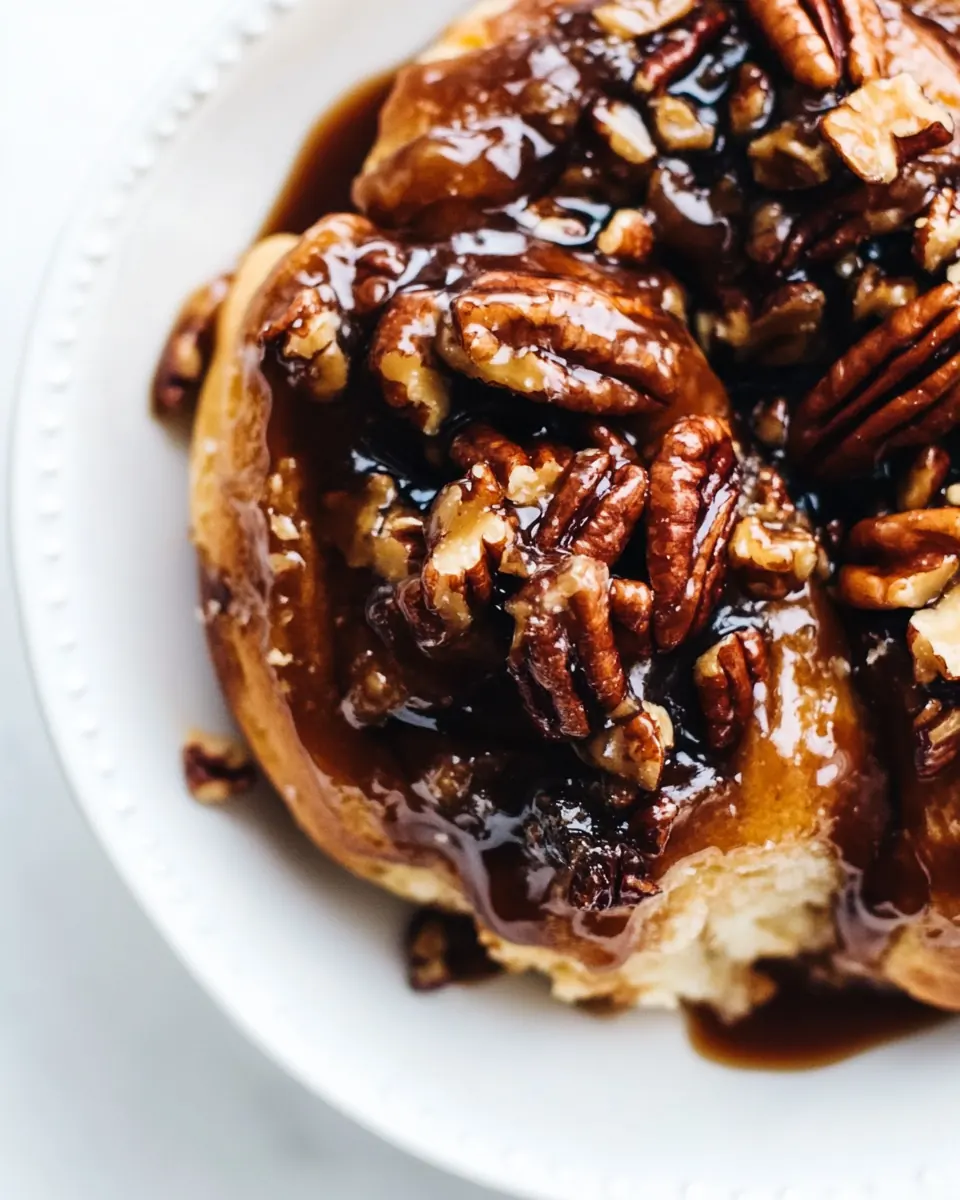
After the rolls have rested, bake them for 25 minutes or until just golden brown on the tops and the internal temperature of the rolls reaches 160 degrees Fahrenheit. Let the rolls sit for 5 minutes before inverting them onto a serving plate or a large baking sheet.: During baking you will hear a faint bubbling from the caramel and smell toasted pecans as the glaze cooks; golden tops indicate a set crust and an internal temp of about 160 degrees Fahrenheit ensures the dough is cooked through but still soft. Letting them rest briefly stabilizes the caramel so it does not run off when inverted. A common mistake is removing them immediately from the pan, which can cause the hot caramel to drain and make a mess or burn you, so use oven mitts and a steady motion when flipping.