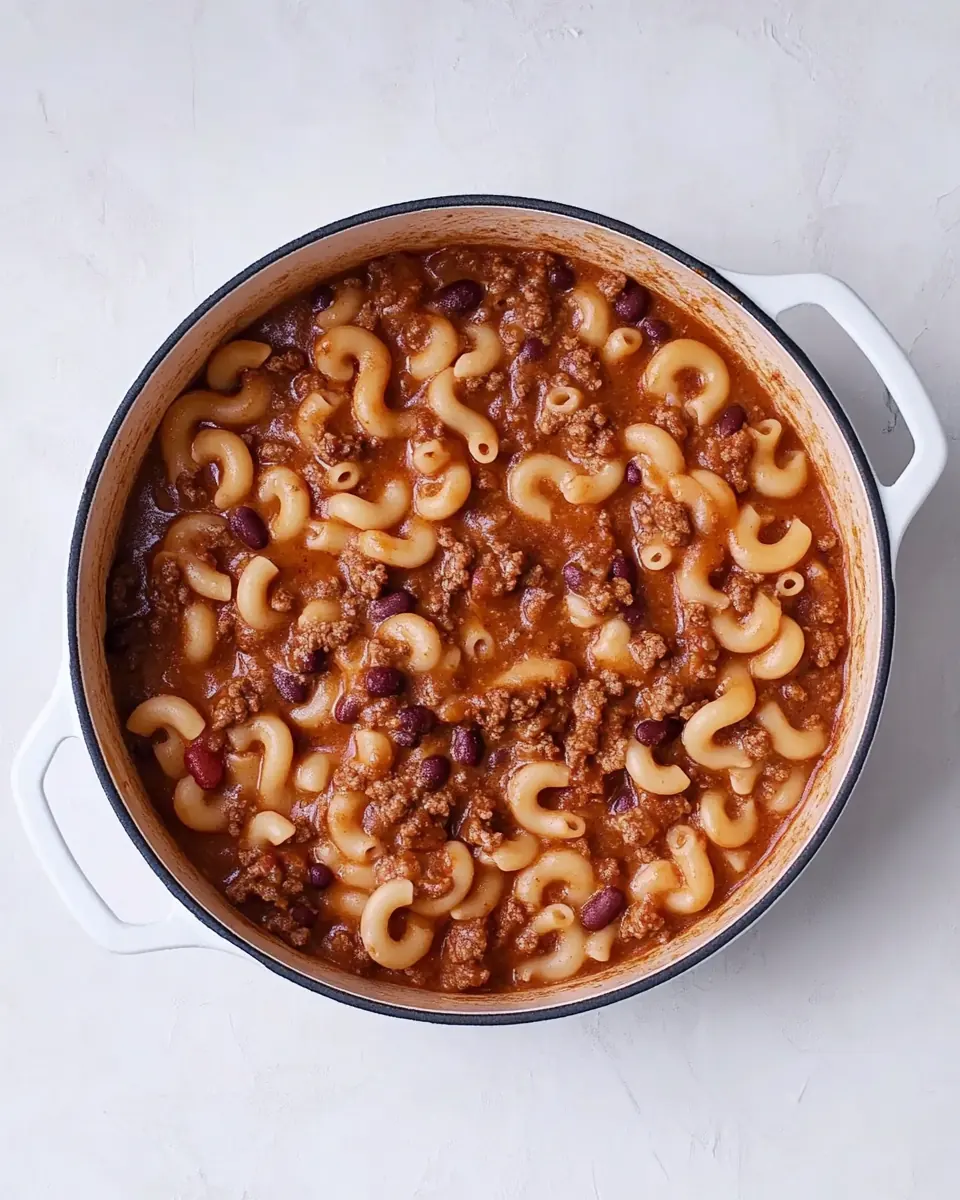
Heat a large pot over medium-low heat and add the olive oil. Stir in the onion, garlic, salt and pepper. Cook until the onions soften, about 5 minutes. Add the ground beef, breaking it apart with a wooden spoon. Cook, stirring often, until the beef is browned, about 6 to 8 minutes. At this time I like to keep breaking the beef apart. I also occasionally increase the heat in order to cook off some of the fat from the beef.: As the pot warms, you should hear a faint ripple of heat across the bottom, and the oil will begin to glisten, showing it is ready to receive aromatics. When you add the onion and garlic , they should sizzle gently, releasing sweet and savory scents that fill the kitchen. This gentle heat helps the onion soften without browning too quickly, which would introduce bitterness. A common mistake is cranking the heat, which can char the garlic within seconds, so keep it controlled and patient. The goal here is translucent, fragrant aromatics, not crispy bits.
Once the beef is browned, stir in the tomato paste, chili powder, paprika and cumin. Cook for another 5 minutes, stirring often. Pour in the tomatoes, green chiles and stock (or water). Add in the pasta. Bring the mixture to a simmer, then cover the pot and cook for 10 to 15 minutes, stirring occasionally. The pasta should absorb all the liquid and plump up! You don't want the heat too high, because the pasta can stick on the bottom. If it needs a few more minutes, keep the pot covered.: Right after adding them, stir so the onion cooks evenly and the garlic does not stick to the pot. You will notice the onion go from opaque white to a soft, pale gold, and tiny sweet aromas will surface. The salt draws out moisture and enhances sweetness, while the pepper gives a background bite. Avoid leaving the aromatics unattended, because uneven heat can lead to burning in spots, creating an off taste in the whole pot.
Once the pasta is cooked and the liquid has been absorbed, stir in the cheddar cheese. Taste and season additionally if needed.: During this time, the sound will change from a light sizzle to a lower, softer cook, and the pot will smell increasingly savory and sweet. The onion should become tender and yield to the touch of a spoon. If the pan looks dry, add a splash of stock or water to prevent sticking. Rushing this step by increasing heat often results in browned edges, which alters the intended mellow flavor.
Serve immediately with sliced green onions and if you're really feeling it, sour cream for serving.: As the ground beef hits the pot, it will hiss and release juices. Use a wooden spoon to break it into small crumbles so it browns evenly. Browning develops deep, meaty flavors through Maillard reactions, which are essential for a rich final dish. Stir frequently to ensure even coloring, and resist the urge to stir constantly, as letting small patches brown briefly builds more complexity. A common pitfall is overcrowding the pot, which causes the meat to steam rather than brown.
Cook, stirring often, until the beef is browned, about 6 to 8 minutes: You will see the meat transition from pink to a nicely browned exterior, with bits sticking slightly to the pot that will deglaze when you add the next ingredients. The aroma will become robust and savory, signaling depth has developed. If there is excess fat pooling, I sometimes tilt the pot and spoon some out to keep the final sauce from being greasy. Avoid undercooking, as raw centers can be unpleasant.
At this time I like to keep breaking the beef apart: Continuing to break the ground beef into smaller pieces ensures an even texture that mixes well with the pasta . Smaller crumbles distribute flavor uniformly and create more surface area for browning, which gives you a richer mouthful in every bite. One error is leaving large clumps, which can make the mouthfeel inconsistent and hidefully raw spots if not fully cooked.
I also occasionally increase the heat in order to cook off some of the fat from the beef: Briefly raising the heat helps excess rendered fat evaporate or separate, which concentrates flavor and prevents a greasy sauce. You should hear a slightly louder sizzle when doing this, and small browned bits will form on the pot surface. Return to medium-low after a minute to prevent burning. Overdoing high heat can scorch the bottom and create bitter notes, so watch closely.
Once the beef is browned, stir in the tomato paste, chili powder, paprika and cumin: As you add these, the pot will fill with aromatic spice oils, and the tomato paste will darken slightly as it cooks, losing any raw tinny taste. This step deepens the sauce and helps the spices bloom, which unlocks their full aroma and flavor profile. Stir continuously so nothing clings and burns, and cook until the paste darkens a touch, which usually takes a couple of minutes. A common mistake is skipping this step, which leaves the spice flavors flat.
Cook for another 5 minutes, stirring often: During this interval, the spices infuse into the fat and meat, transforming the aroma into a cohesive, layered scent. You should notice a fragrant, slightly roasted spice smell and the tomato paste integrating with the meat juices. Stirring prevents hotspots and ensures even distribution. If you skip stirring, the paste can settle and burn on the pot bottom, imparting bitterness to the whole dish.
Pour in the tomatoes, green chiles and stock or water: The moment you add the liquid, the pot will deglaze and those browned bits will dissolve into the base, creating depth and complexity. The fire roasted tomatoes lend a bright, slightly charred acidity, and the green chiles add tang and gentle heat. Use low-sodium stock if available so you can control seasoning. A mistake to avoid is adding boiling liquid to a cold pot, which can shock ingredients and affect texture; room temperature or warm stock integrates more smoothly.
Add in the pasta: Scatter the pasta into the pot, pressing it gently so it's submerged in the liquid. As the pasta cooks, it will absorb the seasoned broth and swell, thickening the mixture into a cohesive one pot meal. Stir initially to prevent sticking, then let it simmer with occasional stirring. If you stir too frequently during the initial simmer, the pasta may shed starch and become gummy, so find a balance.
Bring the mixture to a simmer, then cover the pot and cook for 10 to 15 minutes, stirring occasionally: You will see tiny bubbles at a steady pace as the pot simmers, and the aroma will intensify. The pasta should plump and the liquid should reduce until absorbed. Keep the heat moderate so the bottom does not scorch. If the pasta seems underdone and the liquid is absorbed, add a splash more stock and continue cooking with the lid on. A common error is turning the heat too high, which causes the pasta to stick and the bottom to burn.
The pasta should absorb all the liquid and plump up: Check by tasting a piece; it should be cooked through with a pleasant bite. Visually, the pot will thicken and cling to the spoon, and the surface will look glossy. If it needs a few more minutes, keep it covered to trap steam and encourage even cooking. Overcooking leads to a mushy texture, so monitor closely in the final minutes.
Once the pasta is cooked and the liquid has been absorbed, stir in the cheddar cheese: As you fold in the grated white cheddar cheese , you will see the sauce go from a brothy texture to luxuriously creamy and cohesive. The heat should be off or very low to prevent the cheese from becoming stringy or oily. Stir until fully melted and integrated, then taste for seasoning. A frequent mistake is adding cold cheese straight from the fridge without giving it time to melt smoothly, which can result in clumps.
Taste and season additionally if needed: At this stage, the flavors have rounded out, and you can adjust with a little more salt or pepper if it needs brightness. Use small increments, because the cheese and canned items can already contain salt. A helpful tip is to let the dish sit for a minute before final seasoning, because flavors continue to meld off heat. Over seasoning is hard to fix, so proceed cautiously.
Serve immediately with sliced green onions and if you're really feeling it, sour cream for serving: The final presentation should be steaming, with a glossy surface from the melted cheese and vibrant green from the sliced green onions . The sour cream adds a cooling contrast that complements the spices and cheese. Serve straight from the pot to enjoy the ideal temperature and texture, as it will thicken as it cools. Reheating can dry it out, so add a splash of stock if you need to warm leftovers.