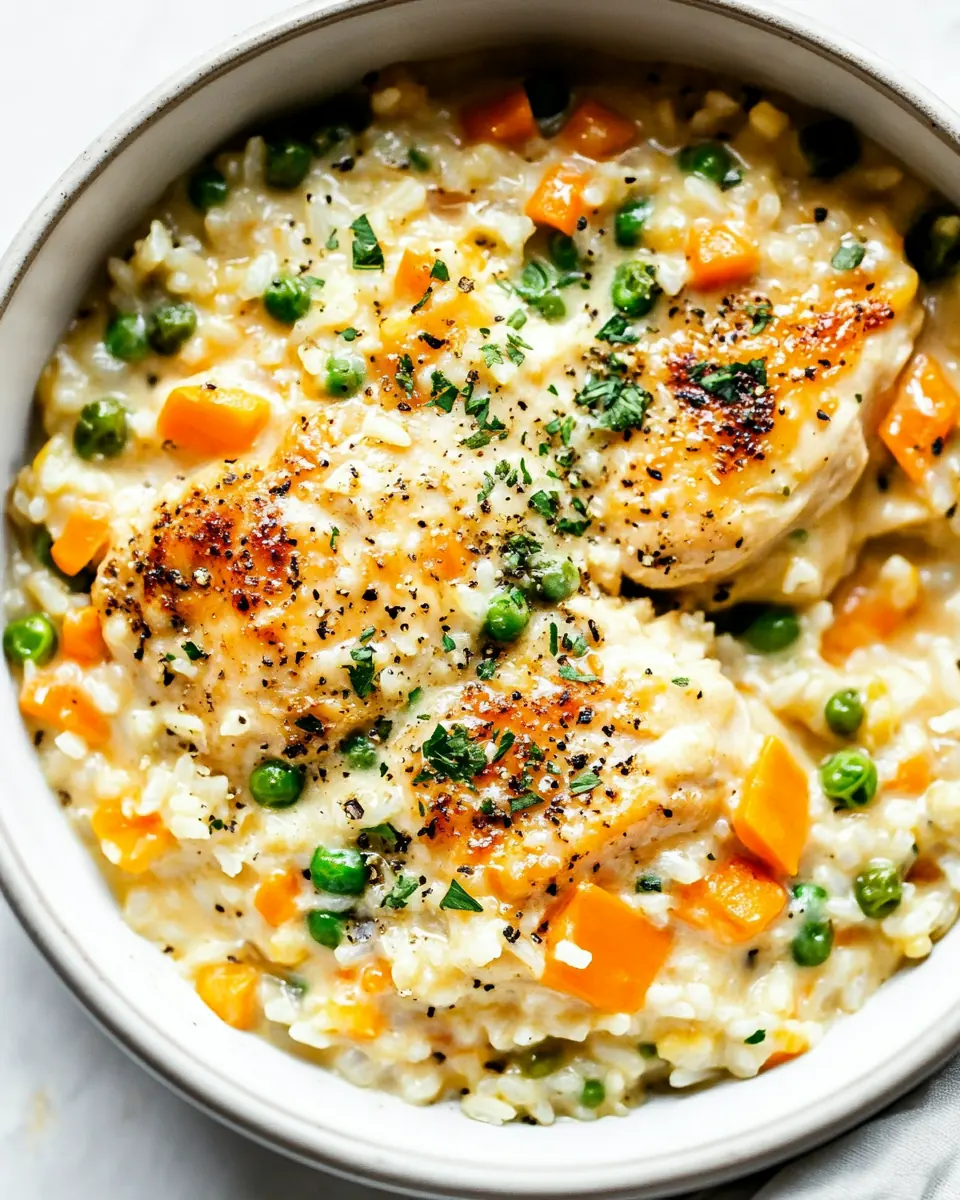
Melt the butter in a large skillet or dutch oven over medium to medium-high heat. Add the onion, garlic, 1 teaspoon of the salt and the thyme. Cook until the onion softens, about 5-7 minutes, stirring occasionally. Add the rice and carrot and cook for 2-3 minutes.: The kitchen will smell rich and buttery as the butter liquefies, creating a glossy surface that helps the onion cook evenly, and you want a gentle sizzle rather than a roar. As the fat warms, you can tilt the pan and see it shimmer, which tells you the heat is right. This step is important because the melted butter acts as the flavor carrier for the aromatics, drawing out sweet compounds from the onion and mellowing the edge of the garlic . A common mistake is overheating so the butter browns or burns, which will impart a bitter taste, so keep the heat moderate and stir occasionally.
Add the chicken broth and evaporated milk and stir in the chicken, the remaining salt and the black pepper. Bring to a boil then reduce to a simmer. Stir, cover with a lid and cook for about 15 minutes, stirring so the rice doesn’t stick to the pot.: When you add the chopped onion and minced garlic , you should hear a soft, steady sizzle and soon notice a fragrant, savory aroma building in the pan. The onion will begin translucent at the edges and soften into a jam like texture over several minutes, which is what you want so the flavors meld into the base. The salt helps draw moisture from the onion , accelerating the softening process, and the dried thyme releases its herbal notes when warmed. If the garlic begins to brown too quickly, reduce the heat, because burnt garlic tastes acrid and will overpower the dish.
Stir in the peas and add more chicken broth or water if the mixture is too thick. Sprinkle with the cheese and cover with the lid to melt the cheese, and serve.: As the onion softens, you will see its edges turn glossy and pale, signaling the right texture. The occasional stir prevents sticking and yields even color distribution, and you will notice the pan smell deepen to a toasty, savory scent. This gentle cooking builds flavor without caramelizing heavily, which keeps the final pot balanced. Overcooking here can lead to loss of that fresh onion taste, so watch for soft, translucent onion rather than deep browning.
Add the rice and carrot and cook for 2 to 3 minutes: When you stir in the rice and diced carrot , the kernels will take on a slightly toasted sheen and release a warm, nutty aroma, while the carrots begin to soften around the edges. This brief toasting step helps the rice hold its shape and enhances its flavor as it later absorbs liquid. You should stir constantly so the tiny grains don't cling to the pan bottom, and avoid skipping this step because un-toasted rice can become overly mushy in a one pot approach.
Add the chicken broth and evaporated milk and stir in the chicken, the remaining salt and the black pepper: Pouring in the chicken broth and evaporated milk creates a creamy, pale liquid that instantly changes the pan from sauté to simmer mode, and the kitchen will fill with a warm, comforting steam. As you nestle the pieces of chicken into the liquid, they begin to poach and absorb the flavored broth, keeping the protein tender and moist. The remaining salt seasons throughout, while freshly ground black pepper adds aromatic lift. A common error is to drop in cold chicken straight from the fridge in very large pieces, which can extend cooking time unevenly, so try to use uniform pieces so they cook at the same rate.
Bring to a boil then reduce to a simmer: Watch for small, rolling bubbles to signify a boil, then lower the heat until bubbles slow to a gentle, steady simmer that barely breaks the surface. The transition from boil to simmer controls how violently the rice cooks and keeps the pot from foaming over. A vigorous boil can make the rice cook too fast on the outside and remain underdone inside, so this gentle simmer ensures even moisture absorption. If you see the liquid evaporating too quickly, slightly lower the heat and stir occasionally to keep things even.
Stir, cover with a lid and cook for about 15 minutes, stirring so the rice doesn’t stick to the pot: During this covered simmer, you will notice the liquid slowly reduce and the pot give off a rich, savory steam. Stirring occasionally prevents the rice from clinging to the bottom and promotes uniform cooking, while the lid traps heat so the grains steam through evenly. The aroma will become concentrated and comforting, and the chicken should become opaque and tender at the center. If you find the rice is sticking, reduce heat and add a splash of broth, because sticking can lead to burnt bits and an uneven texture.
Stir in the peas and add more chicken broth or water if the mixture is too thick: When you fold in the peas , they will quickly warm and release a bright vegetal scent, adding a lively color contrast to the creamy pot. If the mixture looks dense or clumpy, a small splash of extra chicken broth or water will loosen it and help the grains finish tenderly, while preserving a creamy consistency. This is the moment to adjust seasoning gently, tasting for salt and pepper balance. Over thinning will make the dish soupy rather than creamy, so add liquid conservatively.
Sprinkle with the cheese and cover with the lid to melt the cheese, and serve: The final act of sprinkling shredded cheddar cheese transforms the surface as it melts into pockets of gooey richness, and by covering the pot you create a warm, steamy environment that melts the cheese evenly. The aroma will be cheesy and inviting, and the texture becomes luxuriously silky as the cheese integrates into the sauce. Serve while hot so the cheese is melty and the rice retains its creamy texture. A common misstep is letting the pot sit too long after adding cheese, which can cool the dish and cause the texture to firm up, so plan to serve right away.