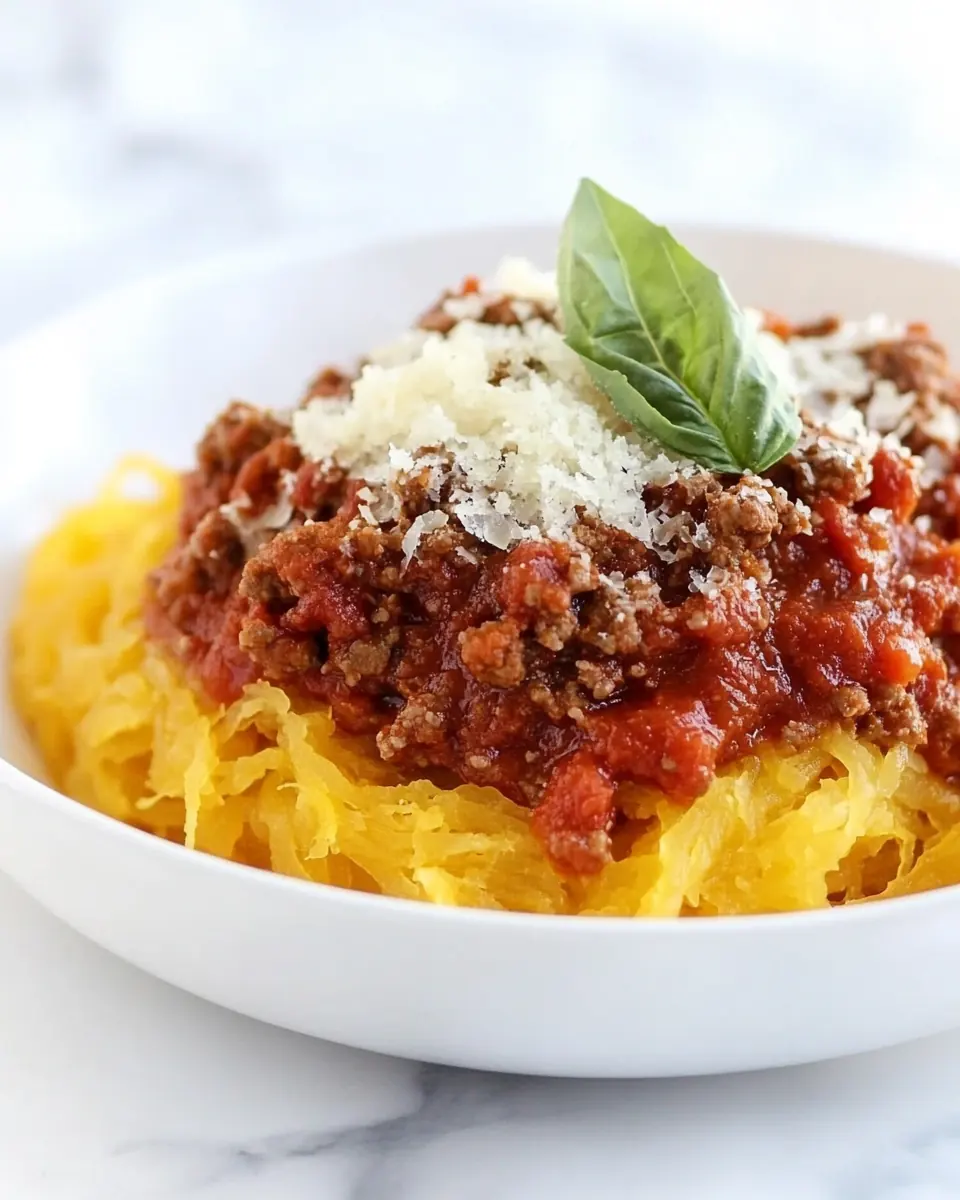
Sauté the beef with onion, garlic, salt, pepper. Added crushed tomatoes, bay leaf and cheese rind, stir. Pierce the spaghetti squash all over with a knife and place over the sauce. Cook high pressure 15 minutes, or until the skin of squash easily gives when pressed with a spoon. Let the pressure release, discard bay leaf and rind and transfer the squash to a bowl to let cool.: The aroma of the sizzling ground beef should be rich and savory, filling the kitchen with deep meaty notes while the onion becomes translucent and the garlic turns fragrant. Listen for a steady sizzling that signals moisture evaporating and browning beginning, those little browned bits stuck to the pan are flavor gold. Stir occasionally to distribute heat and prevent hotspots that cause burning. If the pan seems crowded, the meat will steam rather than brown, so give it room or cook in batches. A common mistake here is adding salt too late or too early; salt helps draw moisture and encourage browning but overdoing it early can dry the meat.
When cool enough to handle, cut in half with a large knife, discard the seeds and scoop the strands out with a fork. Place in a colander to drain well (I use paper towels as well to soak up any excess moisture) then serve sauce over squash with grated cheese if desired.: When you add the crushed tomatoes , the kitchen fills with bright tomato scent that balances the meat. Stir to lift browned bits from the bottom, which dissolves into the sauce and deepens its flavor. The bay leaf offers a subtle herbal note that unfolds during cooking, and if you include the pecorino romano cheese rind it will slowly release savory, umami richness. Simmer until the sauce begins to gently bubble and thicken at the edges, that simmering is when flavors marry. Avoid boiling vigorously, which can separate the sauce and make it too acidic.
For the slow cooker, sauté meat as above in skillet, transfer to slow cooker with remaining ingredients as listed above and cook low 6 to 8 hours.: Piercing the spaghetti squash allows steam to escape and lets it cook through when nestled over the simmering sauce. You should hear gentle pops and see steam rising from the squash, and the sauce should continue to bubble around it. The squash surface will soften slightly as it cooks. Be careful when handling the hot squash, and use tongs or a towel. A common error is not piercing enough, which traps pressure and may cause uneven cooking.
Cook high pressure 15 minutes, or until the skin of squash easily gives when pressed with a spoon: Under pressure cooking, the kitchen fills with concentrated tomato and meat aroma, and the squash cooks quickly into tender, ribbonlike strands. After the cycle, test the squash by pressing the skin with a spoon; it should give easily indicating the flesh is tender. If it resists, an additional few minutes will finish it. Avoid overcooking under pressure as that can turn strands mushy; aim for tender yet structured strands.
Let the pressure release, discard bay leaf and rind and transfer the squash to a bowl to let cool: The slow release allows the sauce to settle and the aromas to balance. Carefully remove the bay leaf and any cheese rind, tasting the sauce for seasoning as you go. Transfer the hot squash to a bowl and let it cool just enough so you can handle it, the residual heat will continue to steady the texture. A troubleshooting note, sometimes the squash holds excess liquid; letting it rest helps excess steam escape.
When cool enough to handle, cut in half with a large knife, discard the seeds and scoop the strands out with a fork: The squash should separate into long glossy strands that look like delicate noodles. Use a fork to tease them out in sweeping motions, and inspect the texture, aiming for tender ribbons that still have some bite. If the flesh feels watery, letting the strands drain will improve sauce adhesion. A common mistake is using a dull knife, which makes halving dangerous and messy; a sharp large knife makes clean confident cuts.
Place in a colander to drain well (I use paper towels as well to soak up any excess moisture) then serve sauce over squash with grated cheese if desired: Drain the strands so the sauce clings instead of slipping off, and dab with paper towels if needed to remove extra moisture. When assembled, the steam will carry the scent of crushed tomatoes mingled with the meat, and the final sprinkle of grated cheese will add salt and creaminess. Serve warm, and taste for final seasoning adjustments. A frequent oversight is skipping the drain step, which can lead to a watery final plate instead of the concentrated bite you want.
For the slow cooker, sauté meat as above in skillet, transfer to slow cooker with remaining ingredients as listed above and cook low 6 to 8 hours: Using the slow cooker, the sauce develops a deep, rounded flavor as the ground beef , onion , garlic , and crushed tomatoes meld over several hours. The aroma becomes homey and layered, and the low heat coaxes fatty and umami notes out of the meat. If you add the spaghetti squash to the slow cooker, check it toward the earlier end of the time range to avoid mushy strands. A pitfall is leaving the cooker unattended on high for too long, which can make the squash turn to a soft texture rather than separate strands.