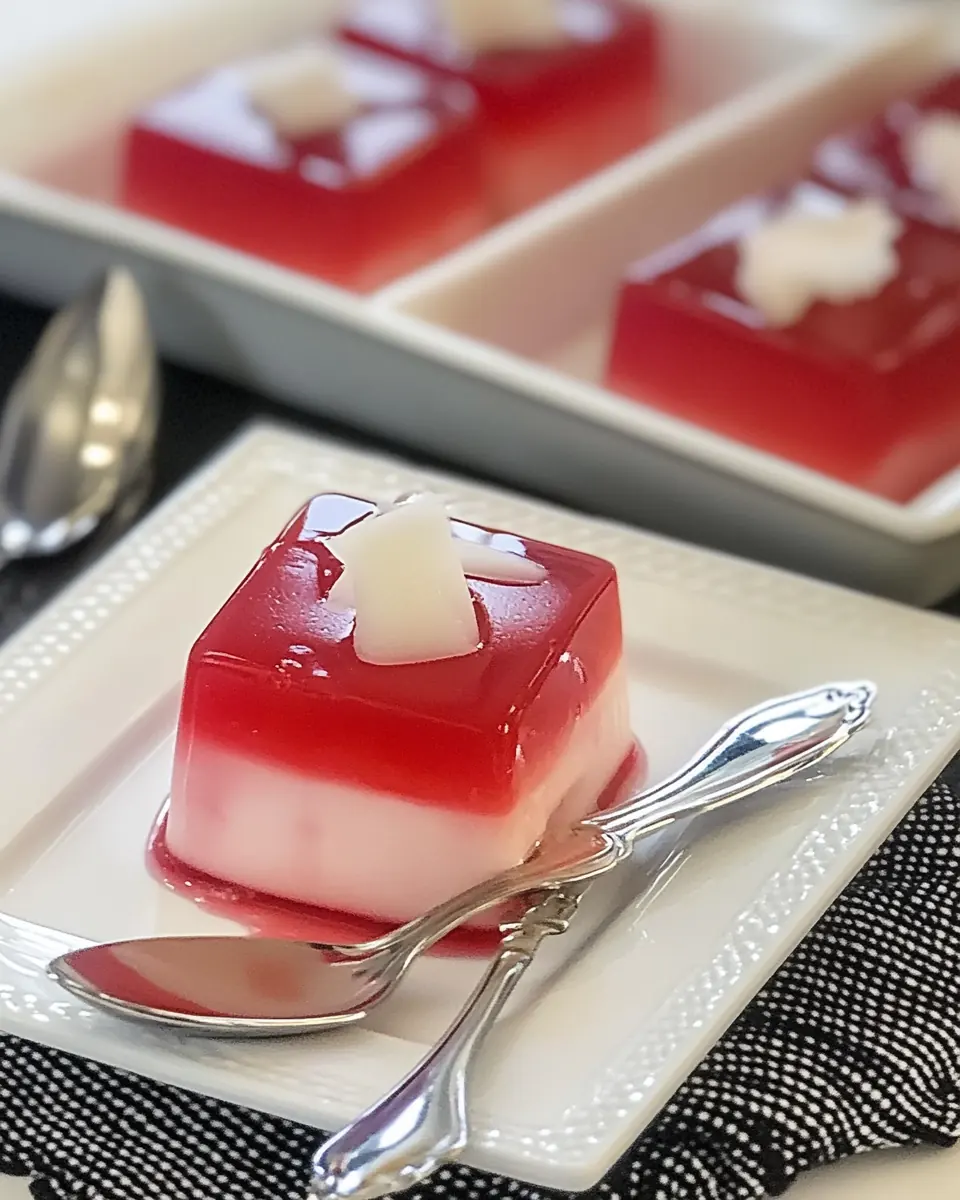
Divide the dry jello into two medium-sized bowls.: The bowls should be dry and room temperature, and when you split the powder you are setting up two distinct textures. I like using similar sized bowls so the heat transfer and dissolution behave consistently. A common mistake here is uneven division, which can lead to mismatched set times and flavor intensity across layers.
Add one cup boiling water to the first bowl and stir till all sugar is dissolved. Add one cup of cold water and mix till combined.: Right after pouring, you will hear a soft hiss as hot water hits the powder, and stirring releases a fragrant burst of fruit aroma. Vigorously stir until the granules are fully dissolved, the mixture becomes clear, and no gritty texture remains. If sugar is left undissolved it will create grainy patches in the final layer, so taste a small drop to ensure smoothness. Avoid using water that is only warm, as that can prevent proper dissolution and weaken the set.
Pour the mixture into clear glasses (6-8 depending on size) filling to the halfway point.: Once the hot water has done its work, the cold water cools the mixture and helps it approach a settable temperature. The surface will steam briefly then calm, and the liquid should be uniformly colored. Stir gently to avoid splashing, and make sure there are no concentrated pockets of flavor or temperature. If you rush pouring cold water aggressively, you may create bubbles that make the layer look cloudy instead of crystal clear.
Chill till slightly jelled, about 30 minutes.: As you pour, watch for a smooth, even fill line; the clear layer should settle nicely without clinging to the sides in streaks. The clarity of this layer shows best in glass, so choose glasses with straight sides if possible. Avoid overfilling because you need room for the creamy top later. A typical mistake is pouring when the mixture is too warm, which can disrupt the set of the subsequent layer.
When the bottom layer is slightly jelled, whip the cream and repeat the process with the second bowl of dry gelatin, decreasing the cold water to 3/4 cup. Whisk in the whipped cream and pour the jello mixture on top of the first layer. Chill till set, about 4 hours.: During chilling you will notice the surface turn from liquid to a slightly tacky, wobbly film that finger pressure will indent gently. This is the cue to move forward; waiting too long can make the base too firm and prevent adherence between layers. Conversely, under chilling will cause the creamy layer to sink into the bottom. Keep an eye on the texture after 20 minutes and check frequently to hit that perfect slightly jelled state.
When the bottom layer is slightly jelled whip the cream and repeat the process with the second bowl of dry gelatin decreasing the cold water to 3 4 cup: You will hear the mixer hum and see the heavy cream thicken into soft peaks, smelling faintly sweet and dairy rich. Mixing the second gelatin bowl with slightly less cold water concentrates the flavor and firming action, which helps the whipped cream stay airy once folded. Whisk the dry gelatin into boiling water first until dissolved, then add the reduced cold water, cool it just enough so it is warm not hot, and gently fold in the whipped cream so you maintain volume. A frequent error is adding hot gelatin to whipped cream which will deflate it or cause curdling, so ensure the gelatin is warm rather than piping hot before folding.
Whisk in the whipped cream and pour the jello mixture on top of the first layer: As you fold, you will see ribbons of cream soften into the tinted gelatin, creating a marbled, lightened color. Pour slowly over the back of a spoon held near the glass edge so the creamy layer settles gently and does not break the base. The final presentation depends on a careful pour, and you should listen for a quiet, steady pour sound rather than splashes. Avoid dumping the mixture quickly, which can cause the layers to merge and lose their defined look.
Chill till set about 4 hours: In the refrigerator the scent will be faintly fruity with a creamy undertone, and the glasses will firm to a pleasant, spoonable texture. I usually let them rest for at least four hours to ensure a clean cut or scoop. A common mistake is slicing or serving too early when the center is still soft, which yields messy servings. For best results, chill undisturbed on a level shelf, and resist opening the door frequently which can wobble the layers during setting time.