For the orange filling: In a medium saucepan, whisk together sugar, cornstarch and salt. Stir in orange zest, orange juice, and lemon juice. Bring mixture to a boil over medium heat, stirring frequently, and allow to boil about 1 minute (mixture should thicken slightly and become translucent).: In a medium saucepan, whisk together sugar, cornstarch and salt : Right away you will notice the dry mix has a fine, sandy texture, and whisking it helps prevent lumps when liquids are added. The cornstarch is the key thickening agent, so thorough blending ensures even cooking. You'll want to stir with a heat resistant whisk so the mixture stays smooth. A common mistake is adding juice too quickly, which can cause clumps, so take a moment here to fully incorporate the dry ingredients.
Meanwhile, in a bowl, whisk together egg yolks and egg until very well blended. While mixing egg mixture, slowly pour 1/4 cup of the hot orange juice mixture over eggs and stir until well blended.: As the citrus liquids hit the pan, the aroma intensifies, sharp and sweet, and you should see the mixture loosen into a pourable slurry. The acid in the juices brightens the flavor and activates the thickening when heated. If you notice any graininess, keep whisking; it will smooth as it heats. Avoid bringing the heat up too fast, because scorching at the bottom will alter the clean citrus taste.
Remove saucepan from heat (once it's boiled as listed above) and while stirring mixture in saucepan, slowly pour egg mixture into saucepan. Reduce burner temperature to medium-low heat and return saucepan to burner and cook, stirring constantly (and whisking rather vigorously to prevent curdling) until mixture thickens well, about 4 minutes.: At a gentle boil the mixture will change from cloudy to slightly translucent, and a faint simmer sound will steady. This brief boil is necessary to activate the cornstarch and cook away raw starch flavor. Stirring frequently prevents a skin from forming and keeps the bottom from burning. If you miss this step the filling may remain undercooked and taste starchy, so watch for that glossy sheen.
Remove from heat, add butter and stir until combined. Pour into a bowl, cover with plastic wrap pressing directly against surface of filling, and chill 2 hours.: The yolks will turn pale and slightly ribbon like when well mixed, which helps them temper evenly. This uniform texture ensures the eggs incorporate into the hot liquid without scrambling. Use a fork or small whisk and make sure there are no stringy bits of yolk. A common pitfall is under whisking, which can cause uneven curd texture later on.
For the cake: Preheat oven to 350 degrees F. Butter and flour three 9-inch round cake pans (lightly butter sides), set aside.: As you ladle a small amount of the hot citrus into the eggs, you will notice the egg mixture warm and loosen, gaining sheen. This tempering step prevents curdling by gradually raising the eggs temperature. Pour slowly and whisk constantly; rushing here leads to scrambled bits which are difficult to salvage.
To the bowl of an electric stand mixer fitted with the paddle attachment (or using a bowl and electric hand mixer), add 1 1/3 cups granulated sugar, baking powder, salt and sift cake flour into bowl. Pour in canola oil, egg yolks (while reserving the whites in a separate mixing bowl) and orange juice.: When you add the tempered eggs back, the saucepan content will look instantly richer and creamier, and steady stirring keeps it silky. Returning to low heat allows gentle thickening without jolting the proteins. If you stop stirring, lumps can form, so maintain motion and moderate temperature.
Blend mixture on medium-high speed until smooth, about 3 - 4 minutes (slightly less if using a paddle attachment that has the scraper), occasionally scraping down sides and bottom of bowl. Blend in orange zest and vanilla extract.: Over these minutes the filling will go from glossy to spoon thick, and you can watch it coat the back of the spoon. This is the moment the texture becomes custardy rather than runny. Stir continuously to avoid sticking; if you see small cooked bits, your heat is too high and you should immediately lift the pan from the flame.
In a large mixing bowl, using an electric hand mixer (or if you have two stand mixer bowls you can use your stand mixer with the whisk attachment), whip 5 reserved egg whites with 1/2 tsp cream of tartar on moderately high speed until stiff (but not dry) peaks form.: Dropping the diced unsalted butter in off heat results in a silkier emulsion rather than a greasy separation, and it mellows the acidity while adding a glossy finish. Stir vigorously so each piece melts uniformly. If the butter does not fully incorporate, continue stirring off heat until smooth; overheating can break the emulsion.
Add half of the whipped egg whites to the batter and fold until partially combined, then add remaining half of the whipped egg whites and fold just until combined (be careful not to overfold and deflate the eggs).: Pressing the wrap prevents a skin from forming and chilling firms the filling so it can be spread easily later. The chilled curd will feel cool and set but still spreadable. If refrigerated too briefly it will be floppy and make assembly messy, so allow the full chilling time for best structure.
Divide batter evenly among prepared baking pans and bake in preheated oven 17 - 19 minutes until toothpick inserted into center of cake comes out clean. Allow to cool in cake pans 10 minutes, then invert onto wire racks to cool completely before frosting with meringue.: As the oven warms you should feel the kitchen beginning to smell faintly warm. Buttering and flouring prevents sticking and helps the delicate chiffon release cleanly. Use light, even coats and tap out excess flour to avoid heavy spots that brown unevenly. If pans are not prepared well, the cake may cling and tear on unmolding.
For the meringue: Add 6 egg whites (don't allow one drop of egg yolk) and sugar to a very clean heatproof bowl and set over a saucepan of barely simmering water. Heat mixture, stirring constantly, until it registers 160 degrees on a candy thermometer, about 3 - 5 minutes.: Sifting and combining dry ingredients creates a uniform, airy base for the batter and eliminates lumps. The dry mix should feel fine and light, which helps produce the chiffon crumb. If you skip sifting you may end with a denser texture due to uneven leavening distribution.
Remove bowl from saucepan, add 1/4 tsp cream of tartar and beat mixture with an electric stand mixer on medium-high speed until stiff glossy peaks form, about 7 - 9 minutes (possibly longer in a humid environment).: Once the wet ingredients hit the dry, the batter will look slightly curdled at first but will come together as you mix. The canola oil provides tender moisture while the yolks add richness. Mix until smooth; pockets of unblended oil will affect the crumb, so scrape the bowl as needed to ensure uniformity.
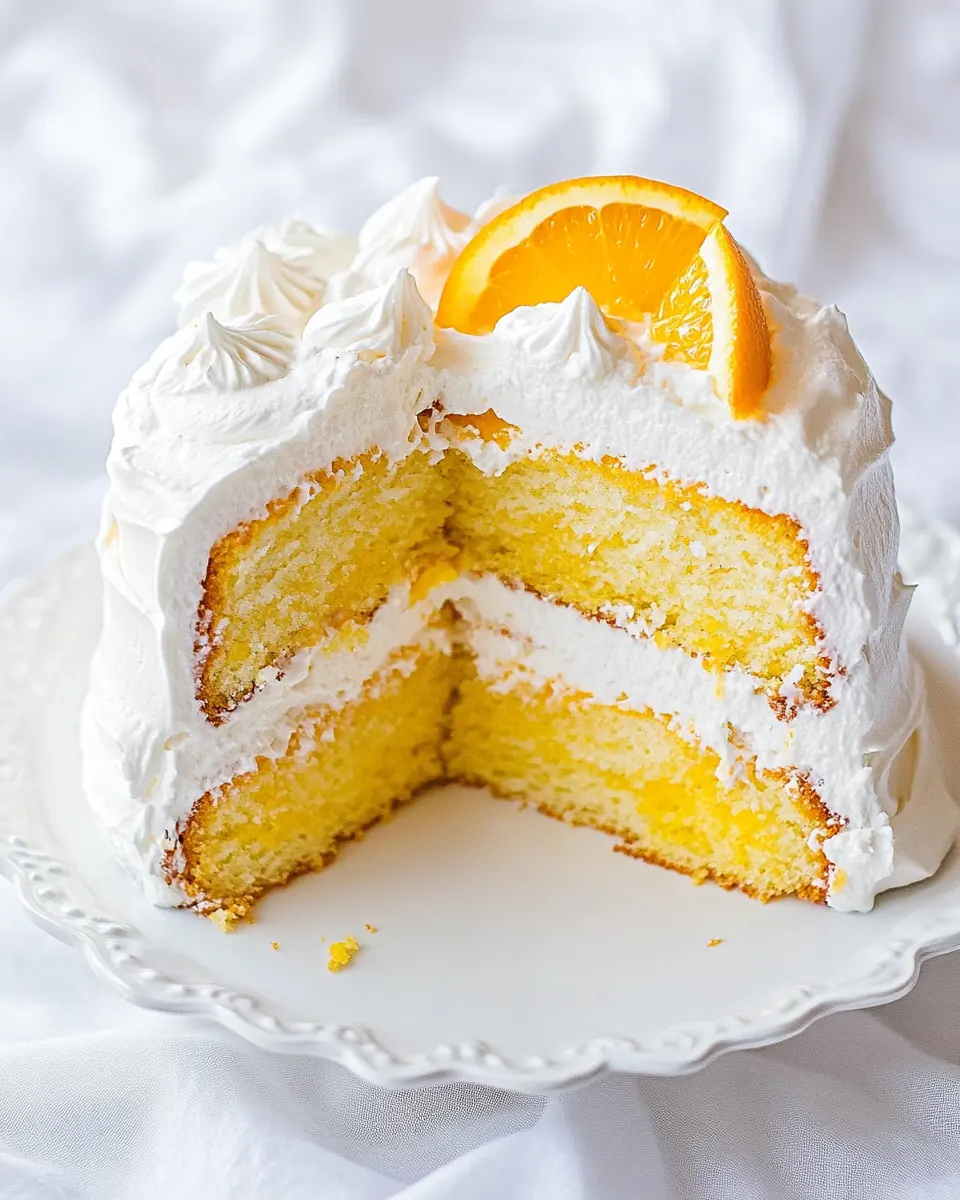
To assemble cake: Trim tops of each cake off to form an even layer. Spread half of the chilled orange filling over 1 layer of the cake (crumb/top side up, drop in a large dollop and spread outward so it doesn't get all crumby), leaving about a 1/2-inch rim of cake uncoated (because once the other layers are added the weight will slightly push the filling outward).: During this time the batter should become glossy and even, with no streaks of flour. Proper blending hydrates the flour and activates baking powder, which leads to an even rise. Avoid overmixing beyond the time window because it can develop gluten and toughen the cake.
Top with another layer of the cake (crumb/top side up), followed by remaining half of the orange filling, leaving a 1/2-inch rim of cake uncoated. Top with last layer (crumb/top side down) and spread meringue over entire cake.: Adding the orange zest at this stage releases aromatic oils into the batter, and the vanilla deepens the flavor. The batter will smell fragrant and citrus forward. If you add zest too early it can lose its fresh punch, so fold it in now for maximum aroma.
Toast meringue with a culinary torch until golden brown (and keeping a close eye making sure to blow any little flame out).: As you whip, the whites will go from glossy to snowy, and the sound of the mixer will change as they thicken. The cream of tartar stabilizes the foam so it keeps structure when folded into batter. Underwhipping leads to limp loft, while overwhipping can make them grainy and difficult to fold, so stop when peaks hold shape but remain smooth.
Add half of the whipped egg whites to the batter and fold until partially combined, then add remaining half and fold just until combined: Folding gently preserves the air in the whites, which is essential for the chiffon lift. You will see ribbons of white swirl through the batter, and the motion should be gentle and deliberate. Overfolding deflates the structure, resulting in a dense cake, so fold only until no large streaks remain.
Divide batter evenly among prepared baking pans and bake in preheated oven 17 to 19 minutes until toothpick inserted into center of cake comes out clean: In the oven the layers will rise and the tops will become lightly golden. The clean toothpick test ensures the crumb is set but still tender. If a toothpick has batter, the layers need more time, but avoid overbaking which dries them out.
Allow to cool in cake pans 10 minutes, then invert onto wire racks to cool completely before frosting with meringue: Cooling slightly in the pans helps prevent the fragile layers from collapsing, and inverting onto racks stops residual heat from steaming the crumb. The layers should feel springy and not warm when you assemble. If you try to frost while still warm, the meringue and filling will slide and the structure will be unstable.
Add 6 egg whites and sugar to a very clean heatproof bowl and set over a saucepan of barely simmering water: As the bowl warms, whisking dissolves the sugar into the whites and you will notice the mixture become warm and slightly glossy. Using a heatproof bowl and gentle steam prevents scrambled whites and prepares a stable meringue. If water boils vigorously, reduce heat; too much steam can overheat the whites and change their texture.
Heat mixture, stirring constantly, until it registers 160 degrees on a candy thermometer: Reaching 160 degrees ensures the sugar has dissolved and the eggs are safe, while maintaining the right structure for whipping. The mixture should feel smooth to the touch and show no graininess when tested between fingers. If you stop early and grains remain, the meringue may not reach full volume.
Remove bowl from saucepan, add 1/4 tsp cream of tartar and beat mixture on medium-high speed until stiff glossy peaks form: Whipping transforms the warm syrup and whites into a glossy, marshmallow like meringue with shiny peaks. The bowl will get warm and the mixture will climb the whisk, forming firm peaks. In humid conditions this may take longer, so be patient. If the peaks appear dull or weepy, you may need a bit more whipping time.
Trim tops of each cake off to form an even layer: Trimming makes stacking stable and creates smooth surfaces for spreading filling. The scent of baked orange will be stronger once the domes are removed. Use a serrated knife and a gentle sawing motion to avoid compressing the crumb. Cutting unevenly can cause lopsided layers when assembled.
Spread half of the chilled orange filling over 1 layer of the cake leaving about a 1/2-inch rim uncoated: The chilled filling should be spreadable and glossy, with a fragrant citrus perfume. Leaving a rim prevents the filling from being pushed out when you stack the next layer, and it helps keep edges clean. If the filling is too cold and stiff, let it sit a few minutes to soften slightly for easier spreading.
Top with another layer of the cake followed by remaining half of the orange filling leaving a 1/2-inch rim uncoated: Stacking should feel balanced, and the second layer will compress the filling slightly to create a neat junction. Maintain that rim for structural reasons. If the layers slide, chill the stack briefly to firm the filling before continuing.
Top with last layer and spread meringue over entire cake: When you blanket the cake with meringue, use sweeping motions to create decorative peaks and valleys that will toast nicely. The contrast of glossy white meringue against the orange filling makes for a striking presentation. If you see weeping or separation, your meringue may have been whipped too long or exposed to moisture; a quick chill can help stabilize it.
Toast meringue with a culinary torch until golden brown keeping a close eye: As you torch the surface, the meringue will hiss slightly and develop a warm, caramelized aroma while turning golden. Work quickly and move the torch continuously to avoid burning spots. If you do not have a torch, a brief stint under a broiler will work, but watch closely to prevent scorching.