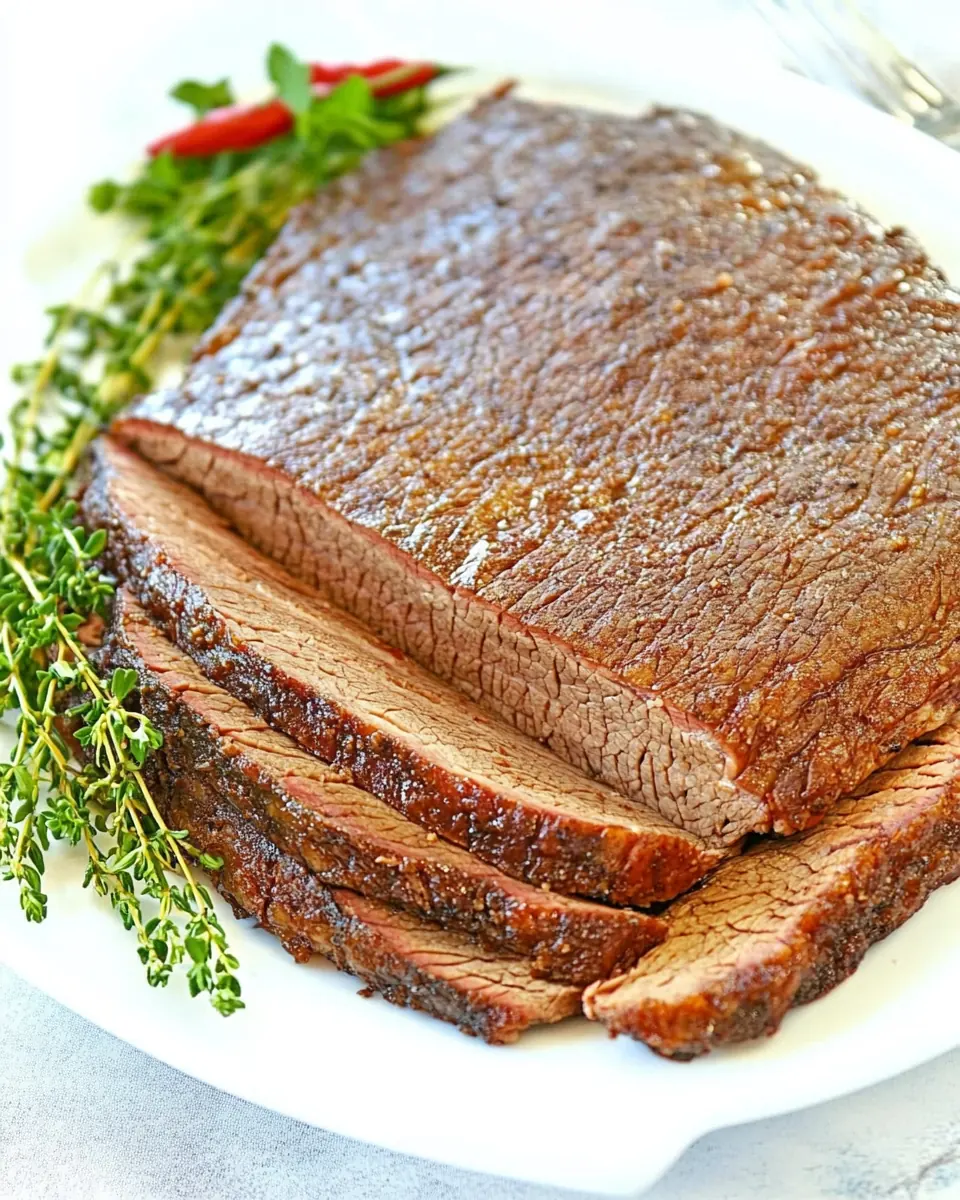
Trim excess fat off the brisket.: Warmth from your hands and a sharp knife will reveal the meat beneath the outer layer, and the sound is a soft, clean slicing as you remove thick slabs of fat. You want a thin fat cap left, about a quarter inch, so it can baste the meat during the slow roast without leaving greasy puddles. The reason is that a properly trimmed brisket renders evenly, creating a balanced texture rather than one overly fatty end and one dry end. A common mistake is cutting away all the fat at first, which removes flavor and moisture; instead, trim thoughtfully and leave a protective layer.
Punch holes in both sides of the brisket with a fork.: As you press the fork, you’ll feel little punctures that allow marinades and seasonings to penetrate deeper, and the meat gives slightly under pressure. This helps the meat tenderizer and seasonings do more than coat the surface. The why here is straightforward, it increases surface area for flavor absorption and speeds tenderization. Avoid going too deep repeatedly in the same spot, since overdoing it can cause the meat to lose juices during the roast.
Sprinkle meat tenderizer on both sides.: The tenderizer should be dusted evenly, and as it meets the meat it settles into the puncture holes you made, almost like a gentle dusting that promises softness. This ingredient chemically helps break down tough fibers over the long marinade and cook, giving you that coveted fork tender texture. The risk is using too much, which can make the surface mealy; measure carefully and spread it evenly to prevent textural issues.
Sprinkle garlic salt, onion salt, and celery salt on both sides.: When these seasonings hit the warm surface, they smell savory and fragrant, building a savory crust once roasted. They work together to layer aromatics and saltiness so the beef tastes rich across each slice. The purpose is to form a well rounded flavor profile rather than a single note. One mistake I see is uneven application, leaving one side bland; take your time to distribute the salts uniformly.
Place the seasoned brisket in a shallow roasting pan lined with heavy-duty aluminum foil.: The foil makes a tight, protective cocoon and the pan is where the juices will collect and concentrate, creating a fragrant base. As you nestle the brisket in, you might hear a soft clink from the pan, and the meat will settle into place. Lining with foil simplifies cleanup and ensures the wrap seals well. Avoid skipping the foil lining because it helps trap moisture and prevents sticking that can tear the meat during unwrapping.
Pour liquid smoke over the meat.: A small amount of liquid smoke brings a smoky aroma that hits you right away, like a whisper of char that complements the long roast. The scent is subtle but transformative, giving the brisket an outdoor smoked character without a smoker. This step matters because it enriches the finished profile and pairs with the roasting basting. Do not pour too much, as overapplying overwhelms the natural beef notes and can taste artificial.
Wrap tightly and marinate for 8 to 10 hours in the refrigerator, the longer the better.: The wrapped brisket will rest and absorb flavors, and when you open the foil after marinating, you may notice a concentrated, savory scent and a slightly tacky surface where seasonings have melded. This slow soak lets the tenderizer and salts work through the meat, improving texture and depth. A typical error is under marinating, which yields a less penetrated flavor, so allow adequate time for the ingredients to do their job.
When ready to bake, unwrap the brisket, sprinkle Worcestershire sauce over the meat, and re-wrap tightly.: The sauce creates a shiny, savory glaze that will mingle with the pan juices as it roasts, and rewrapping locks those flavors in. You should see the sauce bead slightly on the surface, signaling it is ready to be sealed in. The why is that adding the sauce just before roasting concentrates its effect, and wrapping ensures moisture retention. Avoid leaving it unwrapped during the long roast, since exposed surfaces can dry out.
Bake at 225 degrees for 5 to 6 hours or to your liking. I like to use a meat thermometer and cook the brisket to 195 degrees, because that's when it is fork tender.: As the oven breathes heat, you will hear occasional soft pops from rendered fat and smell a deepening meaty aroma that turns almost sweet. At around the midpoint, the surface will look drier but do not panic, the internal breakdown continues. Using a thermometer is critical because the number gives you confidence that the connective tissue has melted into gelatin. The biggest mistake is rushing the temperature up too much, which can toughen the meat instead of inviting tenderness.
Remove brisket from the oven, and allow to cook for about 25 minutes before slicing.: The meat will settle and redistribute juices during this rest, and the surface will slightly cool while internal steam relaxes. Cutting too soon squeezes juices out, resulting in a drier slice, so this rest is crucial for juicy results. You should feel the meat firm slightly when you press it, indicating the proteins have set. Avoid slicing immediately, which leads to moisture loss and a less succulent plate.
Pour the broth into a saucepan and simmer on low heat.: As the broth warms, steam will carry meaty aromas and the surface will ripple gently, indicating it is ready to receive slices. Simmering concentrates flavors and creates a warm medium to reheat the brisket without drying it out. This step is important for keeping slices juicy and for creating a light jus for serving. A common mistake is boiling vigorously, which reduces the liquid too fast and can concentrate saltiness.
Thinly slice the meat.: Use a sharp knife and slice across the grain into thin, even pieces; you will notice the surface sheen from resting and the tender fibers parting cleanly. Thin slices let the meat feel tender on the tongue, and they absorb the reheating broth or sauce beautifully. The reason you slice thin is to maximize tenderness and portioning. Avoid slicing with a dull knife or along the grain, which tears the meat and makes chewing tougher.
Place the slices in the broth to reheat.: The warm liquid will gently coax heat back into the meat, and after a few minutes the slices will appear glossy and ready to serve. This keeps each portion moist and infuses a light savory jus. The why is that reheating in liquid prevents drying and enhances mouthfeel. Don’t leave them too long, or they may over soften and lose structure.
You may reheat this in your favorite barbecue sauce.: If you choose a sauce, it will cling to the warm slices and caramelize slightly if briefly reheated, adding a tangy or sweet dimension depending on the sauce profile. This is a serving option that personalizes the dish and introduces contrast. The caution is to warm gently, as high heat can break down the meat texture or burn sugars in the sauce.