Preheat your grill to medium heat. Brush the corn and scallions with 2 tablespoons of olive oil and sprinkle them with the salt and pepper. When the grill is hot, place the corn and scallions directly on the grates. Cook the scallions for 1 to 2 minutes, flipping them during cook time. Cook the corn until the kernels soften and turn golden brown, about 8 to 10 minutes, turning the corn as you go.: Warmth and aroma arrive as the grill comes up to temperature, a gentle convective heat that will encourage the corn and scallions to char without burning. You should hear a faint hiss when you place a drop of water on the grate, and the metal will feel hot to the back of your hand held a few inches above it. This step matters because a properly heated grill creates searing contact, promoting caramelization on the corn kernels and the sweetening that makes them pop. A common mistake is rushing with a cool grill, which leads to pale steamed vegetables, so wait until it reaches medium heat and you hear that sizzle when items hit the grate.
Once the corn is cool enough to touch, cut the kernels off the cob. Slice the scallions.: The slick of olive oil helps the surfaces of the corn and scallions brown evenly and prevents sticking. As you brush, feel the kernels and green stems, making sure oil coats the whole surface. The salt and pepper wake up the natural sweetness and give a subtle backbone of seasoning. If you under-season here, the grilled veg will taste flat after mixing, so be generous but not heavy handed.
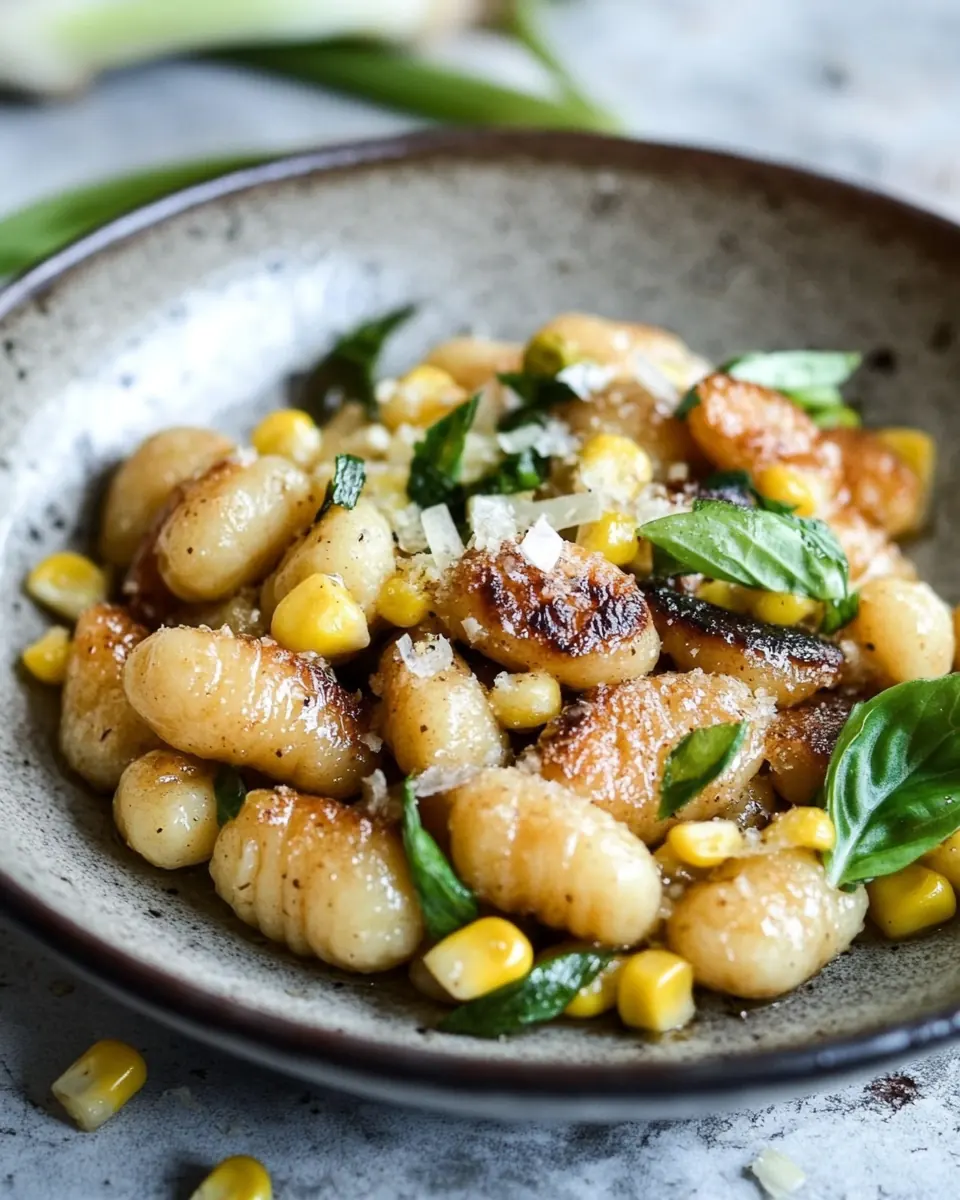
Heat a large skillet over medium heat and add the remaining 2 tablespoons of olive oil. Add the gnocchi and cook until the sides are golden brown and toast, flipping as you go, for about 3 to 4 minutes. Remove the gnocchi and add it to a bowl. Toss it in brown butter, then add the corn and scallions. Sprinkle the parmesan and basil leaves on top. Serve!: You will hear the immediate contact sizzle, and that sound signals the start of Maillard reactions that create those toasty, savory notes. Position the corn so each side will receive heat for even charring, and lay the scallions perpendicular to the grate to avoid them slipping through. Grilling directly on the grates gives cleaner char lines and more concentrated flavor compared to foil.
Cook the scallions for 1 to 2 minutes, flipping them during cook time: The scallions will soften and develop faint blackened tips, and you should notice their aroma become sweeter and more complex. Flip them once to get even color, and remove them as soon as they feel tender when pierced with a fork. Overcooking can turn them mushy, so keep an eye on texture and remove promptly.
Cook the corn until the kernels soften and turn golden brown, about 8 to 10 minutes, turning the corn as you go: As the corn roasts, expect a series of audible pops and a sweet, roasted scent; the kernels will blister slightly and develop golden patches. Turn the cobs every few minutes so each side caramelizes, and aim for a mix of deep golden and charred spots for maximum flavor contrast. Avoid leaving them in one spot too long or you will burn the kernels rather than roast them gently.
Once the corn is cool enough to touch, cut the kernels off the cob: The kernels should release with a satisfying tug and look glossy with their juices. Use a sharp knife against a stable board, and angle the cob to slice downwards so you capture whole kernels cleanly. Cooling slightly keeps you from squeezing out the juices and keeps the kernels plump. A common misstep is working too fast while the corn is piping hot, which leads to burns and messy cutting.
Slice the scallions: After grilling, the scallions will be tender with charred tips; slice them on a diagonal or straight across according to preference to create ribbons that distribute through the dish. The aroma will be smokier and less sharp than raw, and the texture will be soft but still pleasingly structured. If you slice them too thin, they may disappear into the mix, so aim for visible pieces that you can bite into.
Heat a large skillet over medium heat and add the remaining 2 tablespoons of olive oil: The pan should shimmer slightly when the oil is hot and not smoke. This temperature allows the gnocchi to develop golden edges without absorbing too much oil. A well heated skillet gives you audible contact sounds when you add the gnocchi , and that sizzle is a good cue you are at the right temperature. If the oil smokes immediately, lower the heat to avoid burning flavors.
Add the gnocchi and cook until the sides are golden brown and toast, flipping as you go, for about 3 to 4 minutes: You will hear a gentle sear and see tiny browned patches forming, with the aroma shifting to toasty and slightly sweet. Flip individual pieces so multiple sides pick up color, creating a crunchy exterior and a soft interior. This contrast in texture is why pan toasting matters, and rushing this step will leave them limp, so be patient and let color build slowly.
Remove the gnocchi and add it to a bowl: The finished gnocchi should feel springy in the center with crisped edges. Moving them to a bowl prevents further cooking and gives you a base to toss with the sauce. If you leave them in the hot pan they will continue to brown or dry out, so transferring at the right moment preserves texture.
Toss it in brown butter: When you add the gnocchi to the brown butter , you will notice a warm, nutty aroma and a glossy coating forming on each piece. The brown butter softens the surface and adds richness that clings to the toasted edges, and the aroma is often the most persuasive part of this step. Burned butter tastes bitter, so watch closely as it turns golden and smells nutty, then remove from heat to preserve the ideal flavor.
Then add the corn and scallions: Combine the warm corn kernels and sliced scallions with the buttered gnocchi , tossing so each bite includes both sweet and smoky notes. You will see contrasts of color and texture, and the residual heat helps the flavors meld without overcooking the vegetables. A frequent error here is tossing too vigorously, which can bruise the kernels; fold gently so everything stays intact.
Sprinkle the parmesan and basil leaves on top: The parmesan cheese will soften slightly and cling to the warm pieces, while torn basil leaves release a fragrant, herbal lift as they touch the heat. The visual pop of green and the savory dusting complete the plate. Add just before serving so the herb remains bright and the cheese retains some texture.
Serve: Present the dish warm so you catch the brown butter aroma and the contrast between crisp edges and soft interiors. Encourage guests to enjoy it right away, as the textures are at their best fresh from the pan. If you let it sit too long the gnocchi can lose their crispness, so timing matters for peak enjoyment.