In a heavy-bottomed pot or dutch oven, heat olive oil over medium-high heat.: You will notice the oil shimmer when it is ready, and it should move fluidly across the pan. This sheen indicates the temperature is right for sweating vegetables without burning them. The sound is a gentle sizzle as the first pieces of onion touch the oil. Using a heavy-bottomed pot ensures steady heat distribution, preventing hot spots that can scorch aromatics. A common mistake is overheating the oil so it smokes, which ruins the delicate flavors; if it begins to smoke, remove the pan from heat for a moment to cool slightly.
Add diced onion and garlic. Cook, stirring as needed, until onion is translucent – about 5-8 minutes.: As the onion softens you will see it turn from opaque to translucent and the edges will become glossy. The kitchen will fill with a sweet, savory aroma as the natural sugars in the onion caramelize slightly. Stir every minute or so to ensure even softening and to prevent the garlic from sticking to the pan and burning; burnt garlic tastes acrid and will overpower the soup. If the mixture starts to brown quickly, reduce the heat and add a splash of the vegetable stock to deglaze the pan.
Add the San Marzano peeled tomatoes, including the juice, vegetable stock, dried oregano, dried basil, and sugar. Season with salt and pepper and stir to combine. Bring to a low simmer. Cook uncovered, for 12 minutes or until it has thickened. Stir occasionally.: When you add the canned tomatoes and stock the pot will huff and sputter as the liquid hits the hot surface, then settle into a gentle simmer. The aroma shifts to bright, concentrated tomato with herbal notes. Stirring helps break the tomatoes apart if they are whole and integrates the herbs and sugar . The mixture will reduce slightly, concentrating flavors, and you will see it thicken and cling to the spoon. Avoid a rapid rolling boil, which can make the soup taste flat; keep it at a low simmer. If the soup seems too thin after 12 minutes, extend simmering, checking every few minutes until it reaches the desired body.
Add the half-and-half or heavy cream and season to taste with salt and pepper.: Pouring in the half and half will soften the tomato tang and add a creamy sheen. Visually you will notice the color mellow to a gentle orangey red, and a faint steam will rise as it warms. Stir gently to incorporate the cream into the base, and then taste, adjusting with kosher salt and freshly ground black pepper . If the cream curdles, the soup was too hot when added; temper by removing from heat and stirring vigorously while cooling slightly. Take care not to over salt at this stage since reduction concentrated the salts earlier.
Using an immersion blender (or carefully transfer soup to a blender), puree soup until there are no large chunks left.: The soup will transform under the blade into a silkier, cohesive texture. With an immersion blender you can work directly in the pot, moving the head methodically to ensure no large pieces remain. If using a countertop blender, work in batches and vent the lid so steam can escape, covering with a towel to prevent splatter. The sound becomes a steady whir, and you'll see bubbles on the surface as air gets incorporated. Overblending can thin the soup excessively and introduce air that changes mouthfeel, so pulse until smooth.
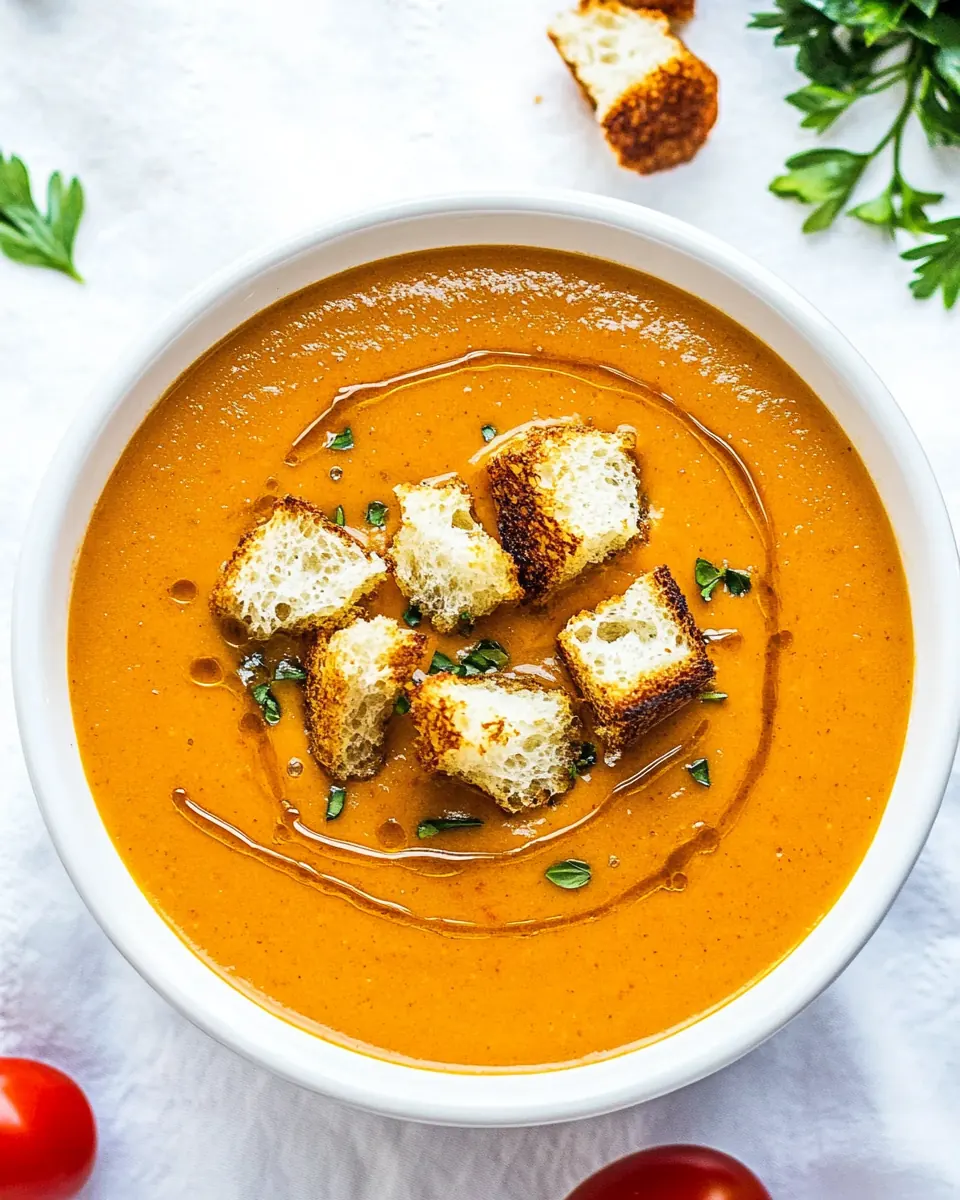
Serve immediately garnished with croutons and french bread on the side.: Pour the soup into warmed bowls so it stays hot longer, and add croutons for a contrasting crunch. The first spoonful should be warm and silky, with herbal hits and a gentle sweetness. I like to place sliced french bread alongside for dunking, which provides texture contrast and makes the meal more satisfying. A typical pitfall is letting the soup sit too long before serving, which can dull the aromatics, so time serving to when everyone is ready to eat.
Store in an airtight container in the fridge for up to 5 days or you can freeze the soup for up to 3 months.: Cool the soup to near room temperature before sealing to avoid condensation and dilution. In the fridge it will thicken slightly as it chills, and flavors often meld overnight, improving the profile. For freezing, leave headroom in the container because liquids expand when frozen. When reheating, do so gently over low heat to prevent separation, stirring frequently. A mistake to avoid is reheating at too high heat, which can break the cream and alter texture.