Preheat the oven to 170 degrees C (340 F).: As the oven warms you ll notice a faint, warming scent of heating metal and glass, which tells you the environment is ready for gentle baking. Preheating is essential so the crust begins setting as soon as it hits heat, preventing sogginess. If your oven runs hot or cold, use an oven thermometer to verify the temperature, because inconsistent heat can cause uneven rising or browning. A common error is to skip full preheating, resulting in a dense, underbaked center.
Butter a 24 cm (9.4 inch) round baking tin.: Rubbing the tin with softened butter will leave a thin, even sheen that helps the pastry release after baking. You should see a glossy coating without pools of butter. This step also aids in achieving a golden edge where the crust meets the pan. Avoid using too much butter, which can cause the base to fry and become greasy during baking.
Mix the flour with the soft butter, sugar, and yolks until you get a homogeneous dough.: As you combine flour , butter , powdered sugar , and the egg yolks , the texture will shift from crumbly to a cohesive dough that holds together when pressed. The aroma should be slightly sweet and buttery. Work quickly to avoid warming the dough too much, or it will become sticky and difficult to shape. Overmixing is the typical mistake here, which develops gluten and makes the crust tough.
Give the dough a round shape and place it in the prepared pan.: Shaping by hand forms a smooth disk that fits the base of your tin. You ll feel a cool, slightly tacky surface that responds to gentle pressure. Center it so the crust bakes evenly, and if the dough resists shaping, chill it briefly to firm up. Forcing overly warm dough into the pan will cause uneven edges and possible slide down during baking.
Press gently and smooth it out so that the bottom of the tray is well covered.: Use your fingers or the back of a spoon to press the dough thin and even across the pan, paying attention to corners and edges for uniform thickness. A well smoothed base encourages even cooking and prevents thin spots from burning. Visual cues include a consistent sheen and absence of cracks. Pressing too hard can compress the layers and make the crust dense.
Chill the dough while you prepare the filling.: Refrigeration firms the fat, which keeps the crust flaky and prevents shrinkage in the oven. You ll notice the dough becoming firmer and easier to handle. This pause also gives you a chance to assemble ingredients without rushing. Skipping chilling often leads to a crust that slumps and loses shape during baking.
Separate the yolks from the whites.: Clear separation ensures the egg whites will whip to full volume while the yolks enrich the filling. You should see bright yellow yolks and translucent whites with no cloudiness. If yolk leaks into the whites, they won t reach stiff peaks, so separate carefully over a bowl. A frequent mistake is using cold cracked eggs that make separation messy, so work over a surface you can clean easily.
Over the yolks put the flour, grahams, and cream and homogenize.: Combining the eggs , the listed flour , semolina , and the abundant sour cream creates a smooth, thick custard base. You should observe a silky consistency and a pale yellow color as it comes together. Proper homogenization ensures even baking and a stable texture. Lumps indicate under mixing, which will produce uneven pockets and a grainy mouthfeel.
Mix well then add the seeds from the vanilla pod and the grated lemon rind.: Stirring in the scraped vanilla pod seeds and fresh grated lemon peel releases aromatic oils that perfume the filling. You ll detect a floral, citrus fragrance that promises bright flavor. Even distribution is key so every slice has those notes. Forgetting to scrape the pod wastes a lot of flavor, so be thorough when harvesting the seeds.
Beat the egg whites well with a pinch of salt until you get a firm froth.: Whipping the egg whites with a touch of salt transforms them into glossy peaks that will lighten the filling. Look for stiff peaks that stand tall and reflect light. This stage adds air and gives lift as the custard bakes. A greasy bowl or yolk contamination will prevent proper whipping, so start with a pristine, dry bowl.
Add the sugar one spoon at a time and continue mixing.: Gradually incorporating the sugar into the whipped whites stabilizes the meringue and creates a glossy sheen. The sound changes as it whips, becoming higher pitched and taut, while the visual cue is a thicker, satiny texture. Rushing this step can deflate the whites or leave sugar grainy in the foam, so be patient until fully dissolved.
Place the meringue over the cream and mix gently with upward movements.: Folding the meringue into the custard should be done with soft, upward motions to preserve the air you ve built. The mixture will lighten and take on a slightly cloud like appearance. This aeration gives the filling a lift and a tender crumb. Overfolding is the main risk, which will knock out volume and yield a denser filling.
After homogenizing the filling, pour it over the crust and level.: When the filling is uniform, pour it into the chilled crust and use a spatula to smooth the surface. You ll notice a creamy sheen before baking, and the filling should sit evenly across the base. Leveling ensures even rise and browning during the bake. If the filling is too warm, it may soften the crust, so keep it cool and well mixed.
Bake the pastry for 40-50 minutes on medium heat until it puffs up slightly and browns on the surface.: As the loaf bakes you ll see the center rise gently and the top take on a warm amber hue, with slight cracking as the custard sets. The oven fills with a delicate aroma of lemon and vanilla, and edges will become golden. Check that the center has a slight wobble but is not liquid. Common errors include opening the oven too often, which causes temperature drops and uneven set.
When cooked, turn off the oven but leave the bread in the oven for 2 hours to cool gradually.: Cooling slowly inside the closed oven prevents a sudden temperature shock that can cause the filling to collapse or crack. The residual warmth allows the custard to finish setting gently. You may notice a faint settling, which is normal. Removing it immediately often leads to a sunken center and a less stable texture.
Then put it in the fridge for a few hours.: Chilling concentrates flavors and firms the filling to a sliceable consistency. The fridge quiets the aromas and gives time for the structure to become elegant and slice cleanly. For best results, cover loosely so condensation does not form on the surface. Cutting too soon is a typical pitfall, resulting in a messy, unset interior.
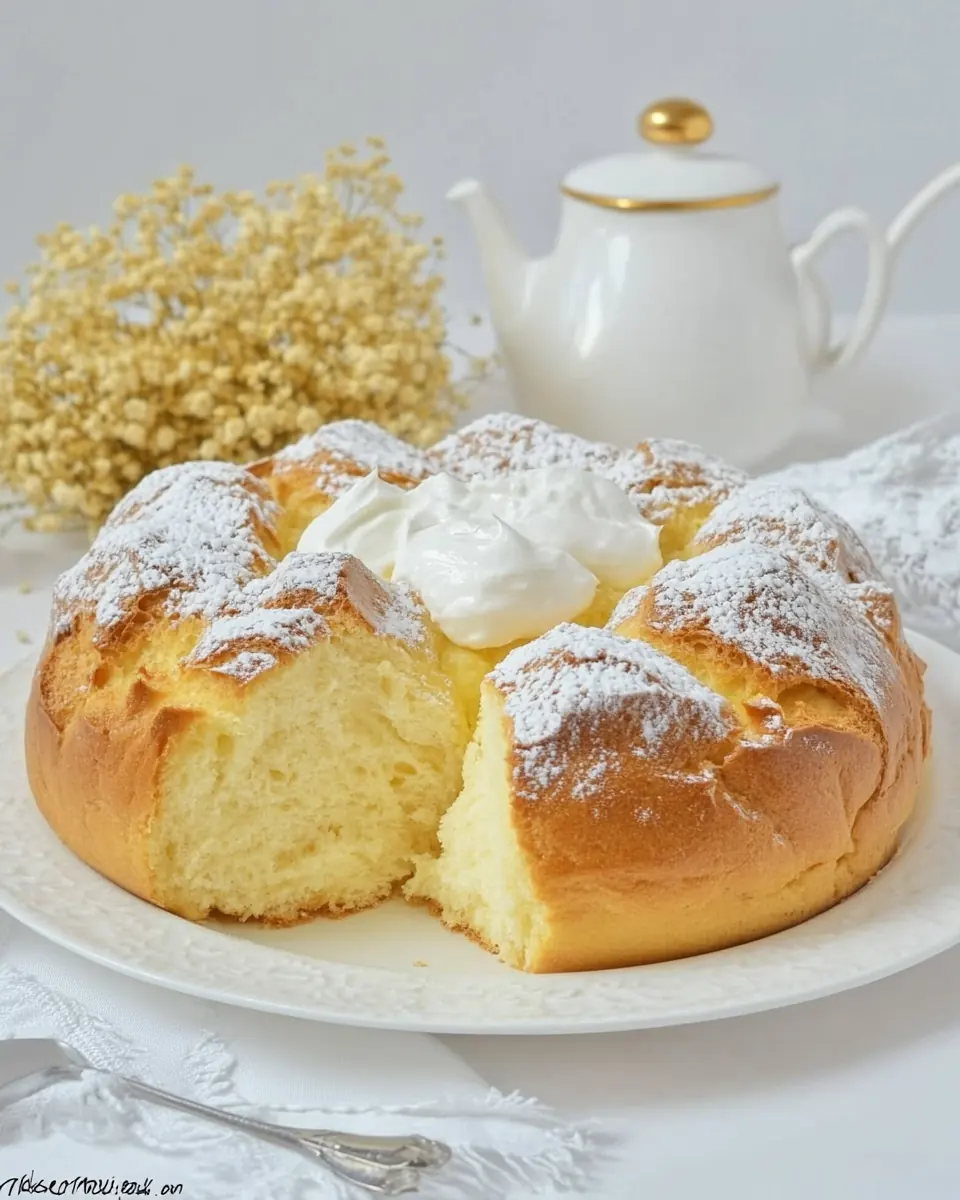
To serve, dust with sugar. It is a delicious pastry, enjoy!: A light dusting of powdered sugar adds a pretty finishing touch and a hint of extra sweetness on the aromatic crust. The first slice should show a tender, moist interior with gentle air pockets from the folded whites. Serve slightly chilled or at cool room temperature for the best balance. Oversugaring can mask the delicate lemon and vanilla notes, so keep it light.
My source of inspiration for this wonderful pastry was Bucataria Nainei.: Acknowledging inspiration reminds us that recipes travel and evolve, and it s lovely to honor the roots. I always appreciate hearing where a recipe came from because context enriches the cooking experience. If you re inspired, try to explore the original for variations. Assuming identical results without adapting to your oven or ingredient brands is a common oversight.