Go Back
Pea Pesto Pasta with Brown Butter Scallops

Pea Pesto Pasta with Brown Butter Scallops

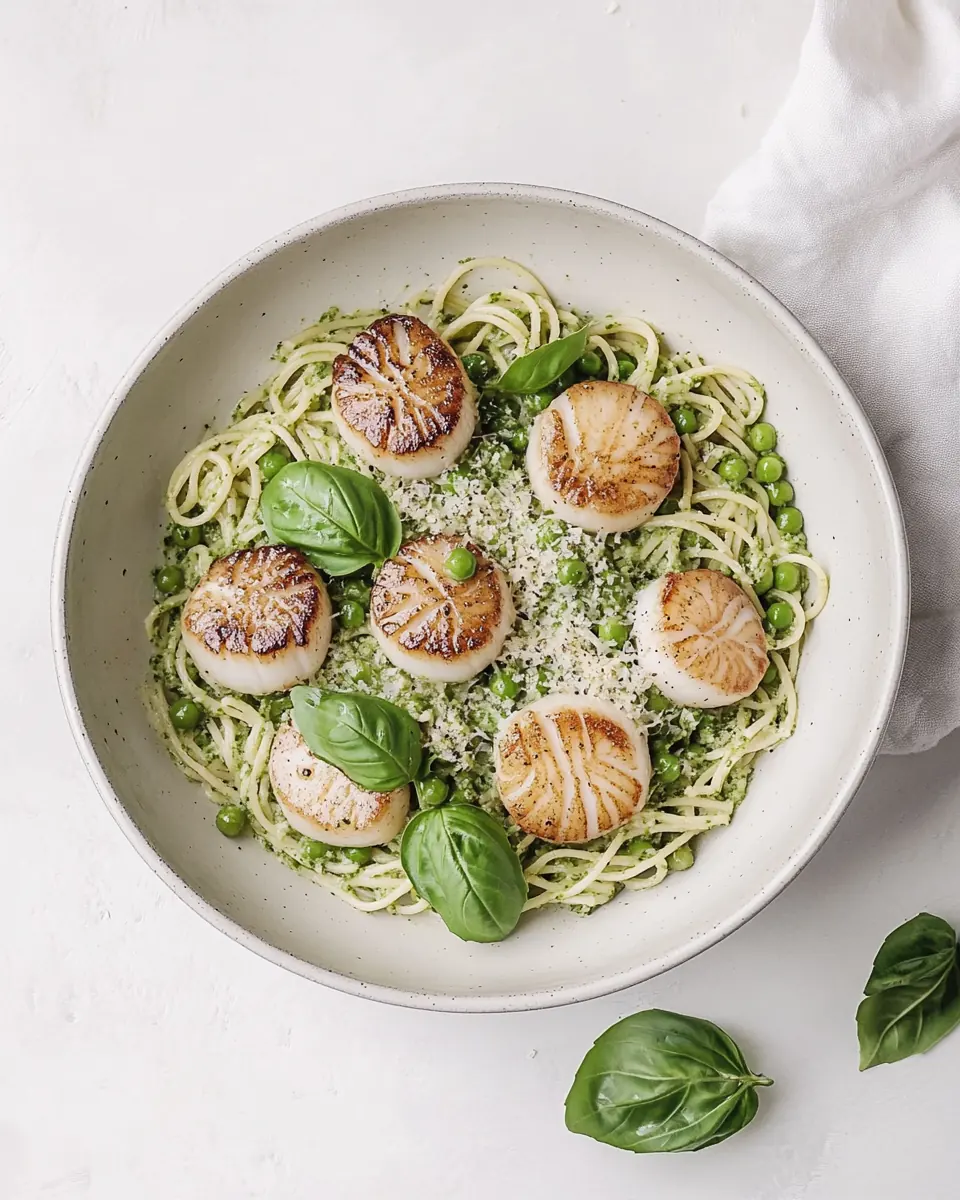
Pea Pesto Pasta with Brown Butter Scallops is a creamy, bright pasta dish featuring herbaceous pesto, sweet peas, and perfectly seared scallops. The angel hair pasta becomes luxuriously coated in a ricotta enriched pesto while brown butter lends a toasty note to the seafood, making it an easy weeknight dinner that feels special and restaurant quality.
Prep Time 10 minutes
Cook Time 15 minutes
Total Time 25 minutes
Servings: 4 servings
Course: Dinner
Cuisine: Italian
Calories: 450

Ingredients
  

  • 3 tablespoons olive oil Drizzle olive oil to provide a silky base for the pesto and to help emulsify the sauce, adding fruity richness and mouthfeel to the pasta.
  • 1 1/4 cup arugula Pack arugula tightly and pulse with other greens to contribute a peppery, slightly bitter note that balances the richness of cheese and butter.
  • 1/4 cup fresh basil Chop basil finely to lend a sweet, aromatic freshness and classic pesto flavor that brightens the dish and complements the peas and lemon.
  • 1/2 cup frozen sweet peas, thawed (I simply rinsed them under cool water for a minute or so) Rinse thawed sweet peas and incorporate them for natural sweetness, vibrant color, and a tender texture that forms the bulk of the pesto.
  • Zest from 1/2 lemon Microplane lemon zest to add concentrated citrus oils that lift flavors and introduce a bright, aromatic accent to the sauce.
  • Juice from 1 lemon Squeeze lemon juice to provide acidity that brightens the pesto, balances richness, and enhances the scallops' delicate sweetness.
  • 1/2 cup ricotta cheese Spoon ricotta cheese into the blend to create a creamy, slightly tangy body for the pesto, lending smoothness and coating the pasta.
  • 1/4 cup grated Parmesan-Reggiano Grate Parmesan-Reggiano finely and fold into the pesto for savory umami depth, salty complexity, and a pleasingly granular texture.
  • 1/4 teaspoon crushed red pepper Sprinkle crushed red pepper to introduce gentle heat and a spicy counterpoint that enhances the dish without overpowering delicate flavors.
  • Kosher salt Season with kosher salt during pesto preparation to build and balance flavors, drawing out sweetness from peas and brightness from herbs.
  • Kosher salt Season with kosher salt again when cooking pasta and scallops to ensure each component is properly salted and flavorful.
  • 1 pound angel hair pasta, or other pasta of choice Boil angel hair pasta until al dente to provide a delicate, tender vehicle for the pea pesto, allowing the sauce to cling and disperse evenly.
  • 2 tablespoons ghee or butter Melt ghee or butter and brown it slightly to develop nutty, toasty notes that will be used for searing scallops and enriching the final dish.
  • 1 pound scallops, thawed and dried well with a paper towel Pat scallops dry and sear them in hot fat to achieve a caramelized crust and sweet, tender interior that complements the pesto and pasta.

Equipment

  • Food processor or blender
  • Medium pot
  • Small skillet

Method
 

  1. To a blender or food processor, add the olive oil, arugula, peas, zest, lemon juice, ricotta, parmesan, crushed red pepper and a few pinches of salt. Pulse until the pesto is smooth, scraping down the sides as needed. Give it a taste and adjust the salt to taste. Set aside.: The aroma at this stage is herbaceous and bright, with the citrus oils from the lemon zest lifting the arugula and basil . As the blades chop, you will hear a steady, hummed sound and see the mixture transform from leafy pieces to a glossy, cohesive sauce. The creamy ricotta cheese softens the texture, turning the pesto toward silkiness rather than grainy paste, and the Parmesan-Reggiano adds savory depth. Pause to scrape the sides often so no pockets of unblended leaves remain, and taste for salt and brightness. If it tastes flat, add a touch more lemon juice or salt incrementally. A common mistake here is overprocessing until the pesto becomes too watery or warm, which dulls the color and vibrancy, so pulse in short bursts and keep the motor cool by pausing occasionally.
  2. Bring a medium pot of salted water to a boil. Cook the angel hair pasta per the package’s instructions (mine said about 6 minutes). Reserve about a 1/2 cup of pasta water (you can eyeball this measurement). Immediately return the pasta to the pot. Add the pesto and toss until evenly coated. If needed, add a splash or two of pasta water.: The pot will sing as it reaches a rolling boil, and salted water is critical because it seasons the angel hair pasta from the inside out. Watch the pasta closely, since angel hair pasta cooks very quickly and goes from al dente to mush in moments. When you lift a strand, it should show a slight firm center, and the surface will glisten with starch. Reserving that pale, starchy pasta water is a chef trick, since those suspended starches help the pesto bind to the noodles, giving a silky, clinging sauce. Toss vigorously to marry the pesto and pasta, adding tiny amounts of water to loosen or thicken the consistency. Avoid rinsing the pasta, which washes away the starch that helps the sauce adhere.
  3. Meanwhile, in a small skillet, set over medium-high heat, add the ghee or butter. When hot, add the scallops and sprinkle them with a few pinches of salt. Cook for 3 to 4 at a time, as to not crowd the pan. Cook on the first side for about 30 seconds to 40 seconds; flip and cook on the opposite side for about 30 seconds. Repeat until you’ve worked your way through all of the scallops.: As the ghee or butter melts and heats, watch for a foaming then a settling where the milk solids begin to brown and emit a toasted, nutty scent that signals brown butter. Carefully add the scallops , and you should hear a bright, high sizzle as they hit the pan, indicating proper heat for searing. They will develop a golden to deep amber crust in those short bursts, and the contrast between the toasty exterior and the tender, opaque center is key. Work in small batches so the pan temperature does not drop, otherwise the scallops steam and fail to brown. A typical error is overcrowding, which leads to pale, rubbery results; give them space and keep a close eye on the color and smell of the butter to avoid burning it.
  4. Divide the pasta and scallops amongst bowls. Garnish with a few sprigs of basil and Parmesan.: At plating, the steam will lift aromatics from the pesto, making the room smell herbaceous and tangy. Arrange the sauced angel hair pasta in shallow bowls, nestling the warm, browned scallops on top so each bite gets a balance of sauce and seared seafood. A final scatter of grated Parmesan-Reggiano adds a salty finish, and a few torn basil leaves refresh the palate with bright green notes. Be mindful not to pile the scallops on top of one another, which can trap steam and soften their crust. If the pesto cooled too much while you seared, toss it briefly over low heat with a splash of reserved pasta water to loosen it before plating.
Notes

  • Don’t crowd the scallops The note included with the original recipe is crucial, and it bears repeating: give each scallop room so the pan stays hot and you get a crisped exterior. If you put too many in, the temperature drops and they steam. If your skillet feels crowded, use a second pan or do multiple batches; the extra time is worth the texture payoff.
  • Make the pesto ahead The pesto stores well in the refrigerator for up to three days in an airtight container, and making it ahead saves precious minutes on a busy evening. Press a piece of plastic directly onto the surface to minimize oxidation and preserve that vibrant green color. When ready, bring it to room temperature so it blends smoothly with hot pasta.
  • Use reserved pasta water Save about a 1/2 cup of the starchy cooking water to loosen and bind the pesto to the angel hair pasta. Add it sparingly until the sauce coats the noodles in a silky sheen, rather than watery pools. Too much water will dilute flavor, so add slowly and test the mouthfeel.
  • Watch the brown butter closely When you see the solids turn golden and smell that nutty aroma, remove from direct heat or the butter can progress to bitter burnt bits quickly. If the butter gets too dark, start a fresh batch; burned butter will ruin the delicate flavor of the scallops.
  • Season incrementally Salt in stages: in the pesto, in the pasta water, and a finishing pinch on the scallops. This layered seasoning approach ensures a balanced final dish without over salting at any single point.