Preheat the oven at 375º.: The kitchen fills with a faint warm smell as the oven comes up to temperature, and you may hear the soft hum as the element cycles. Getting the oven fully hot before putting the pastry in ensures the crust begins to set immediately, which keeps it from soaking up filling later. A common mistake is to guess the temperature instead of using a reliable oven thermometer, which can lead to uneven browning; check the dial against a thermometer if your oven runs hot or cool. You'll notice a subtle dry heat and the oven light may cast a golden glow as it stabilizes.
Place the pastry dough on a 9 inch round pie plate. Poke lightly the pastry and prebake for 8 minutes in the hot oven. Remove and set aside.: When the pastry goes into the oven you will hear a gentle sizzle as moisture leaves the dough, and the edges should just begin to take on a pale golden tone by the end of the pre bake. Docking the bottom allows steam to escape and prevents large bubbles, keeping the base flat for the custard. One trap to avoid is overbaking at this stage; that makes the crust too firm and can crack when filling is added. Let the crust cool slightly so the hot filling does not cause it to become soggy immediately; you'll still want it warm, not cold.
In a large bowl mix together the eggs, almond paste, heavy cream, brown sugar and vanilla extract.: As you whisk, the aroma of vanilla extract and brown sugar should bloom, and the almond paste will begin to dissolve, creating ribbons of nutty flavor in the pale cream. Whisk until the mixture is smooth and slightly glossy, which helps the custard set evenly during baking. If you notice lumps of almond paste, press them through a fine mesh or beat a bit longer; uneven distribution causes pockets of dense texture. Try not to incorporate too much air while whisking, since trapped bubbles can leave tiny holes in the finished custard.
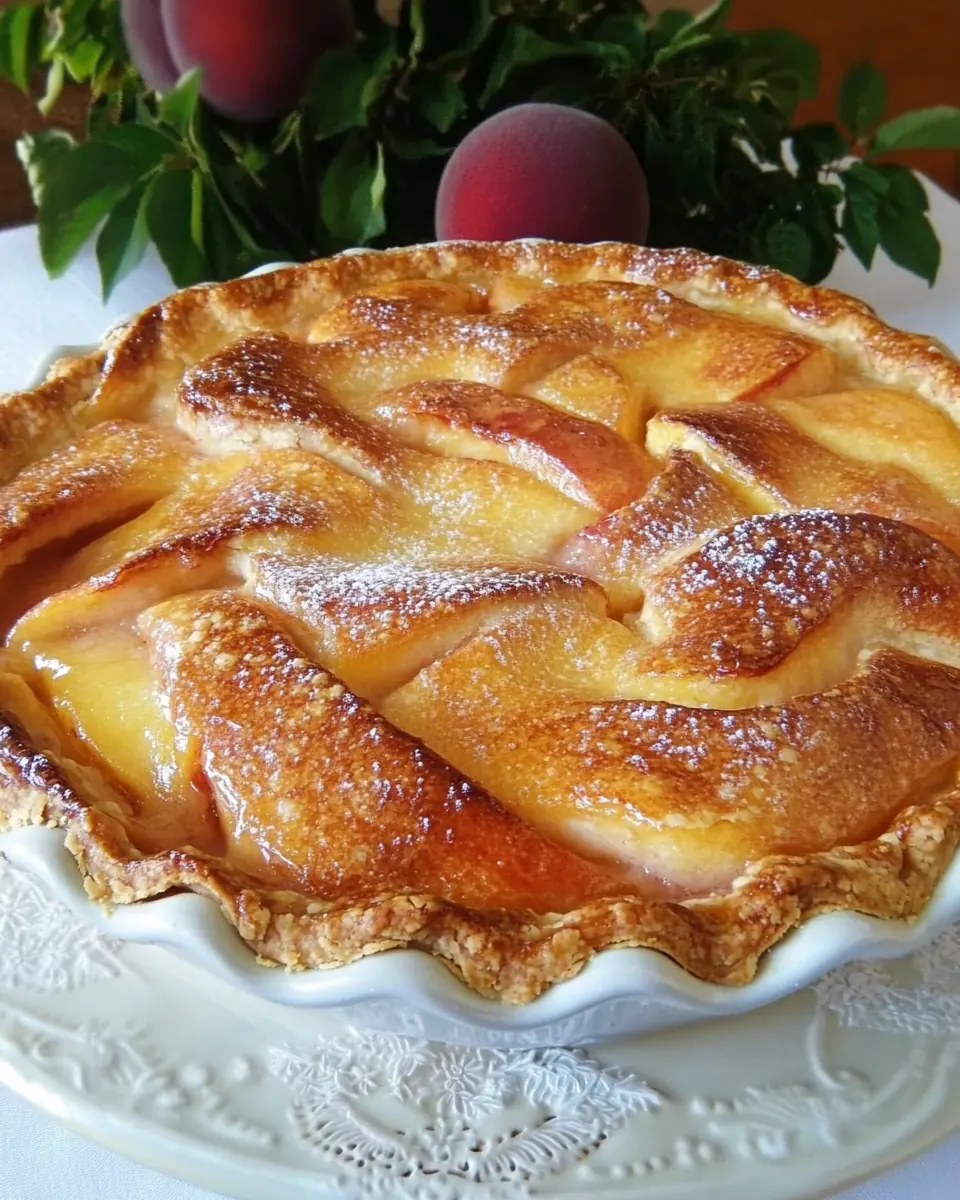
Add the cut up peaches to the pastry shell, cover with the eggs mixture.: The moment you add the peaches you'll see bright pieces nestle into the warm crust, and their sweet scent will rise. Pour the custard gradually so it settles around the fruit and fills gaps without forcing juices out. Listen for a soft glug as the liquid flows into place, and watch the surface level; the custard should come close to the rim without spilling. An easy mistake is overfilling, which causes bubbling and overflow; stop when the pie looks comfortably full and not precarious. If some pieces float, gently press them so the custard embraces them and helps them stay put while baking.
Bake at 350º for 45 minutes, or until the middle is solid firm.: As the pie bakes the kitchen will become fragrant with sweet peaches and caramel notes from the brown sugar , and you may hear a gentle crackle from the pastry edge. The top should become lightly golden and the center should feel set when you give the pan a small, careful jiggle; it will hold with a slight wobble. Let it cool on a rack so the custard finishes setting, cutting will be cleaner after some rest. A common error is removing it too soon which results in a runny center, so resist the urge to slice right away and allow at least some cooling time. If the crust browns too quickly, tent with foil to prevent burning while the center finishes cooking.