Preheat the oven to 375°F/190°C and prepare a 9×13 baking dish with nonstick cooking spray.: When you step into a warm kitchen and the oven begins to hum, you ll smell a hint of heat that tells you the baking stage is imminent. Preheating ensures the crust bakes evenly into a firm, golden base. If the oven isn t at temperature, the crust can turn out soggy or underbaked. A common mistake is skimping on the spray which makes removing bars messy, so be sure to coat the dish completely.
In a large mixing bowl, combine all finely ground Nutter Butter cookies (minus 1 cup) with the melted butter. Mix well using a fork until the mixture feels and looks like wet sand.: Right away you ll notice the cookie crumbs darken and take on a glossy sheen as the butter is worked in, signaling proper coating. The texture should remind you of damp sand, which helps it pack tightly. If the mixture seems dry, it usually means the butter wasn t fully mixed in, so add a touch more butter a teaspoon at a time. Avoid overmixing, which can break down the crumbs into an almost paste like texture.
Pour the crumb mixture into the bottom of a 9×13 baking dish, packing firmly and flat using the palms of your hands. Bake for 10-12 minutes or until the crust has hardened and is golden brown. When done, remove it from the oven and allow it to come to room temperature before proceeding.: Pressing firmly compacts the crumbs so they hold together after baking, giving you clean slices later. You should feel resistance under your palms and see the surface smooth and slightly shiny. If you press too lightly, the crust will crumble; press too hard and it may become overly dense. Use a flat bottomed cup or measuring cup to get an even surface if needed.
In a large mixing bowl, beat together the powdered sugar and cream cheese using an electric hand or stand mixture. Beat until smooth. Fold in 1 tub of whipped topping and mix until smooth.: During baking the kitchen fills with a toasty aroma and the edges will take on a warm golden hue. Allowing the crust to cool prevents the next layers from melting into it, which preserves distinct strata. A common error is rushing to assemble while the crust is hot, which leads to a soggy bottom layer, so cool fully for best results.
Add cream cheese mixture to the Nutter Butter crust and spread evenly and flat using a rubber spatula.: As you beat the cream cheese and powdered sugar , you ll see the mixture turn smooth and glossy, with no visible granules. This silky texture makes for a stable, spreadable middle layer. If you start with cold cream cheese, lumps will persist, so always soften first. Overbeating can introduce too much air and make the layer unstable when chilled.
In a clean large mixing bowl, combine vanilla pudding mix and milk. Beat until the pudding package has completely dissolved and the mixture slightly thickens.: Folding in the whipped topping adds lightness and creates a pillow like consistency. Use gentle strokes to keep the aeration intact, you re looking for an even, airy spread. A common pitfall is stirring vigorously, which deflates the whipped topping and yields a denser layer.
Add in 1 tub of whipped topping, peanut butter, the remaining finely ground Nutter Butter crumbs, caramel sauce, and sea salt. Blend until all ingredients are smooth.: The moment you spread this layer across the cooled crust you ll notice a clean, matte surface forming. Smooth it carefully to avoid tearing the crust underneath. If the crust flakes up, press it down gently before continuing. Don t overwork the spatula, a few smooth passes will do it.
Add mixture to the dish and spread evenly across. Top with the remaining tub of whipped topping before covering the dish and placing it inside the refrigerator to chill overnight.: The pudding will transform from a powder to a glossy, thickened liquid; its aroma will be sweet and vanilla forward. Using cold milk helps the instant pudding set correctly. If the mixture remains runny, double check the measurements; under measured pudding mix or too much milk will prevent setting.
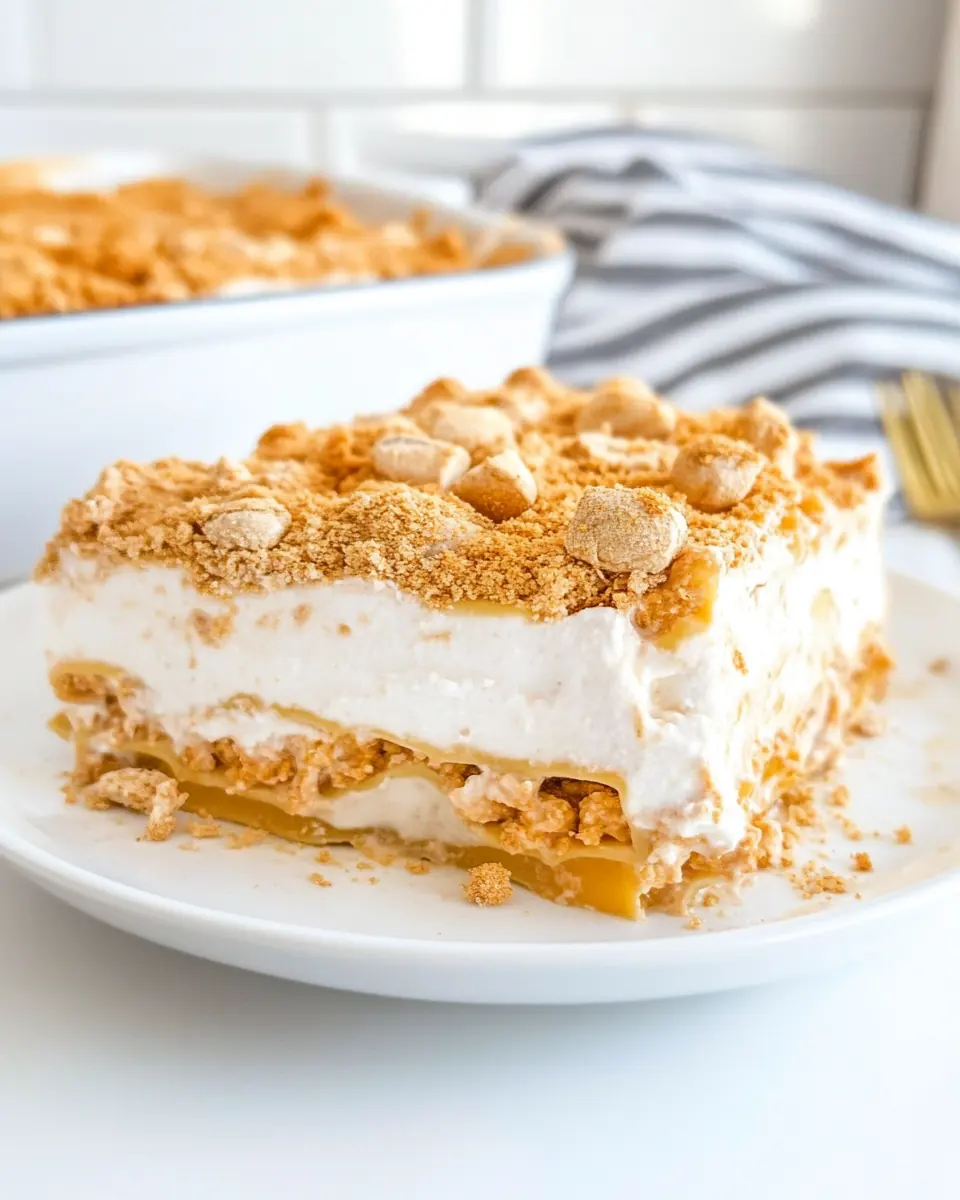
When ready to serve, garnish the dish with the remaining Nutter Butter cookies, broken into larger crumbs as well as a caramel sauce drizzle.: When these components come together, the bowl will take on a luxurious, nutty sheen and a balanced sweet salt aroma. The peanut butter should incorporate smoothly into the pudding, yielding a cohesive filling. If your peanut butter is too stiff, briefly warm it so it blends; lumps indicate incomplete mixing, so scrape the bowl thoroughly.
Blend until all ingredients are smooth: You want a uniformly thick mixture that spreads easily without separating. The sound is a soft, steady whir if you re using a mixer, and the surface should be glossy. Overmixing can make the filling too loose, while undermixing leaves streaks; aim for a consistent texture throughout.
Add mixture to the dish and spread evenly across: As you spread this peanut butter layer, notice how it levels into a satiny sheet that contrasts with the cream cheese layer below. Smooth it carefully to maintain even thickness, because uneven layers will affect slices. A common mistake is piling too much in the center which leads to uneven chilling, so spread from center to edges.
Top with the remaining tub of whipped topping before covering the dish and placing it inside the refrigerator to chill overnight: The final whipped layer should be pillowy and cloud like, creating a light cap. Covering tightly prevents fridge odors from mingling, and chilling overnight allows layers to firm up for neat slicing. If you skip the chill, the slices will be runnier and harder to serve.
When ready to serve, garnish the dish with the remaining Nutter Butter cookies, broken into larger crumbs as well as a caramel sauce drizzle: The finishing touch adds visual contrast and a burst of extra texture. Break cookies into varying sizes for an appealing look, then drizzle the caramel sauce in a steady stream for shine. Avoid over decorating which can overwhelm the layers visually and texturally.