Add peanut butter and brown sugar to a stand mixer fitted with the paddle attachment. (You can also use a hand mixer!) Beat until incorporated, about 1 minute.: When you begin, you will smell the nutty, roasted aroma of the peanut butter as the machine works it with the brown sugar , creating a glossy, slightly grainy mass. The sound is a gentle mixing hum, not loud or clunky, and within about a minute the mixture should look cohesive and slightly shiny. This step is critical because it dissolves the sugar into the fat, producing a uniformly sweet base, so take the full minute to let the mixer do its job. A common mistake is under mixing which leaves pockets of dry sugar, so stop and scrape the bowl if you still see granules. If the mixture seems too stiff, let the mixer run an extra 15 to 30 seconds to warm the fats and make it more pliable.
Add vanilla, oats, and coconut and mix until the dough comes together.: As you add the vanilla , the aroma will brighten and become more rounded, and when the old fashioned oats and shredded sweetened coconut enter the bowl the texture shifts from glossy to a thicker, more textured dough. Visually, you will see individual oat flakes incorporated, giving the dough a rustic look. Mixing until the dough holds together ensures the truffles will shape cleanly and not fall apart after chilling, which is why you want a cohesive, slightly tacky feel in the final mass. Avoid over mixing at high speed because the oats can break down and you will lose that pleasant chew. If the dough seems dry, add a scant teaspoon of water or a touch more peanut butter , but do so sparingly.
Scoop 2 tablespoon sized balls onto a cookie sheet covered with wax paper. Roll into balls. Chill for 30 minutes.: When you portion the dough, the tactile feel should be pliant and slightly tacky but not sticky. Use a measuring scoop or a spoon to keep the truffles uniform, which helps with even chilling and consistent visual appeal. Rolling the balls in your palms should feel smooth, with the oats still providing structure, and the dough will release easily from your hands if they are slightly cool. Place them spaced apart on the wax paper so they do not touch while chilling, otherwise the chocolate step will be awkward. A typical pitfall here is packing the balls too tightly which makes them dense; aim for gentle compression so the interior stays tender.
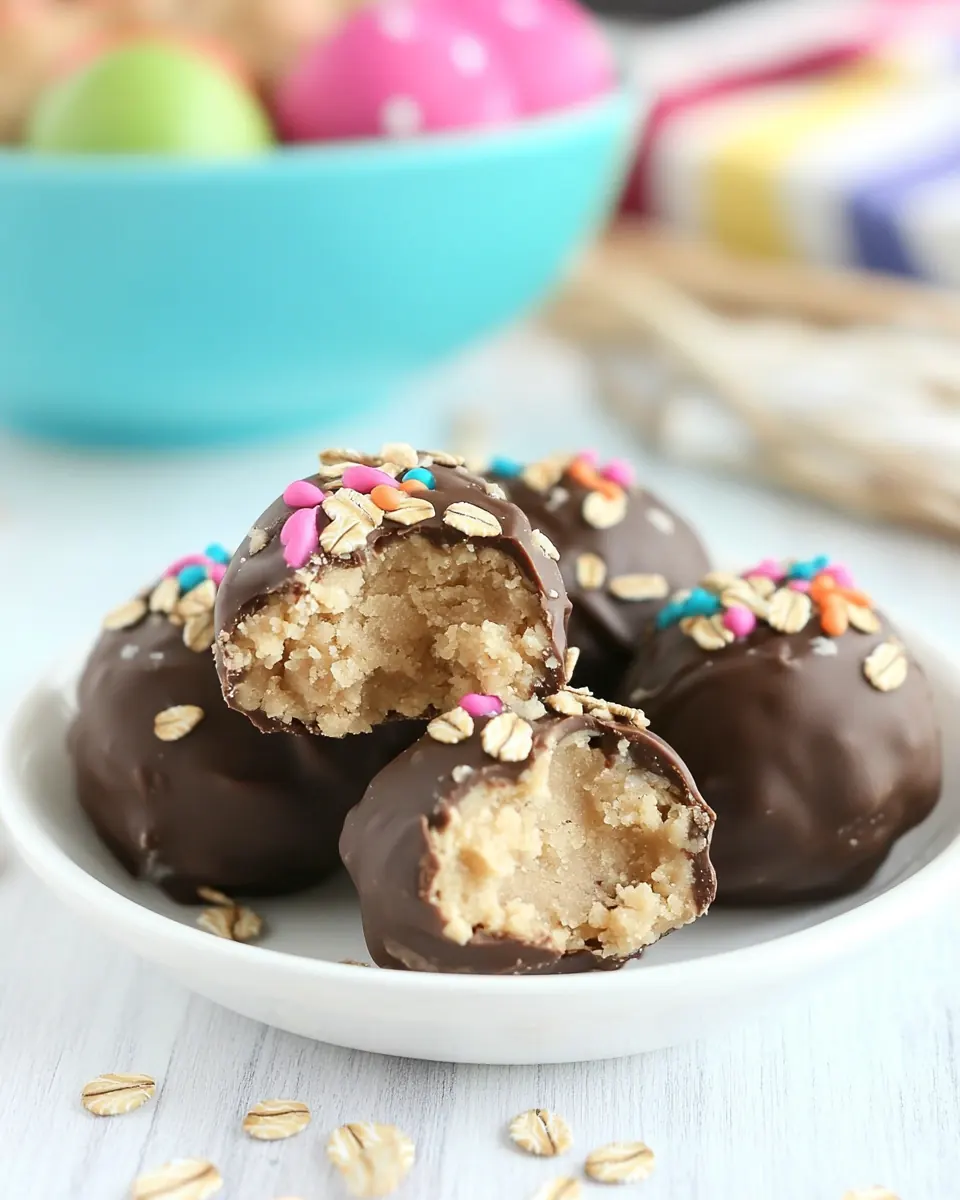
Melt candy according to package directions. Dip each truffle in the chocolate and tap off the excess. Place back onto the wax paper lined cookie sheet and top with sprinkles or extra coconut, if desired.: Rolling transforms the dough from a rough mound into a polished sphere, and you will notice the surface becomes smoother as it warms from your hands. The sound is subtle, just the soft friction of your palms, and visually the balls should be uniform, each with a slightly glossy sheen from the peanut butter . Proper rolling evens out the center, which helps the chocolate coating adhere consistently. If a ball cracks while rolling, press it gently to mend the surface; cracks usually heal with a light smoothing motion. Avoid overworking the dough since that can make the texture compacted and less pleasant.
Chill for 30 minutes: During chilling the dough firms up and becomes easier to dip, and you will notice the aroma mellow slightly as the fats solidify. The cool, almost tactile firmness allows the balls to hold shape when immersed in warm chocolate . This rest is essential, because dipping warm or soft balls often leads to misshapen truffles and chocolate that slides off. A frequent mistake is skipping this step, which results in melted centers and messy coatings, so be patient and use the chill time as a breather to prepare your dipping station.
Melt candy according to package directions: When melting your chocolate or Candiquik , follow the package for temperature guidance so you get a smooth, glossy consistency without seizing. If you use a microwave, heat in short bursts and stir often, listening for a subtle quiet bubbling at the edges which signals it is nearly ready. The smell should be rich and chocolate forward, and the texture should be silky when stirred. Overheating can scorch the chocolate and make it grainy, so avoid sustained high heat; if it thickens too much, a teaspoon of neutral oil can restore fluidity.
Dip each truffle in the chocolate and tap off the excess: As you dip, the sound is a soft splash and the visual cue is a full, even coating that envelopes the truffle. Tapping off the excess is important to avoid thick, clumpy shells and to achieve a neat finish. Use a fork or dipping tool and a gentle tap on the edge of the bowl until only a thin, even layer clings. If your coating is too thin and streaky, the chocolate may be under-tempered or too cool; warm it slightly and stir to unify the texture. Conversely, if the coating is too thick, it will set heavy and hide the truffle shape, so thin it gently as needed.
Place back onto the wax paper lined cookie sheet and top with sprinkles or extra coconut, if desired: Once coated, the truffles should rest on the wax paper and you will hear a faint settling silence as the chocolate sets. The toppings adhere immediately to the warm coating, and they provide a pop of color and texture. If you want a glossy finish, allow the chocolate to set at room temperature for a shiny appearance; refrigeration will set faster but can dull the sheen. A common misstep is overcrowding the tray which can cause the truffles to stick together, so give each piece a bit of breathing room.