In a blender, combine 1/2 mango for the sauce and 1-2 tablespoon water. Blend on high until smooth. Add all other ingredients for the sauce into the blender and blend until smooth, adding water slowly to get desired thickness. I like mine pretty thick.: As the blender whirls, you should hear a steady, high pitch hum and see the mango break down into a glossy puree, the peanut butter folding into it to create a velvety texture. The color will be a warm golden hue, flecked with tiny peanut specks. This step matters because a smooth sauce coats the chicken and vegetables evenly, preventing clumps of nut butter and ensuring balanced flavor. A common mistake is adding too much water too quickly, which thins the sauce and dilutes flavor, so stop and scrape the sides with a spatula if things stick. Taste and adjust salt and heat, remembering you can always add more but not take away. If the sauce seems too flat, a little extra rice vinegar brightens it instantly.
Heat 1 tablespoon desired cooking oil over medium-high heat in skillet.: The oil should shimmer and move easily across the pan when it's ready, not smoke. You may hear a faint ripple as it spreads, and the surface will look glossy. Heating properly creates an immediate contact sear on the chicken , locking in juices and building fond for flavor. If you add protein to a pan that is not hot enough, it will steam and fail to brown, so wait for that shimmer and a very light wisp of smoke. Avoid using too little oil, which can cause sticking, or too much, which will fry rather than sear.
Add in chicken and cook, stirring frequently until cooked through and there is no pink.: As the chicken hits the pan you should hear an assertive sizzle and see the edges turn a golden tan within moments. Stirring often ensures even cooking and prevents one side from overbrowning. The internal texture should be tender and slightly springy, with juices running clear when cut through. The why is simple: proper browning intensifies savory flavor and creates a satisfying texture contrast to the sauce. A frequent pitfall is overcrowding the pan which cools the surface, so if your skillet looks too full brown in batches rather than crowding everything together.
Remove chicken from skillet and set aside for later.: The chicken resting off heat will continue to carry residual warmth and finish gently, preserving juiciness. When you slide it onto a plate, you'll notice the aroma concentrates, and the fond left behind will flavor the next vegetables. Leaving the chicken in the pan while cooking vegetables can lead to overcooking, so pause here. A mistake people make is skipping this step and ending up with dry meat, so give it a moment off the heat to keep it tender.
Add more oil if needed, and add onion. Cook until translucent.: The onion should soften and turn translucent, exuding a slight sweet aroma as its sugars begin to warm. Listen for a gentle hiss rather than a crackle, and stir so no edges go bitter brown. This step builds a sweet savory base that complements the fruity sauce. If you rush and blast the heat, the onion can brown too quickly and become bitter, so regulate the heat and watch closely.
Add in broccoli and cook until tender.: When the broccoli hits the pan, it may sputter slightly if moist, then settle into a bright green as it cooks. The florets should become fork tender yet still vibrant, with a slight snap when bitten. This texture contrast matters because limp vegetables make the whole dish feel heavy. Overcooking is the most common error here, so test florets early; they should be tender but not mushy.
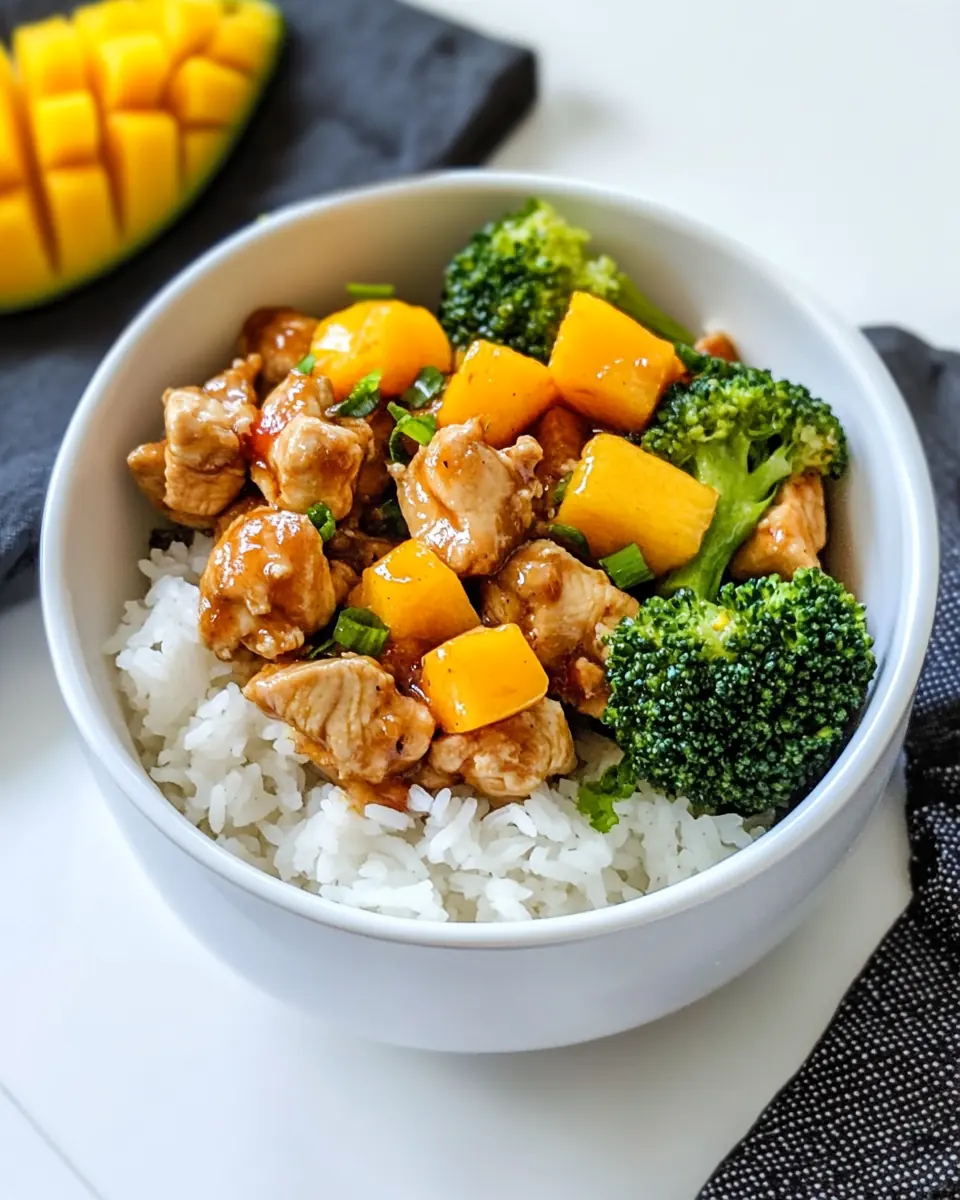
Add chicken and mango into the skillet. Cook until mango starts to very lightly brown.: Reintroducing the chicken brings its savory scent back, and adding the cubed mango adds a burst of sweet juice that can sizzle and caramelize. Watch for the mango edges to take on a soft golden tint and let that light browning add depth. That caramelization adds complexity to the sweetness and prevents a flat fruit taste. A typical oversight is stirring too vigorously, which prevents the mango from ever touching the hot surface long enough to caramelize, so allow it brief contact.
Turn heat to low and add desired amount of sauce to the chicken and veggies and stir to coat well.: Lowering the heat keeps the sauce from breaking while it melds with the pan juices. You should see the sauce glossy and clinging to each piece, pooling slightly then receding back into a shiny coat. This slow melding integrates flavors, softens the peanut butter , and keeps the texture silky. If the heat is too high the sauce can separate or scorch, so keep it gentle. Watch the thickness and add small splashes of water if it becomes too stiff.
Allow to simmer for about 5 minutes.: During this gentle simmer you will smell the mango sweetness and savory soy deepen and the sauce will thicken slightly, coating the spoon. This resting simmer lets flavors concentrate and ensures everything is warmed through. The trick is to simmer, not boil, because a rolling boil can toughen the chicken and overreduce the sauce. If you notice the sauce reducing too fast, lower the heat and add a splash of water.
Pour over your favorite rice and garnish with chopped peanuts and fresh cilantro.: Serving over hot rice creates a bed that soaks up the sauce, and the final scatter of crushed peanuts introduces crunch while the cilantro gives a herbaceous lift. You should see glossy sauce pooling slightly around the rice grains, and each forkful should combine textures. A common misstep is adding garnishes too early which can wilt cilantro and soften peanuts; save them for the end for maximum impact.
Refrigerate leftovers.: Cooling leftovers promptly and storing in an airtight container preserves flavor and food safety. The texture will change slightly in the fridge, with the sauce firming up, so reheat gently with a splash of water to restore consistency. Avoid overheating in a microwave without stirring, which can create hot spots and dry out the chicken .