Line a small baking sheet with parchment paper. Set aside.: The moment you lay down the parchment paper you protect the finished bark and make removal effortless. Run your fingers along the edges to ensure no wrinkles remain, because wrinkles will imprint on the chocolate surface. You should feel the smoothness under your palm, and the paper should lie flat without tearing. One common mistake is using waxed paper which will stick; always use parchment. Another tip is to trim paper so it sits evenly inside the pan, which prevents uneven thickness when you pour chocolate.
Place the white chocolate and 1/2 teaspoon of coconut oil in a microwave-safe bowl and heat, stirring every 30 seconds until melted. Stir in 1/4 teaspoon peppermint extract.: As the white chocolate softens in short bursts in the microwave, you will notice it go from opaque chunks to glossy silk; the stirring motion is what smooths it into a lustrous pool. Aim for gentle warmth, pausing to scrape the sides so nothing overheats. The aroma will shift to a sweet, milky note with a faint coconut whisper, and adding the peppermint extract brightens the scent. Avoid overheating which causes grainy texture; if it looks dull or clumpy, let it cool a bit and stir until smooth.
Pour 1/2 of the white chocolate mixture into the prepared baking dish, and smooth into an even layer with a spatula.: When you pour, listen for the soft glug as the melted white chocolate spreads, and use a small offset spatula to coax it into an even blanket. Aim for consistency so the final bark snaps uniformly. Visual cues include a glossy, mirror like surface and even thickness to the eye. A typical error is pouring too quickly which traps air bubbles; tap the pan gently on the counter to release them.
Place in the refrigerator for 10-15 minutes or until almost completely set.: Chilling firms the layer without making it rock solid, which helps layers adhere. You want it tacky, not brittle, so when you press a fingertip lightly it should leave an impression but not stick. The air in the fridge will chill the surface first, so monitor it closely. If it sets fully, the next layer may not bond well; avoid over chilling by checking early.
Place the semi-sweet chocolate and remaining 1/4 teaspoon coconut oil in a heat-proof bowl, and heat, stirring every 30 seconds until melted. Stir in 1/4 teaspoon of peppermint extract.: As the semisweet chocolate melts, it will darken and take on a glossy sheen, emitting a warm, cocoa forward aroma. Stirring ensures even heat distribution and a smooth melt. Adding the small amount of coconut oil tames viscosity so you can spread it thin. Watch closely to avoid scorching which will give a bitter smell and dull finish.
Pour the semi-sweet chocolate over the white chocolate and smooth into an even thin layer.: Pour in a steady ribbon and use your spatula to create a thin, uniform coat; the contrast should be clear between the white base and the dark middle. The surface will look like a silky sheet and will slightly sink into the chilled white layer, which helps adhesion. If you see streaks or lumps, stop and gently stir the chocolate; lumps mean uneven melting. One trap is spreading too aggressively which can remix the layers.
Refrigerate for another 10-15 minutes or until almost set.: This pause lets the middle layer cool enough so the top white re pour will sit without sinking in. The chocolate should feel cool to the touch but still yield slightly under pressure. Over chilling makes layers separate later, so aim for that tacky stage again. A common slip is leaving it until fully hard, which reduces layer bonding when the final white is added.
While the chocolate is setting up, crush the candy canes by placing them in a Ziplock bag and using a rolling pin to break them up.: Crushing releases sharp peppermint aroma and creates varied textures, from dust to pebble like shards. You will hear the satisfying crack and see fragments scatter across the bag, and this visual is part of the fun. Keep some larger chunks for dramatic appearance. Avoid pulverizing everything into powder, which can sink into the chocolate rather than sit on top.
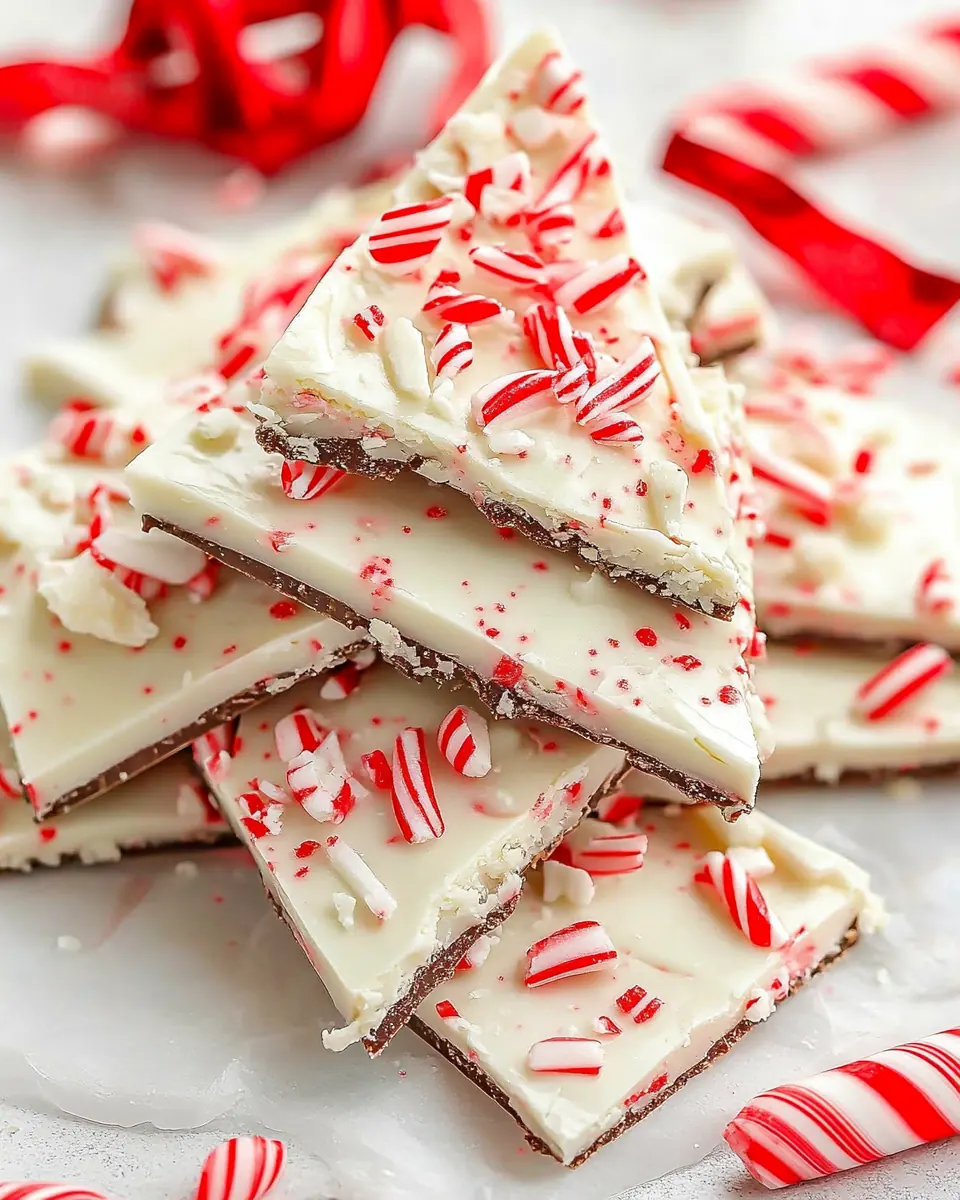
Re-melt the remaining white chocolate if needed. Pour over the semi-sweet chocolate and smooth into an even layer. Top with a generous sprinkle of the crushed candy canes.: The final white chocolate layer should be glossy and pourable; as you spread it, you will notice the candy cane pieces glitter on contact and the peppermint scent intensifies. Pressing a few pieces gently helps them adhere. If the white has thickened, rewarm in short bursts. A mistake is waiting too long, which causes pieces to sink; act while the white is still soft.
Refrigerate for at least another 30 minutes or until the bark is completely set.: This longer chill ensures the layers bond and the bark snaps cleanly. The smell will mellow to a composed chocolate mint bouquet, and the surface will transition from glossy to firm. Remove once fully set to avoid condensation when returning to room temperature. Don't rush this step; insufficient chill leads to messy cutting.
Once set, remove from the pan and peel off the parchment paper. Slice or break into pieces as small or as large as you'd like.: As you lift the parchment, you should hear a crisp snap, and the edges will look clean. Use a sharp knife warmed in hot water for neat slices, or break with your hands for rustic pieces. If the chocolate sticks, chill a bit longer. Cutting when too warm results in smearing and soft edges.