Combine the flour, sugar, salt, and baking powder in the bowl of a food processor fitted with the metal blade. Pulse a few times to combine. Add the pieces of butter and pulse until the mixture is crumbly with lots of pea-size clumps of butter within.: The aroma here is faintly bready and cool, and as you pulse you should see the pale flecks of butter coated with flour, signaling that the fat is cold and well dispersed. This chunkiness is essential, because those pea size pieces will steam during baking and create lift. Work quickly, because if the bowl heats up the butter will soften and you will lose flakiness, which is a common mistake at this stage. If the mixture looks uniformly smooth, stop and chill it, then try again, since that indicates overprocessing.
Add the water and pulse until the mixture is evenly moistened and very crumbly.: As you add the ice cold water the crumbs should begin to hold together when pinched, but remain distinct and cool to the touch. You want a slightly tacky mixture rather than a cohesive ball. The sound is a muted clack from the food processor, and the mix should not feel wet or sticky. If you add too much water the dough will be gummy and hard to roll, so add water tablespoon by tablespoon and test by pinching.
Dump the dough crumbles onto a work surface and divide into two piles, with one pile about 15% bigger than the other. You can eyeball it, but if you have a kitchen scale, one pile should weigh 13 oz (368 g) and the other 11.5 oz (326 g). Shape into two balls of dough and pat each one into a 5-inch (13-cm) disc. Wrap the discs in plastic wrap and refrigerate for at least 45 minutes or up to 3 days to rest.: When you press the discs they should feel cool and firm, and wrapping them prevents drying. Chilling relaxes the gluten and firms the butter , which is crucial for rolling out without tearing. A common error is to skip resting, which can lead to a tough crust and excessive shrinkage in the oven. Mark the larger disc with a small crease so you won’t confuse them later.
In a large heavy-bottomed pot or Dutch oven, mix the apples with lemon juice, brown sugar, salt, cinnamon, flour, and cornstarch. Stir until thoroughly combined and both the flour and cornstarch are dissolved. Place the pot over medium heat and cook, stirring often, until the apples soften and the juices thicken, 11 to 13 minutes. Transfer the apples and their juices to a baking sheet, spreading them out evenly. Allow them to cool completely.: As the apples heat they will release fragrant steam, and the bubbling juices will turn glossy and slightly thickened. You will hear a soft simmer and see the apples go from raw and firm to translucent and tender. This pre cooking concentrates flavor and prevents the pie from becoming watery. One pitfall is rushing this stage, which can leave raw starchy bits; stir thoroughly so the flour and cornstarch dissolve, and spread the apples to cool so they do not keep steaming in the pan.
Preheat the oven to 425°F (220°C) and set an oven rack in the lower third position. Place a baking sheet on this rack to preheat as well. (This acts like a pizza stone, providing a hot surface to help the bottom crust of the pie crisp up effectively.): You will notice the oven takes time to reach temperature, and the preheated sheet will give you a confident blast of heat under the pie, encouraging a crisp bottom. The oven will emit a dry hot scent and the sheet will feel radiantly warm when you carefully touch it with an oven mitt. A frequent oversight is placing the pie too high, which can underbake the bottom crust, so use the lower third position as instructed.
Remove the larger disc of dough from the refrigerator. Lightly dust a clean work surface with flour and place the dough on it; sprinkle a bit of flour over the dough as well. Gently knead the dough with your hands just until it becomes soft and malleable (avoid overworking it—you want it just supple enough to roll out). Roll the dough out into a 13-inch (33-cm) circle, adding more flour as needed to prevent sticking. Carefully lift the dough by draping it over your rolling pin and transfer it to a 9-inch by 1 1/2-inch (23-cm by 3.75-cm) deep pie pan, preferably metal (as metal conducts heat more effectively, helping the bottom crust crisp up) but ceramic or glass will work too. Gently press the dough into the pan, making sure to ease it into place without stretching. Trim the edges of the dough to extend about 1/2 inch (1.25 cm) beyond the pie pan's lip.: Rolling reveals the dough’s texture, and it should feel cool with a lightly floured surface. The sight of a thin, even circle tells you the gluten was not overworked. When you transfer the dough, a gentle drape preserves the flakiness. If you stretch the dough into the pan it will spring back during baking, causing shrinkage, so ease the dough rather than pulling it. Use a light touch when trimming to avoid thinning the rim.
Transfer the cooled apples and their juices into the crust; refrigerate while you prepare the top crust.: The filling should be cool to the touch and glossy as you mound it into the shell, and you may hear soft plops as juices settle. Chilling the filled shell helps the top crust stay cold and prevents the butter in the dough from softening prematurely. A common mistake is filling the crust while the apples are still hot, which can melt the crust fat and cause a soggy bottom.
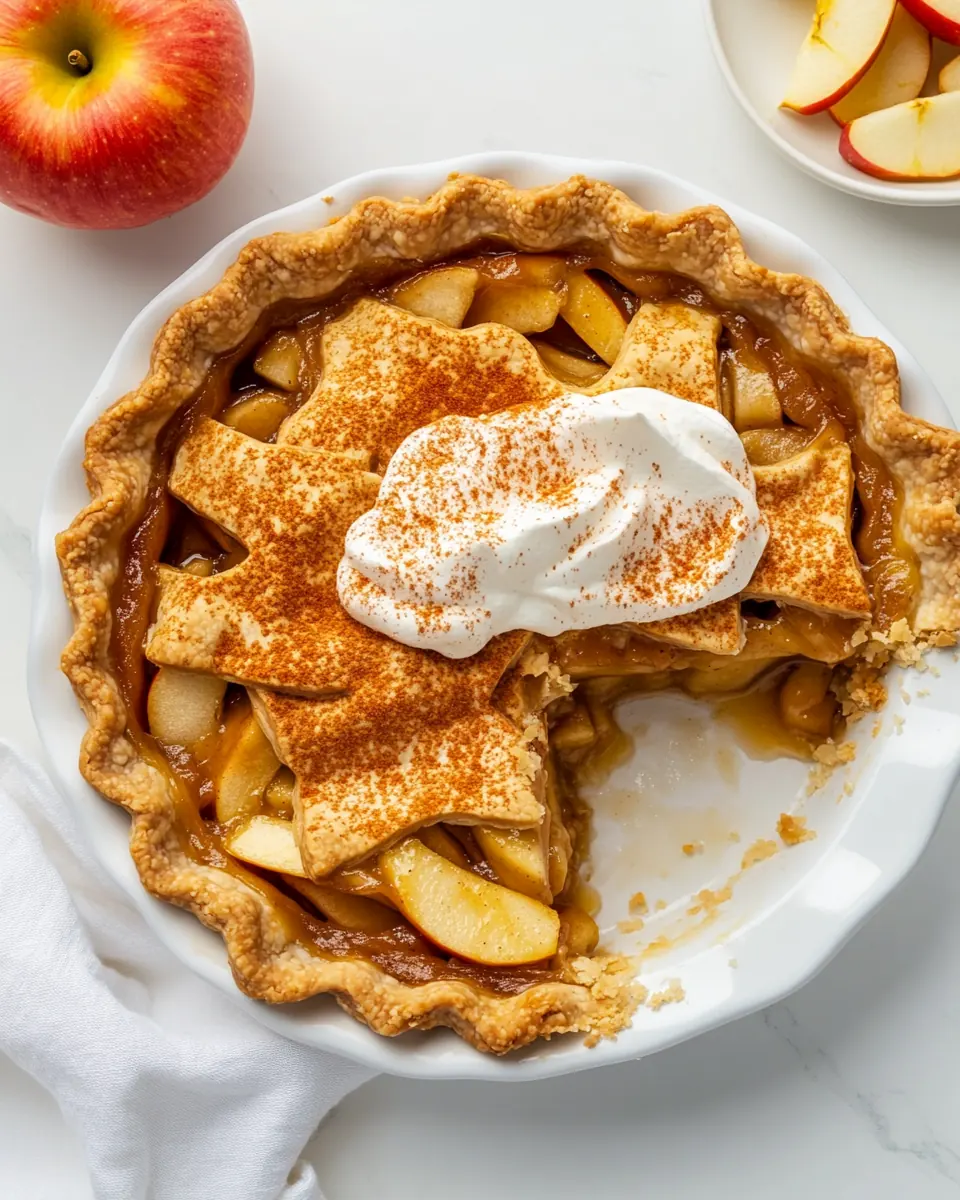
Remove the second disc of dough from the refrigerator and roll it out into an 11-inch (28-cm) circle, following the same process described above. Retrieve the filled pie from the refrigerator and carefully drape the rolled dough over the top. Crimp the edges with a fork or flute them with your fingers to seal the top and bottom crusts together. Work quickly and dust your fingers with flour as needed to prevent the dough from becoming too warm. Brush the top crust with beaten egg, cream, or milk, and evenly sprinkle with 2 tablespoons of granulated or turbinado sugar. Cut four 3-inch (7.5-cm) slits in the top crust to allow steam to escape.: As you seal the pie you will see the edges come together and the top will glisten after brushing. The sugared top will catch the light and provide a delicate crunch after baking. Make sure vents are open so steam can release, because trapped steam leads to a soggy middle and possible overflow. If your fingers get too warm, pop the pie back into the fridge for a few minutes before baking.
Place the pie on the preheated baking sheet and bake at 425°F (220°C) for 15 minutes. Then reduce the oven temperature to 375°F (190°C) and continue baking for an additional 45 minutes, or until the crust is golden brown. Let the pie cool completely on a wire rack before slicing, at least 4 hours. Resist the temptation to cut into the pie while it’s warm, or you may end up with apple soup!: During the first high temperature burst the crust browns and the filling begins to set, creating a pleasing crackle as the butter melts and the crust expands. After lowering the temperature the filling thickens steadily, and the aroma of caramelized sugars and warm cinnamon fills the kitchen. The pie should sound settled and not jiggly in the center when gently nudged. Cutting too soon is a frequent disappointment; patience yields clean slices with a thick set filling rather than a runny mess.