Season the ground chuck with salt and pepper and form it into 8 patties.: The air fills with a meaty, slightly metallic aroma as you season, signaling the start of flavor development. Gentle shaping matters more than forceful compacting, because loose crumbs hold juice while still forming a cohesive patty. When you press and shape, stop as soon as the patties hold their shape, and avoid over handling which compresses fat and makes the finished texture dense. If the meat feels sticky, chill it briefly to firm up, which helps create cleaner, more uniform patties. A common error is making patties too thick, which leads to uneven cooking; aim for even, thin rounds so they cook quickly and sear evenly.
Butter the hamburger buns and toast them in a skillet until lightly browned. Set aside.: Buttering the sesame seed hamburger buns releases a warm, nutty scent as they hit the hot pan, and you should hear a soft sizzle as edges crisp. That toasting creates barrier layers so buns do not soak up juices, and it adds a pleasant contrast in texture. Keep buns face down in the skillet, watch for golden edges, and remove them when they have even color to avoid bitterness from burning. Don’t skip the butter step, because dry buns will feel flat against the juicy patties. If your skillet is too hot, the butter can brown too fast, so moderate the heat to maintain even toasting.
Heat a grill to medium-high. Cook the burger patties for two to three minutes on each side. While cooking, add a dash of salt to the burger.: The moment the grill or grill pan reaches medium high, it should radiate dry heat that encourages rapid Maillard browning, producing savory crust and that subtle grilled aroma. Listen for the quick hiss when a patty hits the grate or pan, that sound tells you the exterior is searing properly. Preheating also helps avoid sticking, so give the surface a few minutes to stabilize before you start cooking. A frequent slip is putting patties on a cool surface, which prevents proper crust formation and increases cooking time. If your grill has hot spots, rotate or move patties to ensure even sear across each one.
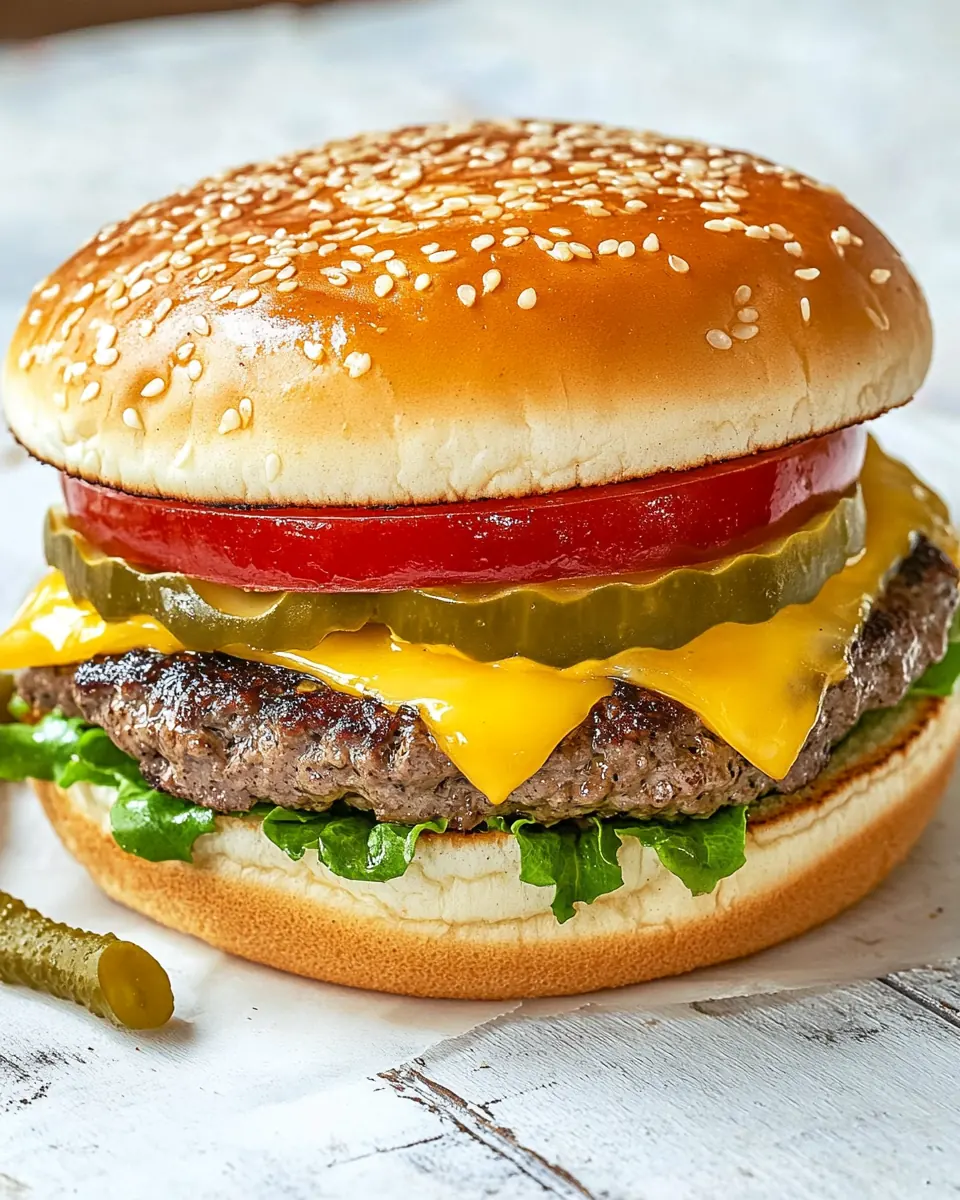
Build the burger by placing the meat on the bottom bun. Then add a slice of American cheese and 2 dill pickle slices. Squirt a small amount of ketchup and mustard onto the cheese, and cover with the top bun.: During those short minutes, watch for juices to rise to the surface and for edges to develop a deep brown rim, both signs of correct doneness for thin patties. The sound of a steady sizzle indicates good contact and searing; if it quiets, the heat may be too low. Flip only once to preserve juices and to allow a stable crust to form, and after flipping immediately lay on a slice of American cheese so it softens from residual heat. Overcooking is a common pitfall here, resulting in dry burgers, so aim for the brief, focused cook time. If you are unsure, use visual cues rather than time alone, watching for even color and slight springiness when pressed gently.
While cooking, add a dash of salt to the burger: The faint pop of salt on hot meat releases a quick aromatic lift and sharpens the beef flavor right at the end, which complements the rich crust. Salting while hot helps the surface seasoning stick and creates a subtle contrast in each bite. Avoid adding too much, or salt can draw moisture out and dry the patty. A common error is salting excessively early; when you salt too soon the meat can become concentrated and less juicy. Use just a light pinch, tasting the finished burger and adjusting at future cooks if needed.
Build the burger by placing the meat on the bottom bun: The visual and tactile part of assembly starts here, with the warm patty resting on a lightly toasted sesame seed hamburger bun that provides structure and a soft cushion. The residual heat from the patty continues to melt the cheese and soften the bun slightly, creating a cohesive bite. Avoid stacking wet ingredients directly against the cut side of an untoasted bun, which can lead to sogginess. A typical mistake is assembling too early and letting the burger sit, which results in limp texture; serve promptly after assembly for the best contrast of crisp edges and soft interior.
Then add a slice of American cheese and 2 dill pickle slices: The cheese should partially melt into creamy ribbons that cling to the patty, and the crisp dill pickle slices add a bright, acidic snap that cuts the richness. Aim to place the pickles near the center so they provide a consistent tang in each bite. Too many pickles will overwhelm and mask the beef, while too few leave the sandwich feeling muted. If your cheese isn’t melting fast enough, tent the burger briefly with a lid or foil to trap heat and accelerate melting without extra cooking.
Squirt a small amount of ketchup and mustard onto the cheese, and cover with the top bun: The final flourish of ketchup and mustard balances sweet, tangy, and savory notes and ties the elements together. Applying a small, controlled amount keeps the bun from becoming soggy and ensures the condiments enhance rather than hide the beef flavor. Press lightly to seat the top bun so the burger holds together for eating, and serve immediately for optimal texture contrasts. Avoid heavy-handed squirting, which can make the sandwich messy and alter the intended flavor ratio.