Drain pineapple in a strainer. Let drain for a few minutes then use a spatula to press the pineapple against the sides of the strainer to get as much liquid out as possible.: Warmth from your hands and the air around the bowl will make the pineapple smell bright and fruity, a clear signal it is ripe and flavorful. As you press with a spatula you will feel the fruit give, and small pools of syrup will collect beneath the strainer. Removing this liquid is crucial because excess moisture will make the filling runny and prevent it from setting properly. If you skip thorough draining you may notice a soggy bottom and watered down flavor after chilling. A common mistake is hurrying this step, so take the time to press firmly but gently, scraping the strainer sides to coax out the juice. The visual cue is a much drier fruit and a reduced amount of syrup in the bowl below.
Place cream cheese and sugar in a large bowl. Mix with a hand mixer until smooth.: When you combine the cream cheese and sugar you will hear the mixer hum steadily, and the mixture will transform from stiff to glossy. The aroma takes on a mild, tangy sweetness. Achieving complete smoothness matters because any lumps will stand out in the final pie texture. Work on low to medium speed to avoid overheating or splattering, and stop to scrape the bowl to ensure even incorporation. A frequent pitfall is using cold cream cheese , which leads to clumps, so letting it soften slightly at room temperature is the fix. You want a uniform, spreadable batter that holds together when spooned.
Add whipped topping and mix until smooth on low speed.: As you fold in the whipped topping , the mixture lightens considerably and becomes pillowy. The sound of the mixer will drop in intensity as air integrates, and you will notice the color shift to a paler, creamier hue. Mixing on low speed preserves the aeration that gives the filling its soft texture; over mixing will flatten it and make it dense. If using a hand mixer, pause and fold by hand if the topping begins to deflate. The right result is airy, with soft peaks when you lift the beaters slightly, indicating a balanced, airy filling.
Fold in drained pineapple.: Folding in the pineapple adds texture and bright pockets of flavor, and you will see flecks of fruit dispersed through the creamy base. Use a rubber spatula and gentle folding motions, turning the bowl as you work to avoid crushing fruit or losing air. This step affects mouthfeel significantly; overworking will break down the pineapple and create excess moisture, while underfolding leaves uneven pockets of fruit. A helpful check is to lift some filling on the spatula and see even distribution with visible fruit pieces. If the filling looks liquidy after adding pineapple , you likely did not drain it enough earlier, so consider spooning off excess moisture before chilling.
Place pie filling in pie crust. Chill at least 2 hours before serving.: Spoon the filling into the pie crust and use the back of the spoon to smooth the surface; you may hear a soft, satisfying scrape as the filling settles. Chilling is essential since it firms the structure and allows flavors to meld. While chilling, the filling will tighten and become sliceable, so resist the urge to cut too early. A common oversight is under chilling, which results in sloppy slices, so plan ahead and allow the full chill time. You will notice the texture shift from very soft to pleasantly set when it has chilled enough.
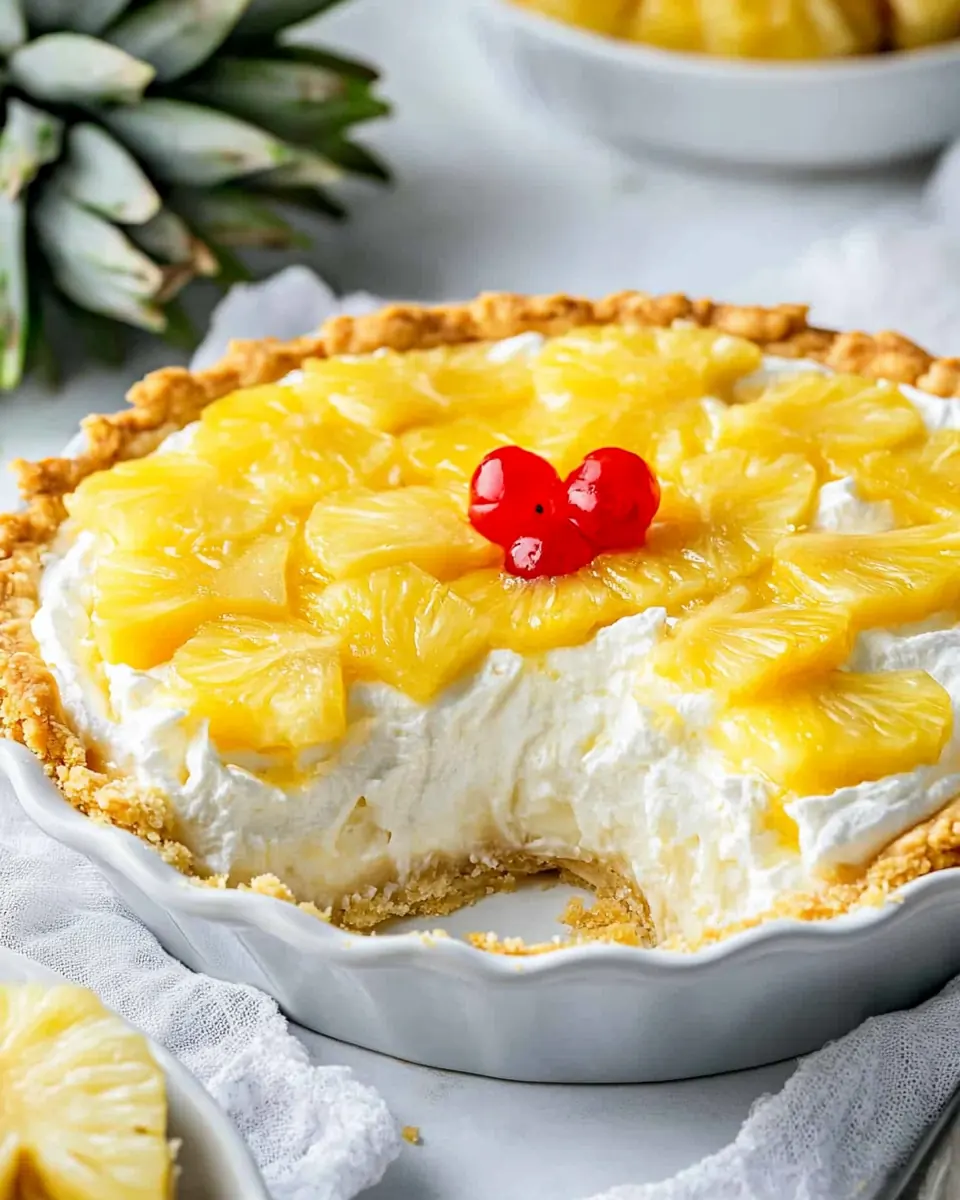
Garnish pie as desired, with more whipped cream, crushed pineapple, and/or cherries.: Garnishing invites creativity and adds visual appeal. The contrast of white whipped topping and bright pineapple is striking, and a scattering of crushed fruit provides a textural pop. As you decorate, pause to enjoy the fragrance of the citrusy fruit and the cream, which will lift as you arrange toppings. Avoid overloading the surface, which can overwhelm the balance of cream to fruit. If you find the garnish sliding, the pie may need additional chilling to firm the surface before placing heavier decorations.
Store in refrigerator for up to 3 days. It’s not recommended to freeze the pie.: Proper storage keeps the pie tasting fresh, and refrigeration preserves texture and safety. You will notice that flavors meld overnight, and the filling often tastes more cohesive the next day. Freezing is discouraged because the whipped elements and pineapple texture break down on thawing, creating a watery, grainy result. A common storage mistake is leaving the pie uncovered, which can lead to flavor transfer and drying. Use a pie dome or airtight container and keep it chilled until just before serving.