Go Back
Pistachio Bundt Cake with Chocolate Ganache

Pistachio Bundt Cake with Chocolate Ganache

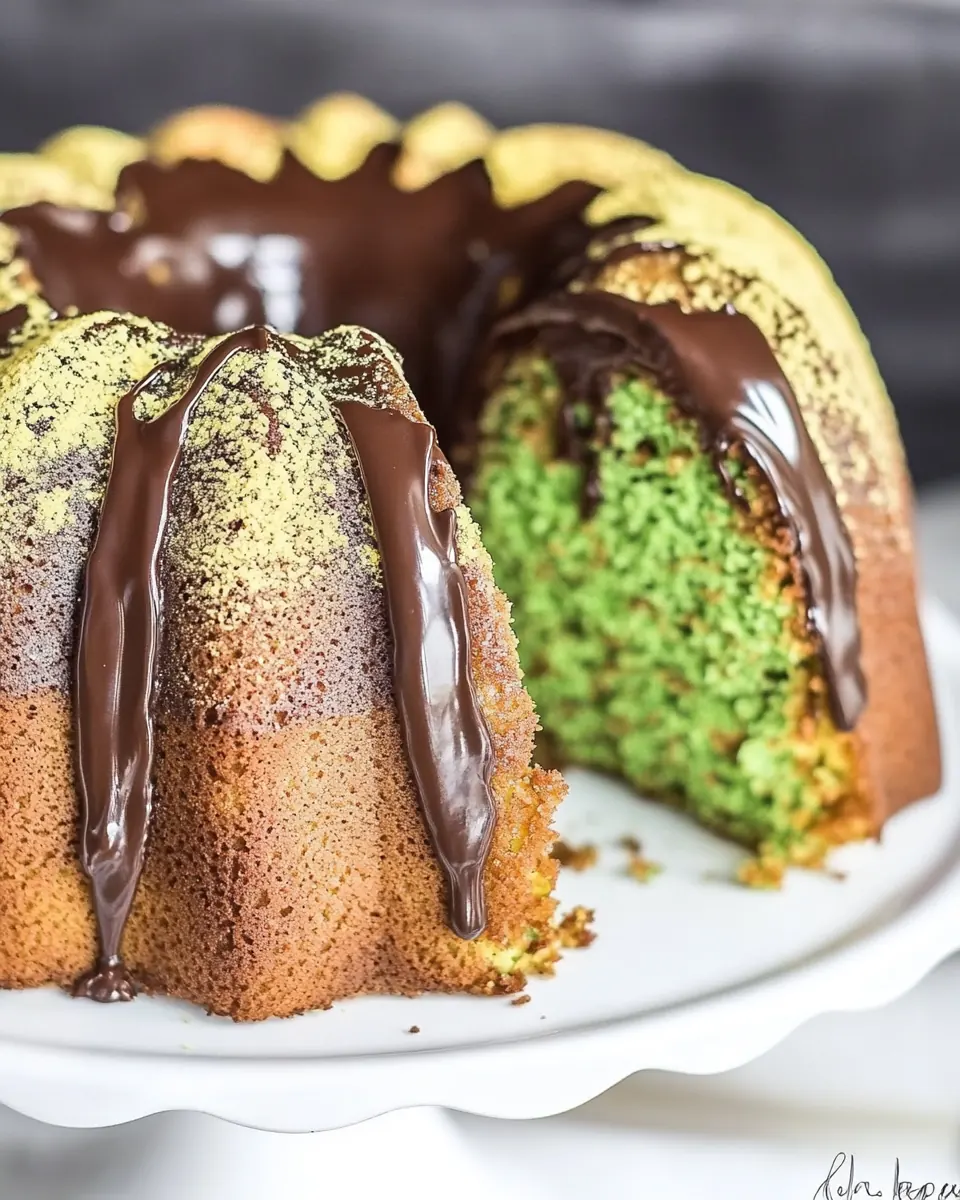
Pistachio Bundt Cake with Chocolate Ganache is a moist, tender cake with a subtle nutty profile and a glossy chocolate glaze. The combination of white cake mix and pistachio pudding keeps the crumb soft and springy while the almond extract enhances the nutty notes. Perfect for spring gatherings, this easy to assemble bundt cake offers big presentation with minimal fuss, making it a dessert you will reach for again.
Prep Time 10 minutes
Cook Time 55 minutes
Total Time 1 hour 5 minutes
Servings: 16 servings
Course: Desserts
Cuisine: American
Calories: 320

Ingredients
  

  • 1 box white cake mix Provide a reliable, easy base and structure for the cake, supplying pre-measured dry ingredients and leaveners to simplify preparation. Enhances texture and crumb while ensuring consistent rise when combined with wet ingredients. Pairs well with pudding mix to add flavor and additional moisture to the batter.
  • 1 box instant pistachio pudding mix (3.4 oz) Add concentrated pistachio flavor and extra moisture to the batter with a sweet, nutty profile from a powdered mix. Dissolves easily into the wet ingredients to uniformly infuse the cake with pistachio taste and mild color. Complements almond extract to deepen the overall nut-forward flavor.
  • 4 eggs Bind the batter together and contribute to the cake’s lift and structure through egg proteins and emulsification. Provide richness and help create a tender crumb while assisting with browning during baking. Also help incorporate air when beaten, improving volume and texture.
  • 1/4 cup vegetable oil Contribute fat to the batter for tenderness and moistness while aiding in emulsification with the eggs. Help carry flavors such as almond extract evenly throughout the cake and improve mouthfeel. Provide a neutral flavor that won’t overpower the pistachio and white cake base.
  • 1 1/2 cups water Adjust batter consistency and activate dry mixes for proper hydration while contributing to steam during baking for lift. Control the final batter thickness to ensure even baking and moist crumb. Serve as the solvent for the instant pudding mix and other dry components.
  • 1 teaspoon almond extract Enhance and complement the nutty notes from the pistachio pudding by adding a delicate, aromatic almond flavor. Use sparingly to avoid overpowering the cake while reinforcing the overall nut profile. Help tie the white cake base and pistachio pudding flavors together for balance.
  • a few drops green food coloring (to get the color you prefer) Introduce a small amount of color to visually emphasize the pistachio theme and create an appealing green hue in the finished cake. Allow adjustment of intensity to personal preference while not affecting flavor significantly. Ensure only a few drops are used to maintain natural-looking coloration.
  • 1/4 cup butter (unsalted) Provide a rich, buttery component for the ganache or glaze that contributes smoothness and sheen when melted with milk and cocoa. Enhance flavor depth and mouthfeel of the topping while helping to create a pourable consistency for coating the cake. Use unsalted butter to better control overall sweetness and salt balance.
  • 1/4 cup milk Act as the liquid base in the ganache to help dissolve powdered sugar and cocoa into a smooth, spreadable topping. Add creaminess and help achieve the proper pourable texture when warmed and mixed with butter. Allow fine-tuning of thickness by adjusting temperature and quantity.
  • 1 1/2 cups powdered sugar Add sweetness and body to the glaze, helping it thicken and set on the cake while providing a glossy finish. Dissolve into warm butter and milk to create a smooth, spreadable consistency that adheres to the cake surface. Help balance any bitterness from cocoa powder in the ganache.
  • 2 tablespoons cocoa powder Contribute deep chocolate flavor and slight bitterness to balance the sweetness of the powdered sugar in the ganache. Dissolve into warm milk and butter to create a rich, chocolatey finish with color and intensity. Work with powdered sugar to form a cohesive, spreadable topping for the Bundt cake.
  • 1 teaspoon almond extract Provide a secondary touch of aromatic almond flavor in the ganache or glaze to echo the cake’s nutty notes and complement pistachio components. Help unify flavors between the cake and topping when added in small amounts. Enhance overall complexity without introducing competing flavors.
  • pistachios (chopped, for sprinkling over the cake) Offer crunchy texture and true pistachio flavor as a finishing garnish when sprinkled over the glazed cake. Provide visual appeal with their green color and add a contrasting bite to the tender crumb. Allow optional use to suit preference for added nuttiness and presentation.

Equipment

  • Nordic 12 Cup Bundt Pan

Method
 

  1. Preheat oven to 350°F degrees. Grease a 10 inch bundt pan.: As you begin, notice the faint warmth in the air when the oven cycles on and the faint metallic scent of a clean oven, which is normal. Greasing the 10 inch bundt pan thoroughly ensures the cake will release cleanly, especially in the crevices, so use a pastry brush or paper towel to coat every nook with fat and then lightly dust with flour or use a baking spray if you prefer. This step matters because a stuck cake can tear and lose its shape, ruining the presentation. Common mistake to avoid here is using too little grease; the batter clings in under-greased pans. Visual cue: the pan should look evenly coated, not patchy.
  2. In the bowl of your mixer, mix together the cake mix and pudding mix. To it add the eggs, oil, almond extract, water and your green food coloring. Beat for at least 2 minutes at medium speed.: Right away you will smell the almond extract and the boxed mixes will give off a sweet, cake batter aroma, signaling the flavor base. Mixing on medium for the recommended time incorporates air and hydrates the dry components so the batter becomes smooth and slightly thick but pourable. This technique improves crumb and prevents lumps from dry pockets of mix, which otherwise cause uneven texture. A typical pitfall is under mixing which leaves pockets of dry mix, or over mixing which can develop too much gluten and make the cake tough. Visual cue: aim for a uniform pale green batter with no streaks of dry powder.
  3. Pour into the prepared bundt pan. Bake for 55 minutes or until an inserted toothpick comes out clean. Cool in the pan for about 15 minutes after which you can turn out onto a cake tray.: As you pour, listen for the quiet splash as batter fills the pan and watch how it settles, smoothing slightly on top. Baking for around 55 minutes will transform the wet batter into a springy, set cake, and the aroma will shift to a deeper, toasty sweet perfume. Use a toothpick to check doneness in the center; it should come out with a few moist crumbs but not wet batter. Letting the cake cool 15 minutes in the pan allows it to firm up, so it releases cleanly; flipping too soon risks collapse. A common error is overbaking which dries the crumb; trust the toothpick more than the clock. Visual cues include a lightly pulling away from the pan edges and a golden top if visible.
  4. In a small sauce pan, add butter, milk, and cocoa powder and turn the heat to low. Whisk occasionally until butter is melted and mixture is smooth. Do not let boil. Remove from heat and whisk in the powdered sugar and almond extract.: The moment the butter melts and the cocoa hydrates, a rich chocolate scent rises and the mixture loosens into a glossy liquid. Keeping the heat low prevents scorching and preserves a silky texture. Whisking off heat when you add the powdered sugar ensures the sugar integrates without clumping, yielding a smooth, pourable ganache. Why this technique matters: gentle heat protects the butter from separating and keeps the glaze homogeneous. A common mistake is overheating, which can make the ganache grainy or cause the butter to separate. Sensory cues include a velvety sheen and a warm, chocolate aroma; if it looks separated, remove from heat and whisk vigorously.
  5. Pour warm frosting over the warm cake. Top with pistachios.: Pouring the warm ganache over a warm cake helps the glaze spread and adhere, creating a thin coating that sinks slightly into the crumb edge and forms a glossy layer on top. The temperature contrast is important; if the glaze is too hot it can melt too much surface, if it is too cool it will thicken and not spread evenly. While pouring, listen for a quiet glug and watch the glaze travel down the sides in ribbons, then sprinkle chopped pistachios while the ganache is warm so they stick. A common mistake is waiting until the glaze has set to add the nuts, which can cause them to roll off. Visual cues include a shiny finish and nuts that sit lightly on the surface rather than sinking completely.
Notes

  • Reduce the food coloring if you prefer a subtler hue. Using only one or two drops will give a pale pistachio tone that reads as natural and elegant, and it keeps the focus on flavor rather than color.
  • Use light olive oil instead of vegetable oil for a slightly fruitier backdrop. This swap can boost mouthfeel and bring a gentle savory note that pairs nicely with the almond extract, but avoid strong flavored oils.
  • Sift powdered sugar before adding to the ganache to prevent lumps and ensure a silky texture. Sifting is a simple step that makes the glaze smoother and more professional looking.
  • Toast the pistachios lightly to deepen their flavor. A quick toast in a dry skillet for a few minutes will heighten nutty aromas, but watch them closely to avoid burning, which can introduce bitterness.
  • Make the ganache thinner by warming the milk slightly more, if you want the glaze to drip farther down the sides. Warmer liquid creates a looser finish, but be careful not to overheat and separate the butter.