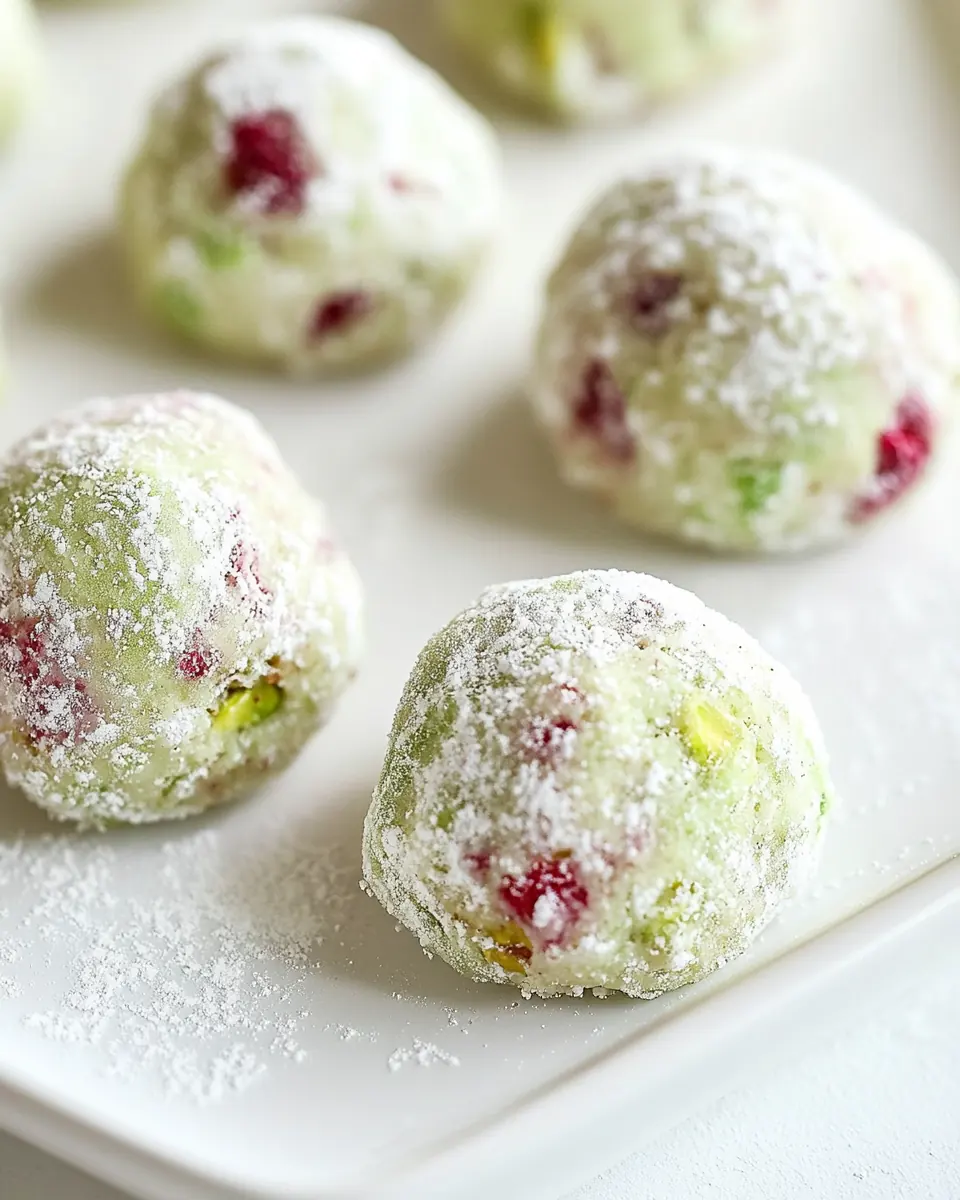
In a stand mixer, beat the butter until fluffy. Add the powdered sugar, pudding mix, and flour. Mix until combined. The mixture may seem dry at first but will come together after beating.: The room temperature butter should become light and fluffy, almost pale in color, after a few minutes of beating. You will notice it becomes aerated, and the sound of the mixer will change from heavy to airy. This aeration is crucial because those tiny air pockets contribute to a delicate crumb. If you rush this step the mixture will be dense, and your cookies may not achieve the tender texture you want. A common mistake is using butter that is too cold, which prevents proper creaming, so allow it to reach room temperature before starting.
Add the almond extract and green food coloring if you want the cookies with a brighter green color.: Once the butter is fluffy, adding the powdered sugar , instant pistachio pudding mix, and all purpose flour will transform the mixture from glossy cream to a soft, cohesive dough. Expect a slightly dry appearance at first, but as the mixer continues, the ingredients bind together and the dough becomes smooth. You should stop mixing as soon as everything is evenly incorporated to avoid overdeveloping the gluten in the flour, which can make the cookies tougher. If the dough seems crumbly, give it a few more pulses, but resist the temptation to add liquid, as that will alter texture.
Finely chop the maraschino cherries. Using a paper towel pat the cherries removing all of the juice and excess liquid. You want to make sure you dry all of the red juice or you may turn your cookies a not so pretty color. Gently mix in the chopped cherries being careful not to overmix because the color will start to bleed.: As the dry and wet components come together, the dough will take on a uniform color and soft, slightly crumbly feel that holds when pressed. The sound will soften and the bowl will look cleaner at the edges, indicating even mixing. This step sets the base structure, so it's important not to overmix; doing so can create dense cookies. A typical pitfall is continuing to mix to remove all crumbs, but a gentle finish yields the best tender crumb.
Wrap the dough in plastic wrap and place in the refrigerator for 30-60 minutes or until firm.: Adding the almond extract now lifts the flavor, bringing a fragrant, nutty note that complements the pistachio. A couple of drops of green food coloring will make the cookies visually striking. Stir them in until the color and aroma are evenly distributed, but be mindful not to overwork the dough. Overmixing at this point can cause the texture to tighten. If you are avoiding artificial additives, simply skip the coloring and trust the pistachio mix for flavor.
Preheat oven to 350 degrees and line a cookie sheet with parchment paper.: Chop the maraschino cherries into very small pieces so they disperse evenly throughout the dough. Patting them dry with a paper towel is essential, because residual syrup will bleed into the dough and can turn parts of the cookies an unappealing color. The cherries should be just moist, not wet, before you fold them in. One common error is using large chunks, which can cause uneven color and texture in the finished cookie.
Take a tablespoon of dough and roll into a ball. Place cookie on the cookie sheet and repeat with the remaining dough.: Pressing the chopped cherries between paper towels until the surface is tacky instead of dripping reduces color bleed and prevents soggy pockets. You will feel the liquid release as you press, and the paper towel will darken. This drying step helps maintain the delicate balance of dough moisture. Skipping it can lead to red streaks, which may look unappetizing and mask the pistachio color.
Bake for 9-11 minutes. Remove from the oven and let the cookies cool on the cookie sheet. Once completely cooled sprinkle or roll cookies with additional powdered sugar.: Ensuring the cherries are dry preserves the cookie's pale green hue and keeps the dough from becoming overly wet. If any syrup remains, it can concentrate in small areas and alter texture and color. A troubleshooting tip is to rinse the cherries briefly and then dry them thoroughly if they seem excessively sticky, but drying on paper towels is usually sufficient.
Gently mix in the chopped cherries being careful not to overmix because the color will start to bleed: When folding the dried cherry pieces into the dough, use a gentle motion so you distribute them without crushing them. You will see tiny red flecks if a piece breaks, so handle with care. Overmixing risks both color bleed and breaking down the cherries into sticky streaks. If you notice too much color transferring, stop and refrigerate the dough briefly to firm it up before continuing.
Wrap the dough in plastic wrap and place in the refrigerator for 30 to 60 minutes or until firm: Chilling solidifies the butter and makes the dough easier to shape. You will feel the dough firm up and become less sticky to the touch after refrigeration. This rest also allows the flavors to meld and helps the cookies keep their shape while baking. A frequent mistake is skipping chill time, which can make the cookies spread excessively in the oven, yielding flatter, less tender results.
Preheat oven to 350 degrees and line a cookie sheet with parchment paper: Preheating ensures the oven is at a stable temperature so the cookies set correctly. At 350 degrees, the exterior firms quickly while the interior remains tender. Lining the sheet with parchment prevents sticking and promotes even browning. An oven that is not properly preheated can cause uneven texture and excessive spread, so always wait until the set temperature is reached.
Take a tablespoon of dough and roll into a ball: Portioning the dough into tablespoon-sized balls produces uniform cookies that bake at the same rate. Rolling creates a smooth exterior that encourages even browning and a pretty silhouette. If your dough is very soft, chill the scooped balls before baking so they hold shape. A common oversight is making inconsistent sizes, which leads to some cookies becoming overdone while others remain underbaked.
Place cookie on the cookie sheet and repeat with the remaining dough: Arrange the dough balls with adequate spacing so they have room to spread slightly without touching. You will see the dough relax and flatten a bit as it warms in the oven, so leave space between pieces. If they cluster too closely, the cookies will merge into each other. Use multiple sheets if necessary to avoid overcrowding.
Bake for 9 to 11 minutes: During baking you will notice the edges set and take on a faint golden hue while the centers remain pale. The cookies should be just set and not browned deeply; this preserves the meltaway interior. Overbaking will dry them out and make them crumbly rather than tender. If your oven runs hot, check at the earlier time mark to avoid a dry result.
Remove from the oven and let the cookies cool on the cookie sheet: Allowing the cookies to cool on the sheet for a few minutes lets them finish setting without breaking apart when moved. The surface will firm slightly, and you will see tiny cracks that are normal for this style. Transferring them too soon can cause deformation, while leaving them too long on a hot pan may continue cooking. Aim for a gentle transition to a cooling rack.
Once completely cooled sprinkle or roll cookies with additional powdered sugar: Dusting with powdered sugar adds a snowy finish and a touch of extra sweetness that enhances presentation. Rolling while still slightly warm creates a glazed look, while sprinkling when fully cooled keeps the sugar dry and delicate. If the sugar becomes damp, wait until the cookies are fully cooled to preserve the powdery finish.