Chop the red bell pepper and the red onion into pieces that are quite small.: The aroma of freshly cut red bell pepper and red onion is bright and sharp, which signals freshness. Finely chopping ensures the vegetables soften quickly and distribute evenly through the eggs, giving consistent texture in every bite. A common error is leaving chunks too large, which creates cold spots where the vegetables remain undercooked and interrupt the silky mouthfeel of the eggs. When cutting, take a few extra seconds to make the pieces uniform, and you will notice even cooking and a prettier finished skillet.
Select a large non-stick skillet for this recipe if you have one so that cleaning the pan won't be so difficult. Heat the olive oil and then cook the red pepper and red onion over medium heat until they're barely starting to soften, about 3 minutes. While veggies cook, coarsely chop the power greens.: When the olive oil heats and the red pepper and red onion hit the pan you should hear a gentle sizzle, not a furious hiss. This moderate sound shows the heat is right to soften without browning aggressively. Using a roomy pan gives the vegetables space to warm and for moisture to evaporate, which keeps them from steaming and getting soggy. A typical mistake is crowding the pan, which results in limp vegetables and longer cook times, so choose a skillet that lets everything spread out nicely.
When red peppers and onions are barely softened, season with dried basil and Spike Seasoning (or another seasoning blend that's good with eggs) and cook about 2 minutes more.: You will notice the edges of the red pepper becoming translucent and the red onion losing its raw bite, releasing a sweet, savory scent. This brief cooking step concentrates flavors while preserving a slight crunch for contrast with the eggs. If you skip this and add greens too early, the onions may not reach that tender sweet state, making the final texture uneven. Keep an eye on the pan and stir occasionally so nothing sticks or browns prematurely.
Add the Power Greens to the skillet and stir the greens into the hot veggies to let them wilt for a few minutes.: Freshly chopped Power Greens Mix has an earthy, green fragrance that intensifies when it hits heat. Coarse chopping helps the greens wilt quickly and evenly, producing tender ribbons rather than large leaves that may clump. A trap I see often is adding whole leaves, which can fold and steam instead of wilting, leaving pockets of undercooked greens in the skillet.
Beat the eggs until yolks and whites are well-combined.: The moment you add the dried basil and Spike Seasoning , the pan releases a fragrant note as the dried herb rehydrates and the seasoning warms. This short toast time helps the flavors bloom and cling to the vegetables. Avoid adding too much at once, because potent blends can mask the natural sweetness of the pepper and onion. Taste as you go if possible, and adjust in small increments.
Pour eggs over the wilted greens and veggies mixture and reduce the heat to medium low. Cook the eggs for 3-4 minutes, stirring a few times, until eggs are starting to look set.: As the Power Greens Mix meets the warm pan, you will see it quickly lose volume and turn glossy, releasing steam and a fresh vegetal scent. This wilting step preserves bright color and prevents the greens from overcooking into a mushy mass. A common misstep is crowding the pan with too many greens at once, which causes steaming rather than gentle wilting. Work in a single layer if needed, and give the leaves time to relax into the mixture.
When eggs are barely starting to set, add 1 cup of the Monterey Jack cheese and stir to combine with the eggs.: The sound and look of beaten eggs is silky and uniform, with no visible streaks of white or yellow. Well mixed eggs cook more consistently and form tender curds rather than separated textures. Overbeating can incorporate too much air, which may create overly fluffy or rubbery eggs, while underbeating gives pockets of unevenly cooked egg. Aim for smooth, uniform color for the best results.
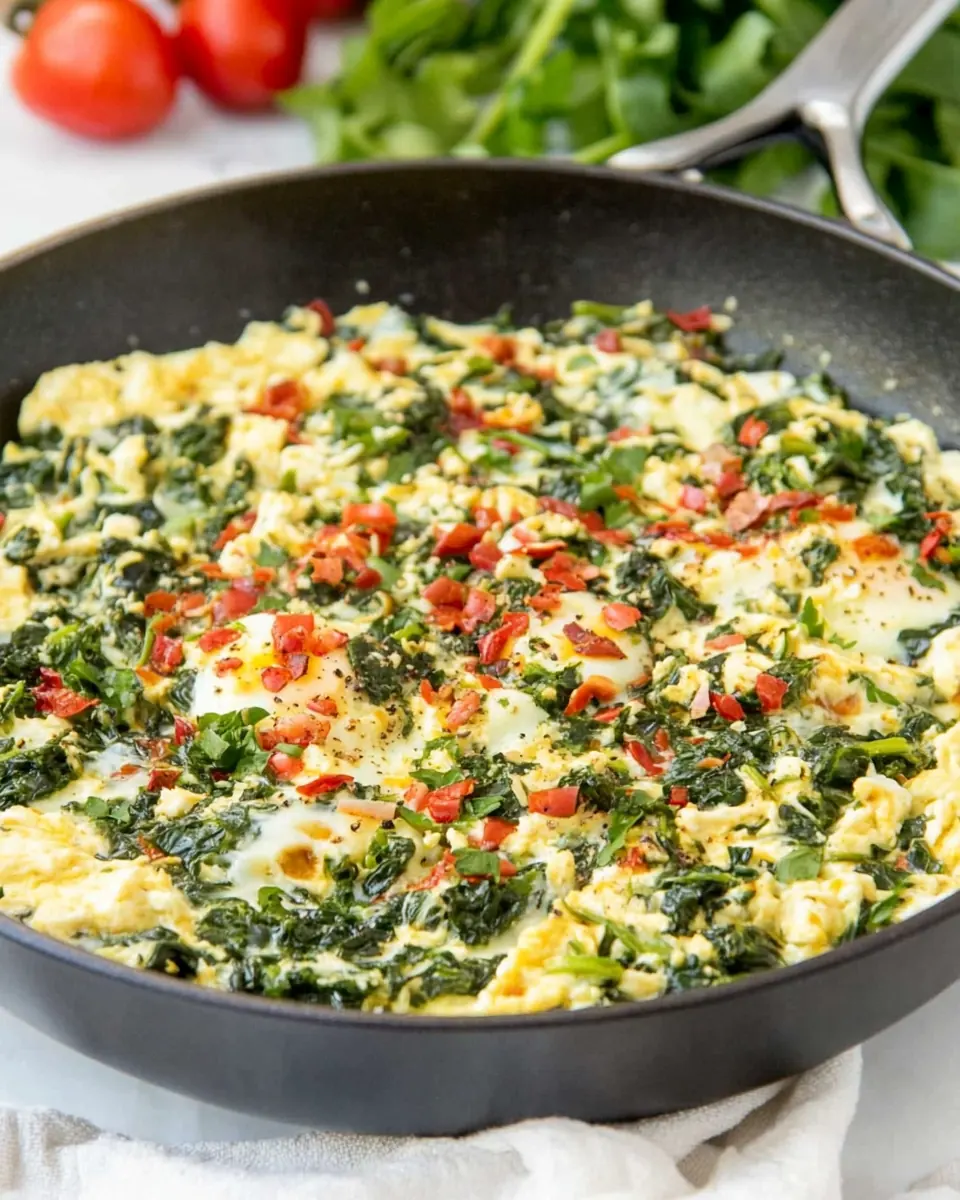
Cook eggs about 3-4 minutes more, or until they're done to your liking. Top eggs with the rest of the Monterey Jack cheese and serve hot!: When the eggs hit the warm skillet you will hear a gentle hiss and see the edges start to set almost immediately, forming delicate curds. Reducing to medium low prevents the eggs from seizing up and becoming dry, allowing them to thicken gradually and remain creamy. A typical mistake is keeping the heat too high, which yields a tough texture and browned edges. Gentle heat is the key to tender eggs.
Cook the eggs for 3 to 4 minutes, stirring a few times, until eggs are starting to look set: During these minutes the eggs should form soft curds, with glossy, slightly runny areas still visible. You will smell a gentle savory warmth and see the color change from glossy wet to more opaque. Stirring a few times encourages even cooking, but over stirring breaks the curds into tiny pieces and removes creaminess, so be moderate and patient. If the eggs look dry, the heat is too high or you have cooked too long.
When eggs are barely starting to set, add 1 cup of the Monterey Jack cheese and stir to combine with the eggs: The introduction of the Mozzarella Cheese or Monterey Jack Cheese melts into soft ribbons and pockets, creating a smooth, gooey texture that binds the vegetables and eggs. You will see strands of cheese pulling as you stir, and the aroma will become richer. A misstep is adding all the cheese too early, which can make the mixture greasy. Adding partway through gives internal pockets of melted cheese without over saturating the pan.
Cook eggs about 3 to 4 minutes more, or until they're done to your liking: In this final interval the eggs finish setting and the cheese melds into the curds, giving a luscious, cohesive texture. Listen for a quiet bubbling and watch for the eggs to lose most of their gloss while still retaining slight moisture if you like them tender. Overcooking past this point yields dry, crumbly eggs, so remove from heat just before you think they are fully done, as carryover heat will continue to set them.
Top eggs with the rest of the Monterey Jack cheese and serve hot: The final shower of Mozzarella Cheese or Monterey Jack Cheese on top melts from residual heat producing a melty crown that looks and tastes irresistible. Serving hot ensures the cheese is gooey and the eggs retain their soft texture. A common oversight is waiting too long to serve, which leads to congealed cheese and a loss of the fresh, silky mouthfeel that makes this skillet special.