In the bowl of a stand mixer, add warm water and instant yeast. Whisk together.: Right away you will notice a slight yeasty scent and a faint steam if the water is perfectly lukewarm, which signals active yeast ready to work. This step matters because it jumpstarts fermentation, encouraging a consistent rise and airy crumb. A common mistake is using water that is too hot, which will kill the yeast, or too cold, which slows activity. If you see no tiny bubbles or foam within about five to ten minutes, the yeast may be inactive, so consider swapping the packet. Keep the bowl draft free and at room temperature to help the yeast bloom evenly.
Add the butter, brown sugar, and salt to the yeast mixture. Whisk until combined.: As you whisk, the mixture will turn slightly glossy and sweeter from the brown sugar dissolving into the warm water . The melted butter adds fat that will soften the dough, and the salt balances the sweetness while regulating yeast action. This combination builds flavor and texture, and properly mixing prevents pockets of salt that could locally inhibit the yeast. Avoid adding hot melted butter directly onto the yeast, which can reduce activity; let the butter cool just a touch before combining.
Fit the dough hook on the mixer and turn on low speed. Slowly add in 3 cups of flour, 1/2 cup at a time, until the mixture is combined and pulling away from the sides.: As you add the flour , you will hear the mixture change from sloshy to a thicker, more cohesive mass, and it will start to clear the sides of the bowl. This is the gluten forming and structure building. Working slowly ensures even hydration and prevents a dry, floury texture. A typical pitfall is dumping all the flour at once, which can create uneven pockets and overwork the dough. Watch for the dough to clean the bowl and feel slightly tacky but not wet.
If the dough is still sticky, add flour an additional 1/4 cup at a time until no longer sticky and the dough bounces back when poked with your finger.: The tactile bounce back is your cue that gluten has developed properly and the dough has elasticity. Adding flour gradually prevents it from becoming too dense. A sticky dough can be hard to shape, while an overly dry dough yields tough bites, so add the extra flour in measured increments and test by pressing lightly. If it takes too much flour to reach the right feel, you may have overworked the dough or mismeasured; start again with careful weighing next time.
Place the dough onto a lightly floured surface. Knead by hand for 2 minutes and then shape into a ball. Place in a large mixing bowl that has been lightly coated with cooking spray. Cover and let rest for 10 minutes.: Kneading by hand for a short time smooths the surface and aligns the gluten strands, making shaping easier. The dough should feel pliable and slightly warm from friction. Resting allows relaxation so the dough becomes more extensible when shaping. Avoid leaving it uncovered, which forms a dry skin, and do not skip the rest, as skipping can make the ropes tear when rolling out.
While your dough is resting, bring a large pot of water and baking soda to a boil. Cut dough into six equal pieces. Roll each piece into 1-inch-long ropes. Cut each rope into 1 1/2-inch bites.: The boiling soda bath needs to be ready when you finish shaping, since the bath gives the crust its character. The ropes should feel uniform and slightly springy. A pizza cutter is handy to get neat, even bites. Work efficiently so the dough does not dry out; if it becomes sticky while shaping, dust lightly with flour .
Preheat the oven to 425°F and line two baking sheets with parchment paper.: As the oven comes to temperature you will sense a faint, clean heat, and preheating to the correct degree ensures even color development. Lining sheets with parchment prevents sticking and makes transfer easy. A common misstep is not fully preheating, which can cause uneven browning and longer bake time. If your oven runs hot or cold, use an oven thermometer for accuracy.
Add each piece of cut dough into the boiling water (work in batches) and let cook for 20 seconds. Remove from the water with a slotted spoon and place pretzel bites on the baking sheets evenly spaced about an inch apart.: When the bites hit the soda water they will hiss softly and feel slightly firmer after the bath; this is the alkaline reaction working on the surface. The brief time in the bath is enough to develop the crust without over softening the interior. Use a slotted spoon to drain well so excess liquid does not steam the oven. Overcrowding the pot or leaving them too long will make the bites too dense or cause a gummy exterior.
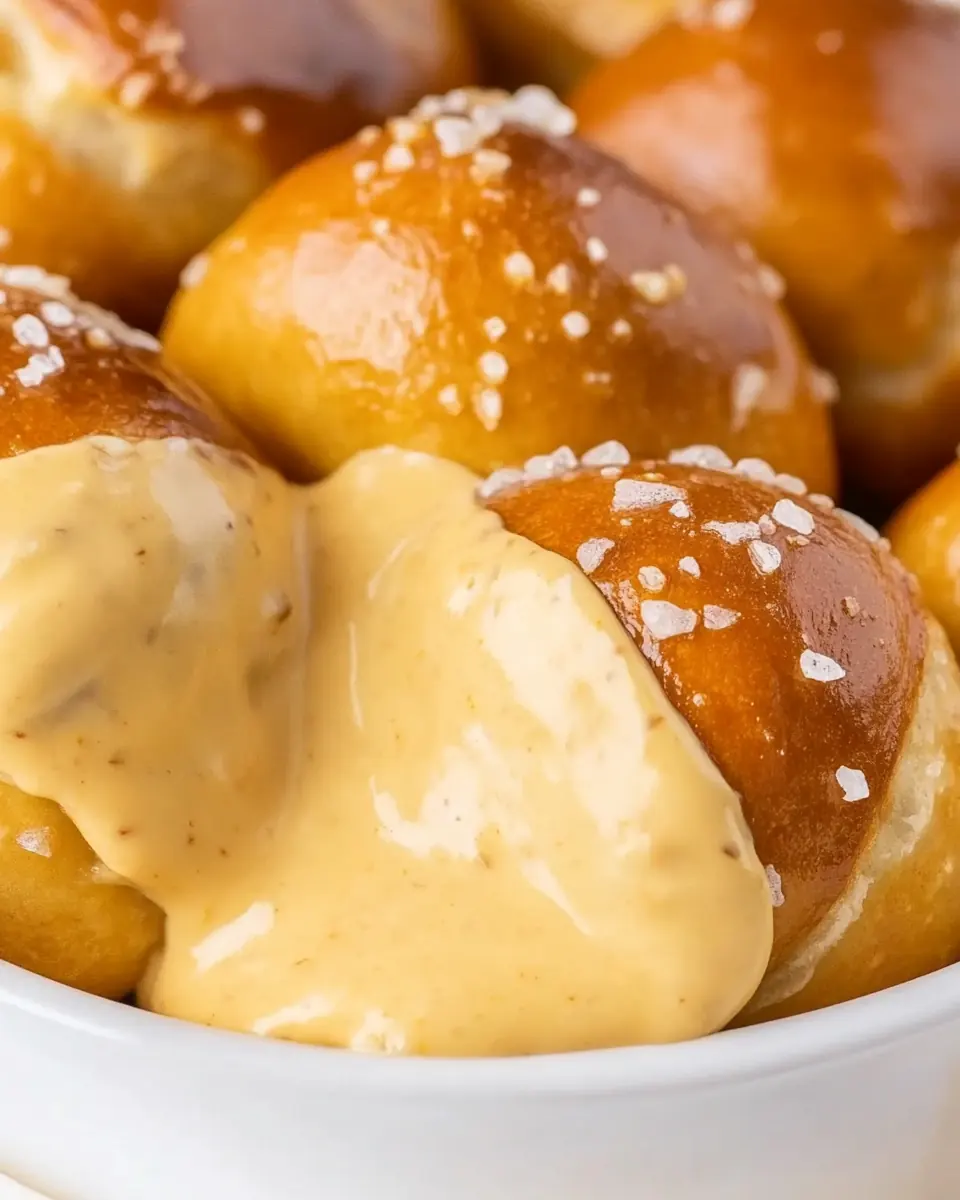
In a small bowl, combine egg and water. Beat together. Brush beaten egg wash over each pretzel bite and then sprinkle with coarse salt.: The egg wash creates the glossy, golden finish and helps the coarse salt stick. Brush evenly so each bite gets a thin coating, and apply the salt immediately so it adheres. Too much wash pools and can create soggy spots, so use sparingly. If you forget the wash, the bites will still taste good but will be paler and less shiny.
Place the baking sheet in the oven and let bake for 12 to 15 minutes, or until golden brown.: During baking you will notice the aroma of toasting dough and butter; the surface should develop a deep golden brown with slight blisters. This color indicates proper Maillard reaction and flavor development. Rotate the sheets halfway if your oven has hot spots. A common error is removing them too early, leaving a pale exterior and doughy interior; aim for a confident golden hue.
In a medium saucepan over medium-low, heat the butter. Once the butter is melted, add flour and whisk together until no lumps remain.: The melted butter sizzling gently signals the start of a roux, and whisking the flour in creates a smooth base for the sauce. Cook until the raw flour smell is gone, about one to two minutes, which prevents a chalky sauce. Stir continuously to avoid scorching; if browning occurs, lower the heat and scrape gently to combine.
Turn heat to medium and slowly whisk in milk. Let cook over medium heat whisking often for about 5 minutes. The mixture will thicken as it cooks.: As you add the warm milk , the mixture will first loosen then gradually thicken into a velvety béchamel like texture. Whisking breaks up any lumps and promotes a silky finish. This step is critical because the sauce needs body to carry the cheddar . A rushed addition of cold milk can form lumps; if lumps appear, remove from heat and whisk vigorously or strain.
Add cheese, salt, pepper, and ground mustard. Whisk to combine until smooth. Season with additional salt and pepper to taste.: As the grated cheddar melts in you will see the sauce turn glossy and smell richly of dairy and warm cheese. The mustard powder lifts the flavor, while the salt and pepper balance the richness. Keep heat moderate so the cheese melts smoothly without separating. If the sauce appears oily or grainy, reduce heat and whisk, or add a splash more milk to re emulsify.