Preheat oven to 325°F (170°C). Line a 13 x 9-inch rimmed baking sheet with parchment paper.: The oven should be fully heated so the sponge rises evenly, creating a uniform surface that will accept piping without sinking. You will sense steady warmth once the oven reaches temperature, and a consistent preheat prevents underbaked centers. A common mistake is sliding the pan in too early, which can cause flat spots or uneven baking. Ensure the parchment fits snugly, and press it into corners so batter spreads evenly without pooling.
For cake: In the bowl of a stand mixer fitted with the whisk attachment, beat egg whites on high speed until doubled in size, 3 to 4 minutes. With mixer at low speed, gradually add ? cup (67 grams) granulated sugar. Increase mixer speed to medium-high, and beat until thick and glossy, 1 to 2 minutes. Transfer egg white mixture to a medium bowl.: In the bowl of a stand mixer fitted with the whisk attachment, beat egg whites on high speed until doubled in size, 3 to 4 minutes. With mixer at low speed, gradually add ? cup (67 grams) granulated sugar. Increase mixer speed to medium-high, and beat until thick and glossy, 1 to 2 minutes. Transfer egg white mixture to a medium bowl. : As you whip the egg whites you will hear the foam transform from liquid to a fast, airy roar, and visually it will change from glossy to sheen with peaks that hold. Adding sugar slowly melts into the foam, stabilizing it; if you dump sugar in too quickly the foam can collapse and become grainy. When done the whites should form glossy peaks and hold a ribbon-like trail from the whisk. Avoid any yolk contamination, which will prevent full volume, and use a clean, dry bowl for best lift.
Return mixer bowl and whisk attachment to stand mixer. Add egg yolks and remaining ? cup (67 grams) granulated sugar; beat at high speed until thick and pale in color, 3 to 4 minutes. Gently fold in egg white mixture just until a few white streaks remain.: The yolk and sugar mixture will turn pale and velvety, and you should notice a slight ribbon when the whisk lifts through it, signaling proper aeration. Folding in the whites preserves trapped air that yields a delicate sponge. Use a gentle turning motion to combine, and stop while a few white streaks remain so you don’t deflate the batter. Over-folding will collapse the volume and produce a denser cake, which is a frequent slip when trying to fully homogenize the mix.
In a small bowl, stir together melted butter and cream. Gently fold into batter just until combined. Sift flour onto batter; gently fold in just until no white streaks remain.: The butter and cream add silk and flavor, so when folded in the batter will feel slightly looser but still light. Sifting the all purpose flour over the batter and folding preserves the aeration and prevents lumps. You should see the batter shine slightly from the butter, and the scent will hint at richness. Be mindful not to overmix here, as the flour will develop gluten if worked too long, leading to toughness. If you see the batter deflate dramatically, you have likely overfolded; stop immediately and proceed to coloring.
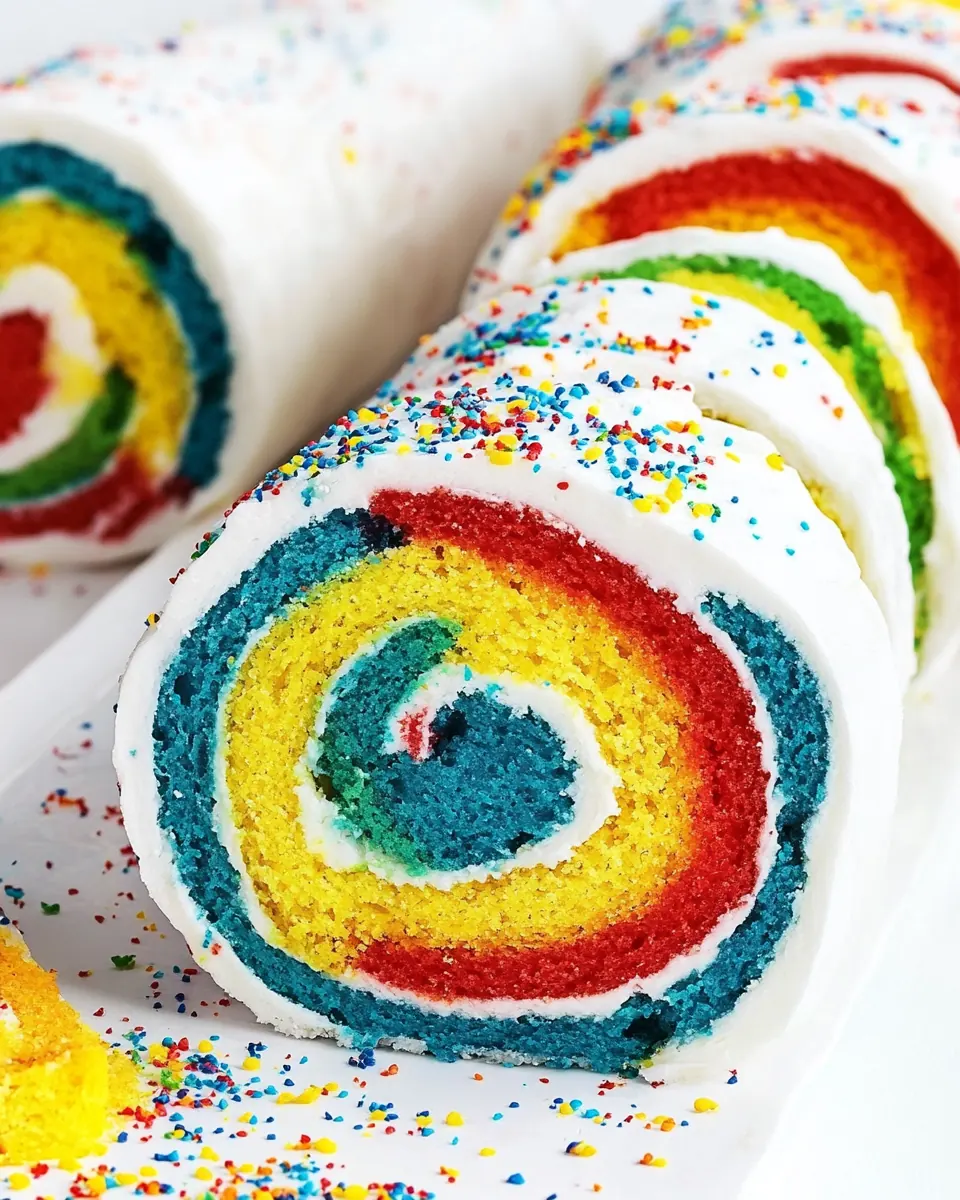
Divide batter among 6 small bowls (about 83 grams each); tint batter with food coloring as desired. Transfer each color of batter to a separate pastry bag, and cut a 1/2-inch opening in each tip. Pipe each color of batter into prepared pan in a row.: When you portion and color the batter you will feel its pillowy texture in the spoon; use gels or pastes so the batter stays thick and holds stripes. As you pipe rows across the pan you will see clean edges and bright color contrasts. Keep the piping steady and the flow consistent, because uneven pressure creates gaps or varying stripe widths. If colors bleed into each other, you may have thinned the batter too much or piped too close together; give yourself small spacing and a light hand to keep patterns distinct.
Bake until cake springs back when lightly pressed in center, 10 to 14 minutes. Let cool in pan on a wire rack for 10 minutes.: During baking you will notice the surface go from glossy to matte and the edges pull slightly from the pan, with a gentle aroma of baked egg and butter. The spring back test is crucial, press lightly and the center should rebound; this tells you that the structure is set but still tender. Underbaking will cause the cake to collapse when rolled, while overbaking makes it dry and prone to cracking. Keep a close eye in the last minutes and err on the side of a slightly moist center for pliability.
Lightly dust confectioners’ sugar onto cake; top with a clean kitchen towel. Place a cutting board on towel, and carefully invert cake onto towel. Gently remove pan and parchment paper. Starting at one long side, roll up cake with towel into a log. Place, seam side down, on a wire rack, and let cool completely.: Dusting with confectioners’ sugar prevents sticking and adds a delicate sweetness. The inversion will feel delicate as you lift the pan, and you should move slowly to avoid tearing. Rolling warm helps train the sponge to take shape, and the towel gives gentle resistance so the cake rolls smoothly. If you try to roll when it is too hot or if you peel parchment aggressively, the cake can tear. Let the rolled cake cool fully so it holds the shape when filled later.
For filling: In the bowl of a stand mixer fitted with the whisk attachment, beat cold cream, confectioners’ sugar, and vanilla at medium speed until medium-stiff peaks form.: In the bowl of a stand mixer fitted with the whisk attachment, beat cold cream, confectioners’ sugar, and vanilla at medium speed until medium-stiff peaks form. : Cold heavy whipping cream whips into a pillowy, billowing filling, and you will hear the mixer change pitch as the cream thickens. The mixture should cling to the whisk in soft, defined peaks that hold shape but still yield slightly at the tip. Over-whipping will make the cream grainy and eventually turn it into butter, so stop at medium-stiff peaks. If the cream seems slow to thicken, chill the bowl and continue; warmth is the most common reason for slow whipping.
Gently unroll cooled cake; spread whipped cream onto cake, leaving a 1/2-border on long side that is bottom seam. Gently reroll cake without towel, and place, seam side down, on a serving plate. Refrigerate until cake is chilled, about 1 hour, before serving. Best served same day. Refrigerate in an airtight container for up to 1 day.: When you unroll the cooled sponge you will see the rainbow spirals laid bare, and the surface should feel dry to the touch from the earlier dusting. Spreading the whipped filling creates a soft cushion that will lift each slice, and leaving a small border prevents filling from spilling when you roll. Reroll with gentle pressure so the shape remains tight but not crushed. Chilling helps the cake set and makes slicing clean. A common error is filling too heavily, which will push out at the seam and make a messy presentation; keep the layer modest and even.