Preheat oven to 350 degrees.: Warmth in the kitchen signals the start, and when the oven reaches 350 degrees the puff pastry will hit uniform heat that encourages even rise. You will notice a gentle, even warmth and eventually the smell of butter and pastry as it browns. This temperature prevents the exterior from burning before the inside is heated through. A common pitfall is preheating too low, which can result in dense, under puffed pastry.
Roll the puff pastry sheet out and layer generously with cream cheese.: Once the sheet is slightly thawed but still cool, the surface should feel pliable without being sticky. The sound is soft as your rolling pin passes, and you will see the pastry thin into a large rectangle. Spread the softened cream cheese in a generous, even layer so every bite has creaminess. This prevents the puff pastry from becoming dry and acts as an adhesive for the wrap. Avoid pressing so hard that you tear the delicate layers, which would reduce flakiness.
Cut pastry into 10" strips.: Use a sharp knife or pizza cutter to slice the pastry into strips about 10 inches long, producing clean edges that seal neatly when wrapped. The visual cue to look for is even, straight strips that are all similar width so each roll bakes at the same rate. Clean cuts help preserve layers and create uniform browning. If your strips are uneven, some rolls will over bake while others stay doughy.
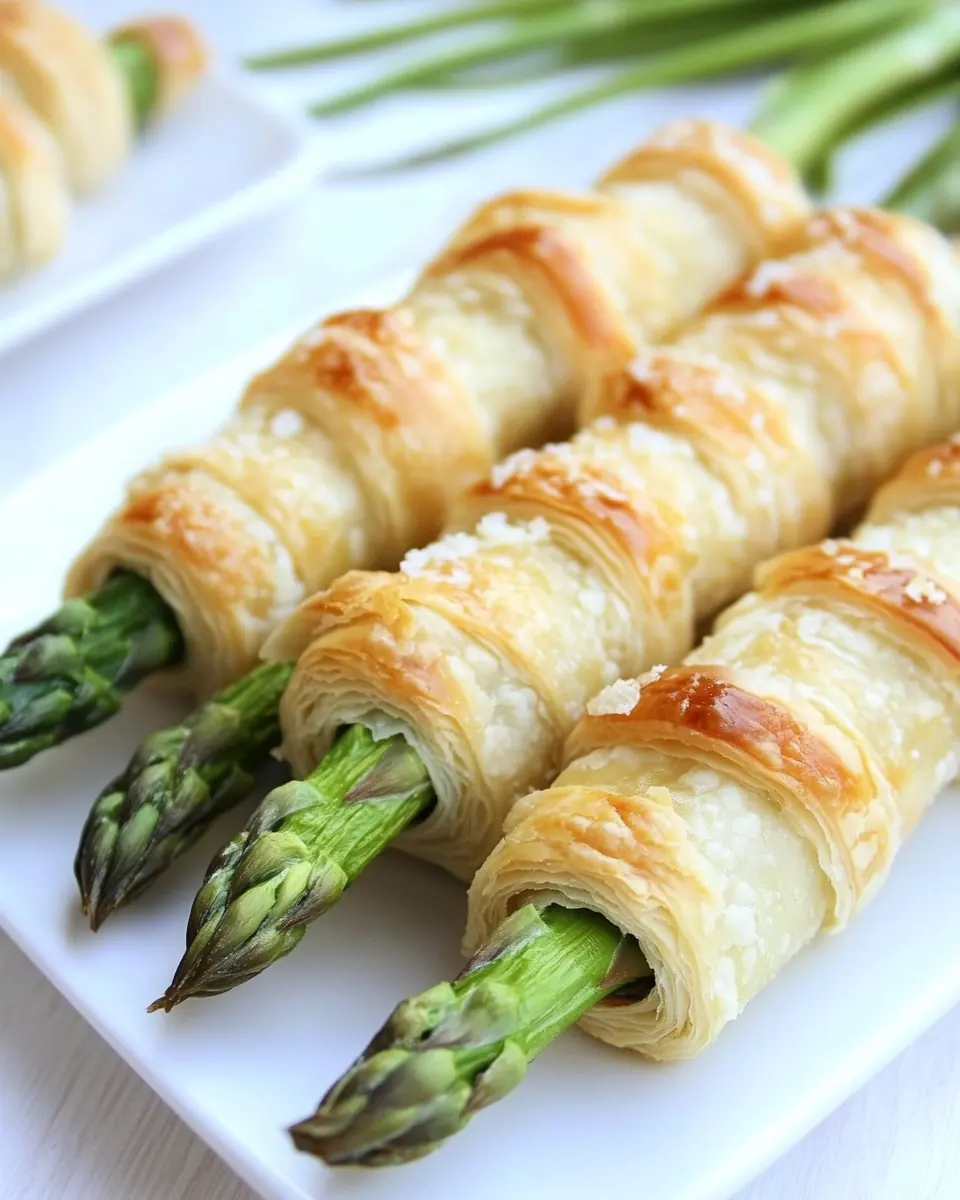
Wrap one strip around one spear of asparagus (or a bundle of asparagus if you want it to be more filling).: The tactile part here is comforting, as the pastry wraps around the asparagus and the cream cheese creates a soft cushion. As you wrap, you will feel a gentle resistance when the pastry layers nestle together. Wrapping a single spear gives a crisp pastry to vegetable ratio while a bundle yields a heartier bite. Common mistakes include wrapping too loosely which can unfurl during baking, or wrapping too tight which can tear the pastry.
Brush with beaten egg and sprinkle with parmesan cheese.: The beaten egg should be applied with a light, even brush so the pastry gets glossy without pooling. You will see the surface go from matte to luminous, and when you sprinkle Parmesan Cheese it clings to the egg wash. This step influences both appearance and texture, producing a deep golden color and a savory finish. Overdoing the egg can create a sticky surface that browns unevenly.
Set in oven for 12-16 minutes.: As the rolls bake, you will hear a faint crackle as the puff pastry layers separate and expand, and the kitchen will begin to smell buttery and toasted. Visual cues are important, watch for the pastry to turn golden and the edges to look crisp, while the Parmesan Cheese develops tiny browned flecks. This timing ensures a flaky exterior and a tender asparagus interior; under baking leaves soggy pastry, while over baking hardens the filling and can dry out the vegetable.