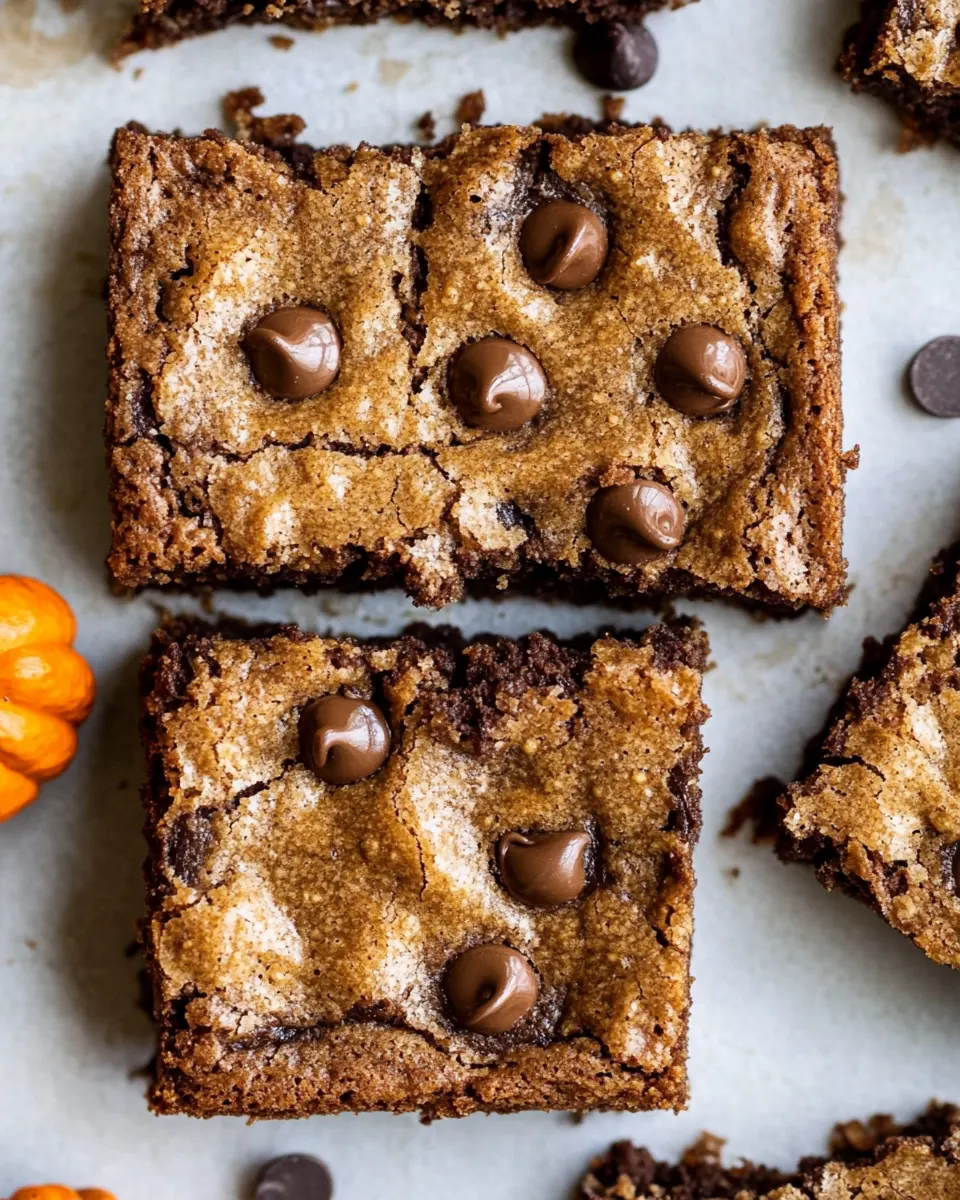
Preheat the oven to 350° F. Line a 9×13 inch baking dish with parchment paper. Add the butter to a medium pot set over medium heat. Allow the butter to brown, until it smells toasted, about 2-3 minutes. Stir often. Remove the pot from the heat and stir in the pumpkin butter and brown sugar. Let cool 5 minutes. Whisk in the eggs and vanilla. Add the flour, baking powder, cinnamon, and salt, mixing until just combined. Stir in the chocolate chips. Spread the dough out into the prepared dish. Evenly sprinkle the cinnamon sugar over the dough (if desired), then add a handful more of chocolate chips. Bake for 25-30 minutes, just until set in the center. Let cool. Cut into bars…snack and enjoy!: The kitchen should smell faintly warm as the oven reaches temperature, a reassuring sign that the bake will begin with a stable environment. Preheating ensures even rise and proper set, otherwise the edges can overcook before the center firms. Avoid opening the oven repeatedly, since temperature drops delay proper baking.
Line a 9×13 inch baking dish with parchment paper: The parchment peels away cleanly once cooled, and it also helps the edges bake evenly, producing a uniform golden rim. Press the paper into the corners so batter spreads smoothly and does not pool, which can create uneven thickness. Skipping parchment risks sticking and makes removal messy.
Add the butter to a medium pot set over medium heat: As the butter melts, it will foam, then the foam will subside and the color will shift toward amber, releasing a toasted, nutty scent that signals it is ready. Browning concentrates flavor in a way melted butter cannot replicate, so be attentive and stir continuously. Leaving it unattended can cause the milk solids to burn and taste acrid.
Allow the butter to brown, until it smells toasted, about 2 to 3 minutes: You'll hear a gentle sizzle and see brown specks form at the bottom; the aroma is reminiscent of toasted nuts. This tiny time adds deep caramel notes that elevate the batter. If the butter darkens too quickly, lower the heat to prevent bitter burnt flavors.
Stir often: Frequent stirring distributes heat, ensuring the milk solids brown evenly and the butter does not stick to the pot. The sound softens as the water content evaporates, and the texture becomes smoother. Not stirring can create hot spots that burn, compromising the flavor.
Remove the pot from the heat and stir in the pumpkin butter and brown sugar: The warm butter loosens the pumpkin butter , melding flavors into a glossy mixture that smells warmly spiced. Mixing off heat prevents curdled eggs later, and it helps the brown sugar dissolve for a silkier batter. Adding eggs while the mixture is hot can cook them prematurely, creating texture issues.
Let cool 5 minutes: Cooling reduces the risk of scrambling when the eggs are added, and it allows aromas to settle into a cohesive blend you can taste. The mixture should still be warm to the touch, not hot. Rushing this step can result in lumpy batter from cooked eggs.
Whisk in the eggs and vanilla: The batter will become glossy and slightly thick as the eggs emulsify with the butter mixture, offering structure and moisture. Whisk until smooth and homogenous, which helps the final crumb be tender. Incomplete mixing leaves streaks of egg, creating uneven pockets in the bake.
Add the flour, baking powder, cinnamon, and salt, mixing until just combined: The dry ingredients should be folded in gently so the batter remains tender; overmixing activates gluten in the all-purpose flour and yields a tougher bar. Look for a cohesive dough with no dry streaks, but stop once it comes together. Overworking the batter is a common mistake that tightens the crumb.
Stir in the chocolate chips: As you fold in the semi-sweet chocolate chips , notice how they scatter through the dough, promising molten pockets after baking. Even distribution ensures every bite has a hit of chocolate. If you stir too vigorously, the chips can break and melt into the batter, reducing those distinct pockets.
Spread the dough out into the prepared dish: Use a spatula to press the batter into an even layer, smoothing the top so it bakes uniformly; you should see a glossy surface dotted with chips. An even thickness gives consistent bake and neat bars when sliced. Uneven spreading causes thinner edges that overbake while the center remains underdone.
Evenly sprinkle the cinnamon sugar over the dough (if desired), then add a handful more of chocolate chips: The cinnamon sugar melts slightly and forms a delicate crust, while extra chocolate chips on top provide visual appeal and extra gooey pockets. This final flourish creates contrast between tender interior and crisp top. Too much topping can burn before the center sets, so use sparingly.
Bake for 25 to 30 minutes, just until set in the center: You'll see golden edges and a slight jiggle at the center that indicates doneness, and the top should look matte rather than glossy. The oven's heat carries the final textural changes, turning edges crisp and leaving a tender middle. Overbaking dries the bars; pull them when the center still has a gentle wobble.
Let cool: Cooling lets the structure finish setting, making clean slices possible while preserving moist texture. If you cut too soon, the centers can fall apart; if you wait too long, warm meltiness is lost. Aim for cooling to just warm room temperature for best slices.
Cut into bars…snack and enjoy: The final experience is sensory, with crisp edges, tender centers, and bursts of melted semi-sweet chocolate chips . Serve at room temperature or slightly warm for gooey centers. Overhandling the bars when cutting can crumble edges; use a sharp knife and wipe it between cuts for neat squares.