Line a cookie sheet with parchment paper, and set aside.: The room will smell faintly of paper and neutral air, and setting up a lined sheet prevents sticking and makes transferring cookies easy. Using parchment ensures bottoms do not burn and cleanup is faster. A common mistake is skipping the parchment, which can lead to broken cookies during transfer.
In a medium bowl, beat cream cheese, powdered sugar, and 1/2 teaspoon vanilla until smooth and well combined.: As you whip the mixture you will notice it transform from lumpy to silky and glossy, with a cool, tangy aroma. This texture is crucial so the filling sits nicely inside the dough without leaking. If you see lumps, keep beating gently rather than adding liquid, because that preserves the right firmness.
Scoop cream cheese using a small cookie scoop (about 2 teaspoons) onto the tray (there should be about 18 scoops). Freeze for 1 hour.: The cream cheese rounds will become firm and slightly frosted at the edges in the freezer, making them easier to encase. Cold filling prevents melting into the dough during shaping and baking. A frequent error is not freezing long enough, causing the filling to ooze out while shaping or baking.
Preheat the oven to 375°F.: You will hear the oven click and see warmth build, and preheating ensures even baking and the proper set on cookie edges. An oven that is not fully preheated often causes uneven texture and extended baking times.
Pour the pumpkin onto a plate and blot out all excess moisture until there is no extra moisture. Set aside.: When you press the pumpkin with a paper towel it will release water, and removing that moisture keeps the dough from becoming too wet and cakey. The pumpkin should feel thick and slightly tacky, not watery. Skipping blotting will make the dough sticky and cause spread in the oven.
In a medium bowl, mix flour, two teaspoons pumpkin pie spice, baking soda, and salt.: As you whisk these dry ingredients together you will see a uniform light tan color and smell the warm spice. This step ensures even distribution so pockets of spice or leavening do not form. A common oversight is adding wet ingredients to unblended dry ingredients, which can lead to streaks or uneven lift.
In a large bowl, beat butter on high until smooth. Add brown sugar and 1/4 cup white sugar. Beat until combined well.: The butter and sugar will cream into a pale, fluffy mixture that smells buttery and sweet. This aeration contributes to tender crumb and slight rise in the cookie. If butter is too soft the mixture will be greasy, and if it is too firm it will not incorporate properly, causing dense cookies.
Pour the pumpkin into the butter and sugar mixture and the remaining vanilla. Beat until mixed well.: The batter will take on a warm orange hue and a gentle pumpkin scent, and the texture should be cohesive and moist but not runny. Proper mixing ensures even flavor and consistent moisture. Overmixing can develop gluten once the flour is added, making the cookies tough.
Pour the dry ingredients into the wet ingredients and mix with a wooden spoon until combined.: Stirring by hand gives you tactile feedback about dough consistency, which should be soft and pliable. You might hear a quiet scrape as the spoon moves through the dough. A mistake to avoid is over stirring, which can make the dough tight and less tender.
In a small bowl, mix the remaining 1/4 cup white sugar and 1 teaspoon pumpkin pie spice.: This coating will smell fragrant and sweet, and it provides a slight crunch and extra spice on the outside of each cookie. Mixing it in a small bowl keeps your workstation organized. If the spice is not evenly mixed with sugar, some cookies will be blander than others.
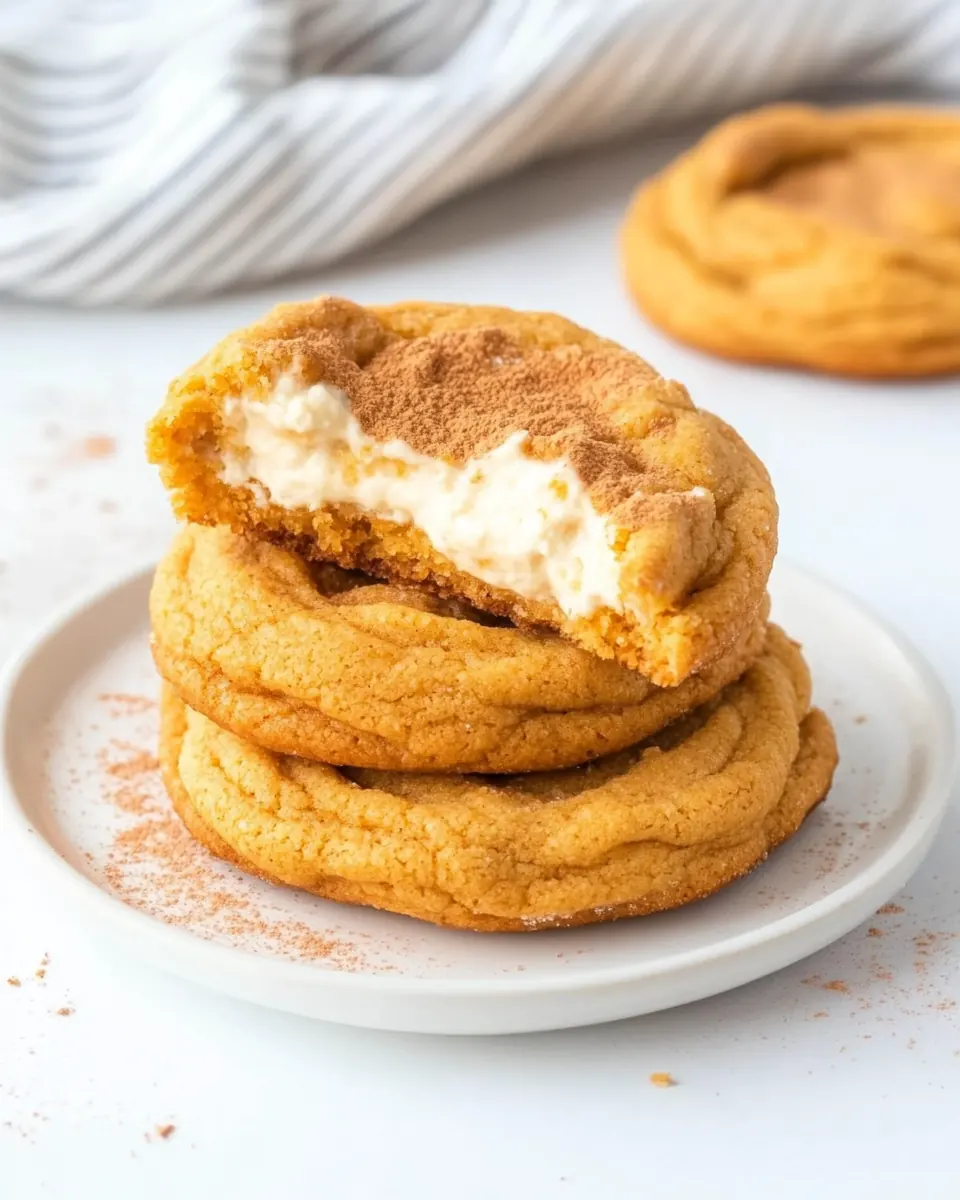
Scoop pumpkin dough with a medium scoop and pat each ball into a 2 1/2 to 3-inch circle in your palm. Add a frozen ball of cream cheese to the middle, and press the dough around the filling. Roll into a ball and then roll into the sugar and pumpkin pie spice mixture.: The dough should feel cool and a bit tacky, and as you enclose the frozen filling you will notice the dough smooth over and seal. The sugar coating adds a light tactile crunch and fragrant aroma. A critical mistake to avoid is leaving gaps between dough and filling, which will allow the filling to leak during baking.
Place on the prepared baking sheet and repeat with the remaining dough.: Arrange the cookies with some space so they have room to spread slightly, and the pan will look neat with uniformly shaped balls. Transferring them carefully prevents breaking the seal. Overcrowding the sheet will cause merging and uneven baking.
Bake for 12 minutes (Keep remaining dough balls with the cream cheese inside chilled while baking).: As they bake you will smell pumpkin and butter, and the edges will set while the centers remain soft. The sugar coating may glisten faintly under heat. If cookies are left out at room temperature too long before baking the filling could soften and leak during cooking.
Let cool on a baking sheet for 5 minutes before removing to a wire rack to cool completely.: The cookies will firm slightly on the sheet, and moving them too soon can cause them to collapse or tear. Cooling on a rack prevents the bottoms from becoming soggy from trapped steam. A common misstep is removing them immediately, which can cause the filling to spill and the cookie to break.