Preheat oven to 350°F. Place pie crust in a 9-inch pie plate and crimp the edges. Chill in the refrigerator until ready to use.: The warm scent from the oven fills the kitchen, signaling the start of transformation, while the chilled pie crust stays firm and less likely to shrink as it bakes. Crimping the edges creates a decorative rim that also helps the crust hold the fillings securely. A common mistake is to skip chilling, which can cause the crust to slouch and lose its shape, so always return it to the fridge for at least 10 minutes before filling. You'll notice a tactile firmness when the crust is properly chilled, and it should not flex easily under pressure.
Using an electric mixer, beat cream cheese with granulated sugar and vanilla until smooth. Add the egg and beat until smooth and creamy. Set aside.: When you whip the cream cheese with granulated sugar and vanilla , listen for the mixer change in tone as the mixture becomes glossy and homogenous, which means the sugar has dissolved and there are no lumps. The texture should be silky, almost mousse like, and the aroma will pick up the warm perfume of vanilla . Adding the egg helps the layer set, but avoid over mixing which can incorporate too much air and create tiny cracks after baking. If you see small clumps, pause and scrape the bowl, then continue at a low speed until perfectly smooth.
In a large bowl, whisk together pumpkin, evaporated milk, and eggs until blended. In another bowl, combine brown sugar and spices, then add to pumpkin mixture. Whisk to blend until smooth.: As you whisk the pumpkin , evaporated milk , and eggs , the mixture becomes homogenous and glossy, releasing a warm, spiced scent. Mixing the brown sugar with the spices before adding prevents clumping and ensures even distribution of spice throughout the custard. The color should be a deep, inviting orange and the texture velvety. Over whisking can aerate the custard, causing bubbles that leave small holes after baking, so aim for smooth but not frothy. If your spices clump, sift them first into the sugar for the smoothest result.
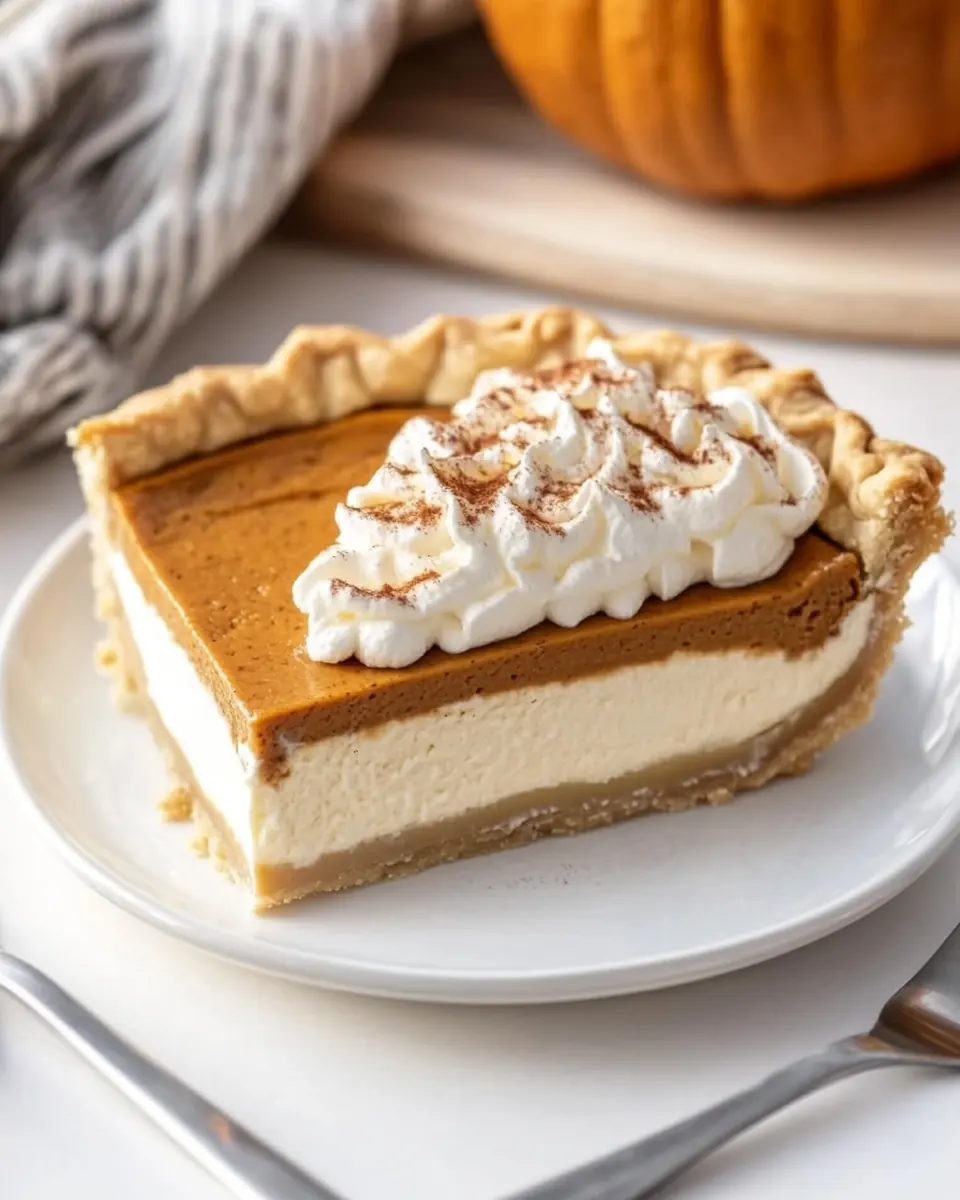
Remove pie crust from refrigerator and place on a rimmed baking sheet. Pour in cream cheese mixture and spread evenly. Carefully pour the pumpkin mixture over the top, pouring slowly to not dip into the cream cheese layer.: When you assemble, the chilled pie crust on a rimmed sheet is easier to move and catch any spills. Spread the cream cheese layer gently into an even disk, its surface should look satin and hold a slight impression from your spatula. Pour the pumpkin custard slowly along the center, watching it pool on top like a glossy blanket; pouring too quickly can push through the cream cheese, blending the layers. A steady wrist and a gentle stream achieve a crisp delineation between layers. If you see the cream cheese ripple excessively, stop and let it settle, then continue more slowly.
Bake for 60-70 minutes, until edges are set but the center is just barely jiggly. Place on a cooling rack and let cool to room temperature, then cover and chill in the refrigerator for at least 4 hours to set before serving.: During baking you will notice the edges firm first and take on a slightly darker tone, while the center retains a gentle wobble, the exact cue for doneness. The aroma will deepen, with spices becoming more pronounced and the tops developing a subtle sheen. Pulling it too early leaves the custard underdone and runny, while over baking will dry the textures, so aim for that faint jiggle. After cooling on a rack, chill thoroughly so the layers fully set; slicing too soon leads to sloppy edges. When chilled properly, the pie yields clean slices that hold their shape and present beautifully.