Preheat the oven to 350°F. Spray the bottom only of a 9 x 5-inch loaf pan with nonstick spray; set aside.: As the oven warms, you can notice the house temperature even out and a faint warm metal scent from the oven cavity, which signals readiness; this ensures an even bake and proper rise. Always allow the oven to reach a stable heat before placing the pan in, because putting a batter into an underheated oven can produce a dense center. A common mistake is rushing this step, which leads to uneven rise, so set a timer and resist opening the door while it preheats.
In a large bowl, whisk together the pumpkin, sugars, milk, oil and egg whites in a large bowl.: At this stage the batter should smell like autumn spices and molasses from the brown sugar, and the mixture will be glossy and smooth when properly combined; whisking incorporates air so the loaf is lighter. Use a rubber spatula to scrape the sides so there are no pockets of unmixed ingredients. Avoid overbeating, as that can break down the batter’s structure, resulting in a gummy crumb.
In a separate bowl, whisk together the flour, baking powder, spice and salt. Add the flour mixture to the wet mixture and stir just until moistened.: Dry whisking distributes the leavening and spices evenly, which prevents pockets of baking powder or clumps of spice. You will see a uniform pale orange speckled mix when finished, and that visual evenness translates to consistent flavor throughout. A common trap is adding wet to dry without sifting or whisking, leading to lumps that create uneven texture.
In a medium bowl, use an electric mixer to combine the swirl ingredients until well blended.: When you fold the dry into the wet, the batter should thicken and pull away from the sides, but do not overmix; visible streaks of flour should disappear with gentle strokes. Over stirring activates too much gluten, making the loaf tough rather than tender, so stop as soon as it’s combined. If you see tough, stringy batter, that indicates overmixing and the loaf may be firmer than desired.
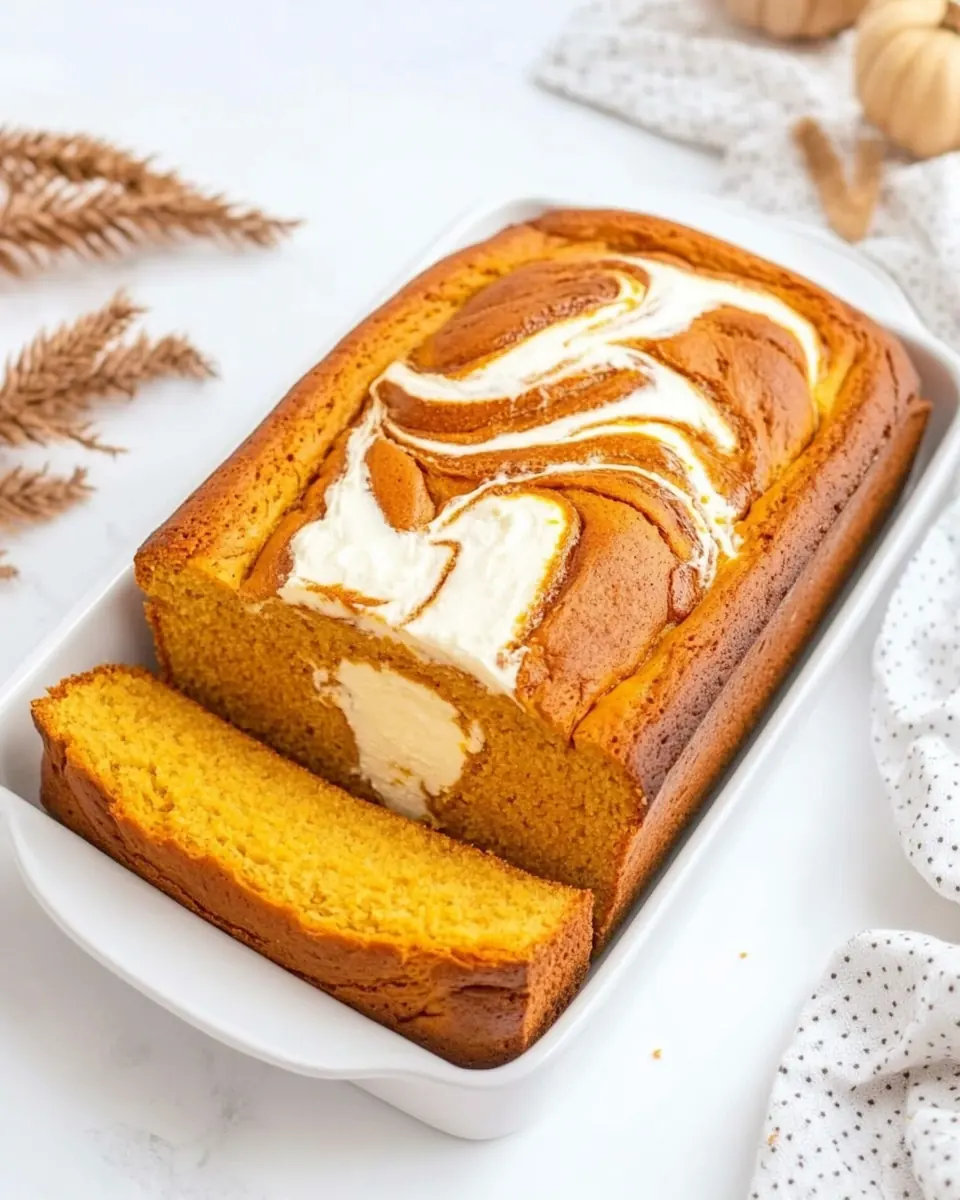
Spoon half of the pumpkin batter into the prepared pan; spoon the swirl mixture evenly over the batter. Cover with the remaining pumpkin batter. Use a knife to gently drag through the batter and swirl it around, being careful not to touch the bottom or sides.: The cream cheese, sugar and the single egg white should become smooth and creamy, with no lumps, and the mixer will make a subtle soft whirling sound as the texture changes; this creates a stable swirl that bakes into a ribbon. Room temperature cream cheese blends more easily, preventing streaks of cold cream cheese in the batter. If lumps remain, the swirl will bake unevenly, so scrape the bowl and beat briefly until silky.
Bake for 1 hour, or until a toothpick inserted into the center comes out clean. Run a knife or a thin spatula around the edges of the pan to loosen the bread; cool the bread in the pan on a wire rack for 10 minutes. Remove the bread from the pan to the wire rack; let cool completely.: The visual cue here is a layered look where the cream cheese sits as a ribbon not fully mixed into the pumpkin; the knife should create graceful loops that show both colors, producing the classic marbled pattern. Work gently to keep air pockets from forming between layers, and avoid dragging the knife to the sides or bottom which can smear the swirl and make the loaf bake unevenly. If you push too aggressively you risk collapsing the structure and losing the distinct cream cheese ribbon.
Bake for 1 hour, or until a toothpick inserted into the center comes out clean. Run a knife or a thin spatula around the edges of the pan to loosen the bread; cool the bread in the pan on a wire rack for 10 minutes. Remove the bread from the pan to the wire rack; let cool completely: While baking you will notice an inviting pumpkin spice aroma and the top will turn a warm golden brown, maybe with slightly darker edges; these sensory signs indicate caramelization and a set crumb. The toothpick test prevents underbaking, which causes a gummy center; allow the loaf to rest briefly in the pan so it firms and releases cleanly. A typical misstep is removing the loaf immediately and forcing it out, which can cause it to break; patience during the cool down yields clean slices and a better texture.