Preheat oven to 350 F. Line an 8×8-inch pan with aluminum foil for easier cleanup and spray with cooking spray; set aside.: The kitchen should start to smell faintly warm as the oven reaches temperature, which signals the beginning of the baking ritual. Preheating ensures even rise and consistent baking; if you skip preheating, the batter may bake unevenly and collapse in the center. Use the foil sling to lift the cake out easily after cooling, and spray the foil so the cake releases cleanly. A common mistake is not lining the pan, which makes removal messy and can tear the crumb when you try to extract slices — the foil prevents that.
To a large bowl, add the eggs, sugar, pumpkin, oil, pumpkin pie spice, vanilla, and whisk to combine.: As you whisk, notice the batter becoming glossy and smooth, with the color shifting to a warm orange. This step distributes the pumpkin and spice so the flavor is consistent throughout the cake . If you overwhisk, you can incorporate too much air and end up with a drier texture; whisk just until homogeneous. If the mixture looks curdled, it usually still comes together once the dry ingredients are folded in, so avoid panic at this stage.
Add the flour, baking powder, baking soda, salt, and stir until just combined, don’t overmix.: You will see streaks of flour vanish as the batter becomes cohesive, and the texture will shift from runny to slightly thicker. Gentle folding protects tenderness by limiting gluten development. Overmixing will create a tougher crumb, and under-mixing leaves pockets of dry flour. Use a folding motion and stop when no white flour remains.
Turn batter out into prepared pan, smoothing the top lightly with a spatula; set aside.: The batter should pour easily and settle into an even layer; smoothing helps ensure uniform baking and an even crumb topping surface. If the batter is too thick to spread, a brief jiggle of the pan will help it settle. Avoid pressing or compacting the batter, as that can compress the crumb and affect rise.
To a medium bowl, add the flour, sugars, salt, and stir with fork to combine.: The dry crumb ingredients should look sandy and evenly mixed, which sets the stage for a balanced topping. Stirring by hand gives you control, ensuring the sugars are evenly distributed. A uniform mix prevents clumps of sugar or salt in the topping. If you skip this step and layer unblended ingredients, you may get overly sweet or salty spots.
Drizzle in the melted butter and mix and fluff with a fork to combine until small pebbles form.: As you incorporate the butter, watch the mixture change from dusty to clumpy, forming small pebble like crumbs that will crisp in the oven. This tactile cue is key; the pebble stage ensures the topping bakes to a crunchy, slightly chewy texture. If you add cold butter, you will not get proper clumping; if you overwork it, the topping can become pasty instead of crumbly.
Add the pecans and mix with the fork to combine.: The chopped pecans will distribute throughout the crumb, adding flecks of toasted brown and a nutty aroma. Mixing by fork keeps the pecans from shredding and preserves their crunch. Uneven mixing can lead to clusters of nuts or bare patches; aim for even distribution so every slice has texture.
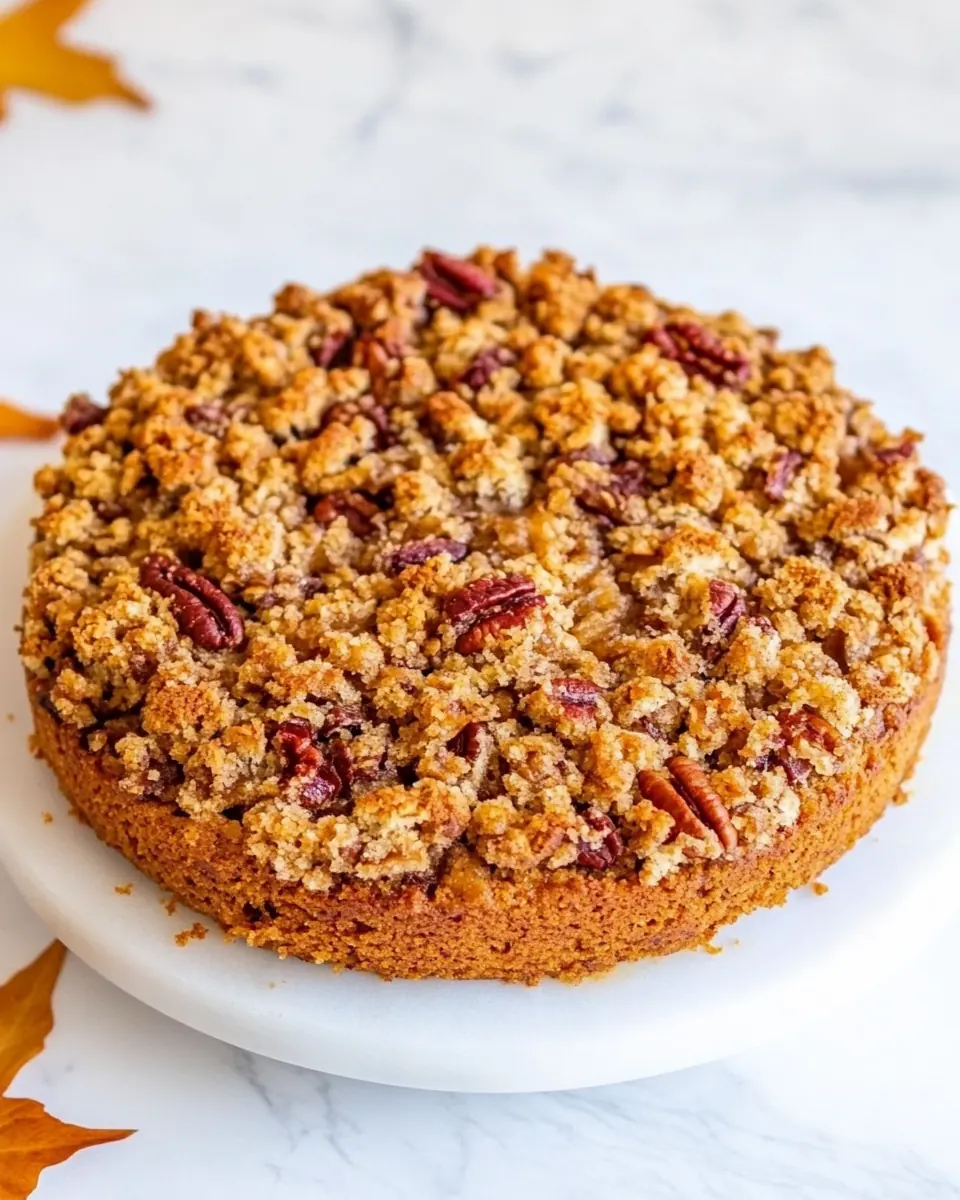
Evenly sprinkle the crumb topping over the cake and bake for about 46 to 51 minutes (I baked 49 minutes) or until the center is set and a toothpick inserted in the center comes out clean or with a few moist crumbs, but no batter.: As the cake bakes, you will hear quiet settling and smell toasty butter and spice; the topping will turn a golden brown and the edges will pull away slightly from the pan. The toothpick test is the best visual and tactile cue for doneness: a few moist crumbs are perfect, batter indicates underbaking. Avoid opening the oven in the first 30 minutes to prevent a collapsed center, which is a common error.
Set cake aside on a cooling rack to cool before serving. Cake will keep airtight at room temp for up to 5 days.: Cooling lets the crumb set and prevents the topping from becoming soggy, while aromas continue to mellow. The cake will still be warm and inviting, but waiting until it is mostly cool makes slicing cleaner. Storing airtight helps maintain moisture, though refrigeration can dry it faster. Do not store in direct sunlight or near heat, which can accelerate spoilage.