Preheat oven to 350 degrees F.: As you begin, inhale the small comforting heat of your kitchen coming alive, and notice the faint metallic click of the oven's thermostat. Preheating ensures even baking, because an oven at the right temperature gives the custard the correct rise and set, and it prevents the crust from absorbing too much fat and becoming soggy. One common mistake is putting the pie in too early, which can make the filling cook unevenly; always wait until the oven signals it's reached temperature. Listen for the oven light or the beep, and give the rack a minute to settle so the pie slides in smoothly without wobble.
In a medium sized bowl, mix together the graham cracker crumbs, melted butter, and sugar.: Warm butter meeting the dry, sandy graham cracker crumbs gives a pleasant, slightly toasty aroma as you stir; you'll see the crumbs darken and clump into a moist sand. Mixing by hand or with a sturdy spoon lets you feel the texture, and you're aiming for an even coating where each crumb is lightly moistened, which helps the crust bind. If the mixture seems powdery it will not hold its shape, and if it's too wet the crust will be greasy rather than crisp. Avoid overmixing, which can compress the crumbs into a paste and lead to a dense base.
Next, pour the graham crumb mixture into a 9 inch pie plate. Press the mixture into the bottom of the pan and up the sides, then bake for 8-10 minutes, then remove from oven to add pumpkin pie filling.: Pressing firmly with the bottom of a measuring cup or your fingers creates an even, compact shell that will support the filling. As it bakes the butter smells richer and the edges become slightly darker, signaling readiness; the crust should feel set to the touch but not brittle. A common pitfall is pressing unevenly, which causes thin spots that can leak; take time to build the sides uniformly. After the initial bake allow the crust to cool briefly so it does not shrink away when you pour in the filling.
While crust is baking, in a large bowl, beat eggs, then stir in pumpkin, spices, salt and sugar. Gradually stir in evaporated milk. Pour into pie crust after it has baked.: The rhythm of whisking the eggs changes the sound in the kitchen; a steady, rhythmic beat yields a silky base. When you fold in the canned pumpkin and measured spices, the mixture deepens in color and releases a warm, woody scent. Gradually adding the evaporated milk keeps the batter smooth and prevents curdling, ensuring an even custard. A common mistake is adding the milk too quickly which can create lumps; take a breath and stream it in while stirring. Pour steadily so the filling settles without trapping many air bubbles.
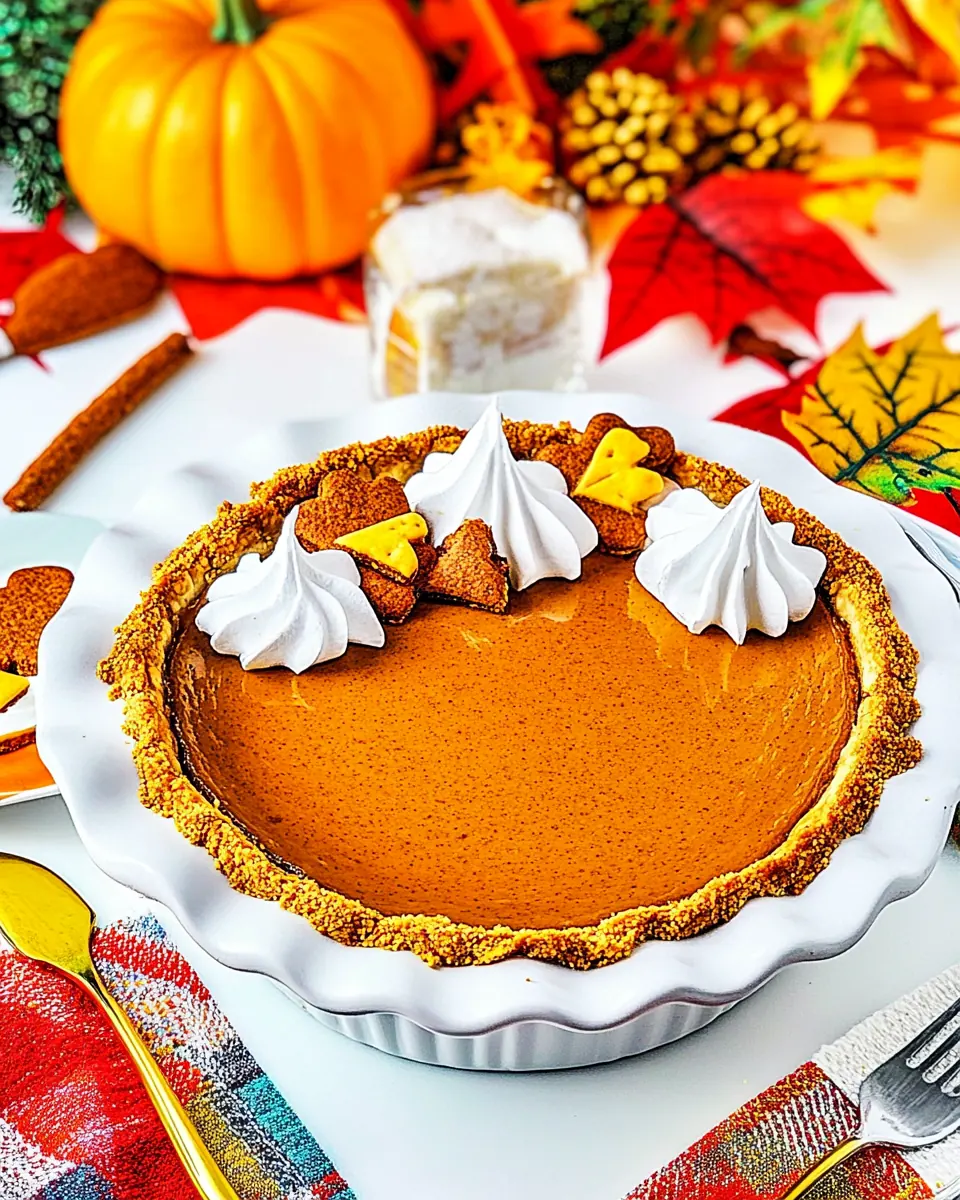
Bake pie for 40-50 minutes, or until a knife inserted into the center comes out clean. Allow to cool on a wire rack for two hours, then refrigerate for at least four hours. Store covered in refrigerator.: During baking you'll notice the filling puff slightly and the aroma of cinnamon and ginger will spread, signaling progress. The surface should look set and not overly jiggly, and when the knife comes out clean the custard is properly cooked; underbaked filling will be runny, and overbaked filling becomes dry and prone to cracking. Cooling on a wire rack helps the pie release steam, preventing condensation that would make the crust soggy. Chilling in the fridge for the recommended time lets the texture firm to a perfect sliceable consistency. A typical mistake is slicing too soon, which leads to a sloppy serving; patience here rewards you with neat slices.