Preheat your oven according to the directions on the puff pastry box.: You will smell the faint warmth of the oven and, as it reaches temperature, feel the readiness of a properly heated chamber. Preheating ensures the layers in the puff pastry begin to steam and lift immediately, creating those flaky layers we want. A common trap is putting the pastry into an oven that is still heating, which can lead to uneven rise and a soggy texture. If you are unsure, allow the oven an extra 5 minutes after it signals it is ready, and place the rack in the center for even browning.
Start by slicing off a thin layer from the top of the brie (this helps it melt better). Rub a little butter or spray a pumpkin-shaped baking dish—or a regular 9×9 dish if that’s what you have.: When you cut the top off, you release the interior from the rind, letting the heat reach the center more quickly so the brie becomes luxuriously molten. Greasing the dish prevents sticking and faintly enhances flavor at the base. The scent of warm cheese will begin to build as it bakes, signaling progress. A mistake to avoid is cutting too deeply into the wheel which can remove too much rind and lead to a runny, messy center; keep the slice thin.
Roll out a sheet of puff pastry on a cutting board. Place the brie in the center, cut side up. Add 2 tbsp of strawberry jelly, sprinkle on 2 tsp of chopped pecans, and finish with 1 tbsp of brown sugar. Fold the puff pastry up around the brie, trimming any extra pastry so it wraps nicely without overlap (pro tip: this helps it bake evenly!).: Rolling the pastry releases a faint flour aroma and a cool, supple texture under your hands. Centering the brie helps the filling distribute evenly as it melts. The jelly will glisten and the pecans will add visual contrast. You should hear no sound here, but the visual cues are important, the jelly should not be runny and the nuts should be evenly spread. An error to avoid is overfilling, which can cause leakage and prevent a clean pastry seal; keep the filling modest and centered.
Tie four pieces of twine around the wrapped brie, evenly spaced, to create that cute pumpkin shape as it bakes. Trim any extra twine.: this helps it bake evenly!). : The pastry feels silky and slightly elastic as you bring the edges up; trimming excess prevents thick lumps that bake slower and remain doughy. The goal is a uniform top so heat penetrates consistently, producing an even golden color. If folds are too thick, the pastry will take longer to bake in those spots. Avoid heavy overlapping, which creates dense areas and can pull the pastry apart as it puffs.
Whisk 1 egg with 1 tsp water and brush it over the puff pastry.: As the pastry cooks, it will puff and the twine will guide the rise into distinct sections, giving you that pumpkin silhouette. You will notice the pastry begin to swell and take form in the oven, which is satisfying to watch. The twine should be snug but not tight, because pastry needs room to expand. A frequent mistake is tying too tightly which can constrict the pastry and tear it as it puffs; leave a little slack.
Bake uncovered as directed on your puff pastry box—mine took about 20 minutes at 400-425°F, and I pulled it out when it was golden brown on top.: The egg wash creates a shiny, golden crust and gives a slight savory edge when baked. You will see the glossy sheen immediately after brushing, and during baking the color deepens to a rich amber. Use a light touch to avoid pooling, and brush evenly for consistent color. Avoid over brushing which can cause the wash to drip and burn on the dish.
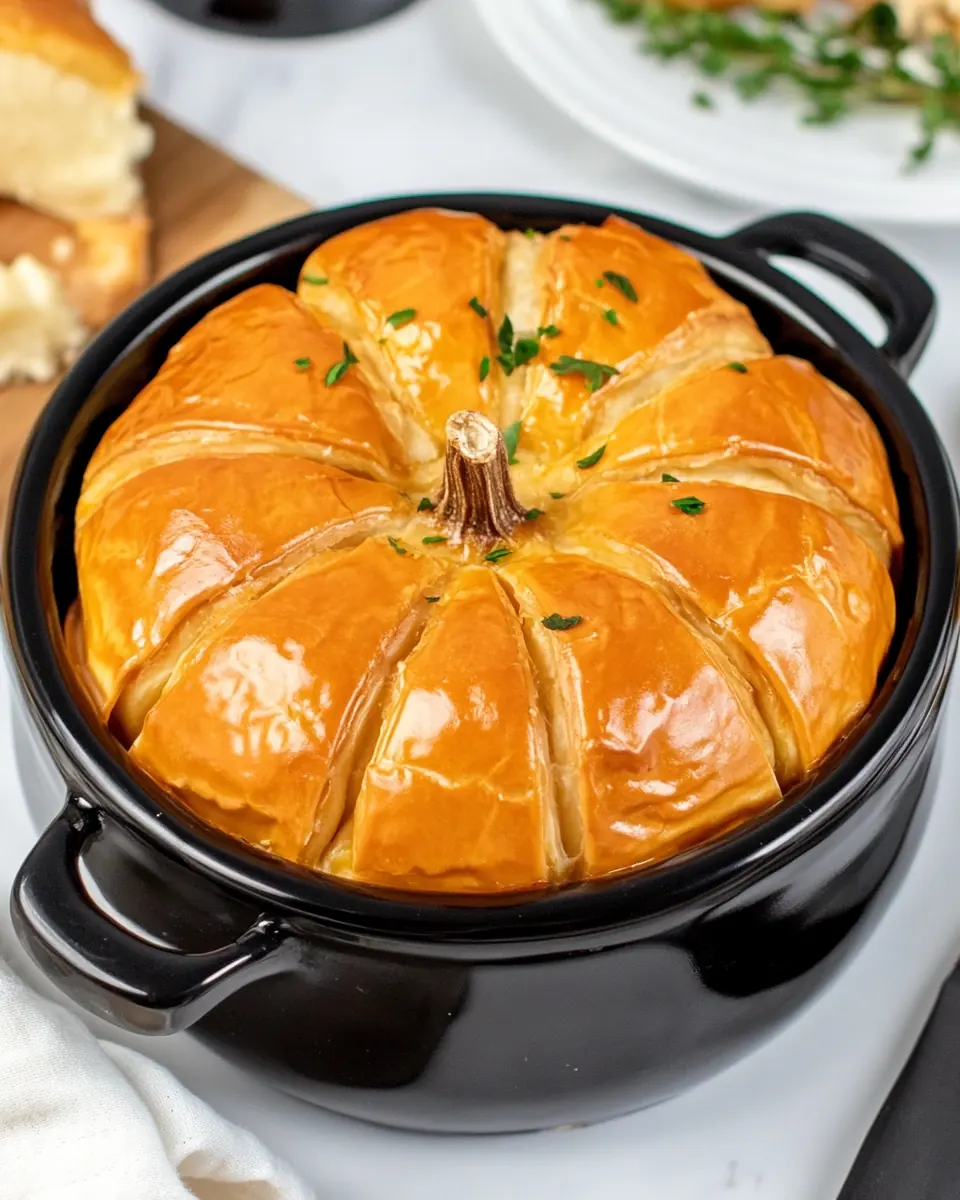
Add a sprig of rosemary in the center for a 'stem,' and let it sit for 5-10 minutes so the cheese sets a bit before slicing.: In the oven, the pastry will make a soft crackling sound as the layers steam and separate, and a sweet, toasty aroma will develop. Look for an even golden brown and a crisp texture; the center should feel slightly buoyant when touched gently with a spatula. The reason proper oven heat is essential is to ensure the pastry sets quickly, trapping the melted brie inside. A common issue is underbaking which yields a pale, doughy crust; if color is uneven, rotate the dish mid bake for better browning.
Add a sprig of rosemary in the center for a 'stem,' and let it sit for 5 to 10 minutes so the cheese sets a bit before slicing.: Resting allows the molten brie to thicken just enough to slice without losing its structure, and the aroma of the rosemary will lift as you bring it to the table. The pastry will crisp further as it cools slightly, and the interior will be creamy, not runny. Avoid slicing immediately, as hot cheese can spill out and make serving messy; patience yields cleaner slices and tidier presentation.