Preheat oven to 350 degrees F. Line a large baking sheet with parchment paper. Spread the oats in an even layer on the baking sheet and toast for 10-12 minutes. When finished roasting, remove the oats from the oven and reduce oven temperature to 300 degrees F.: The scent of warm oats should bloom quickly into a nutty, toasty perfume, and you will notice the oats shift from pale to a light golden brown, which signals the release of deeper flavor. Stirring once or twice ensures even coloring and prevents the edges from cooking faster than the center. If you skip toasting, the bars can taste flat and the oats may remain a bit raw. A common mistake is leaving the oven door open long enough that the oats steam rather than toast, so open the door only briefly to check and stir. Expect a faint crackling as moisture leaves the oats, and remove them the moment you see uniform light browning.
Meanwhile, line 9"x 13" cake pan with parchment paper and spray lightly with non-stick cooking spray. Set aside.: The residual heat will continue to advance the toasting slightly, so transferring quickly keeps them from over browning. Lowering the oven sets a gentler baking environment for the bars so they brown evenly without hardening or burning the sugars. A mistake here is not reducing the temperature, which can make the edges crisp up too much before the center sets. Use the lowered temperature for the final bake to encourage a chewy interior and golden exterior.
In a large mixing bowl combine the oats, pecans, cashews, pepitas, cranberries, cherries, flax seeds and chia seeds. Set aside.: The parchment and spray help you remove the bars intact after chilling, preventing sticking and tearing that ruins the clean edges. Press the parchment into the corners so the mixture will transfer out easily. Not preparing the pan well leads to bars that stick and crumble when you try to lift them. Ensure the paper extends beyond the sides for an easier lift out.
In a small mixing bowl mix together the ground cinnamon, ginger, nutmeg, cloves and salt. Set aside.: As you mix, notice the varied textures, from the soft chew of the dried fruit to the firm nuts and tiny seeds. The dry mix should look evenly distributed, with no heavy pockets of any single ingredient, which helps the binding liquid coat everything uniformly later. A frequent oversight is uneven chopping of nuts, which causes some bites to be overly nut heavy. Give the bowl a good toss to ensure balance.
With everything ready, heat a small saucepan over medium heat. Melt the butter and stir in the honey and brown sugar, stirring constantly until the sugar has dissolved completely.: Combine the spices until the color is uniform and the aroma is cohesive, which indicates even distribution. This pre blending ensures that the warm notes are consistent across the bars rather than concentrated in one spot. If spices are added haphazardly, you will get bites that are too spicy or too bland. Freshly measured spices will provide the best fragrance.
Stirring constantly add the vanilla and spice mixture and remove from heat. Stir in 1/2 cup chocolate chips (reserving the remaining 1 cup).: You will see the mixture transition from separate liquids to a smooth, glossy syrup, and a sweet, caramel like steam will rise. Keep the heat moderate to prevent the sugars from scorching, and stir continuously so the texture becomes uniform. If the sugar remains grainy, the bars may not bind properly. Avoid boiling vigorously; a gentle simmer is perfect.
Pour the honey and butter mixture over the oat and nut mixture and stir well until fully combined and coated (approximately 2-3 minutes). Add the remaining mini chocolate chips and stir again.: Adding the spices into warm liquid releases their aromatic oils, creating a fragrant syrup that will cling to the dry mix. The half cup of chocolate chips should melt into small glossy pools, contributing to a cohesive stickiness, while reserved chips will remain intact later. One common mistake is adding vanilla to boiling syrup, which will evaporate some aroma, so remove from heat promptly. The mixture should smell warmly spiced and sweet.
Pour the granola mixture into the prepared cake pan and spread evenly. Press the granola mixture firmly down into the pan and transfer to the oven. Bake for 25-30 minutes or until light and golden.: At this stage, the warm syrup will transform the dry components, making them glossy and slightly tacky so they bind when pressed. You should hear the slight clink of nuts as you fold, and the mixture will feel evenly moistened without being soggy. If it feels too wet, the bars may not set firmly; if too dry, they will crumble. A typical error is rushing and not stirring long enough, which leaves dry pockets; stir until everything looks uniformly glossy and cohesive.
Remove from the oven and allow mixture to cool before covering with foil and transferring to the refrigerator to cool and solidify (at least 2-4 hours).: Pressing firmly compacts air pockets and helps the bars hold together, producing clean edges after baking. I press with the back of a spatula and then a piece of parchment on top to compress evenly. In the oven, you will see the surface shift to a deeper golden color and the edges firm up. If you do not press firmly, the bars will be crumbly and fall apart when sliced. The sound of a firm press should be compact and muted, not loose and airy.
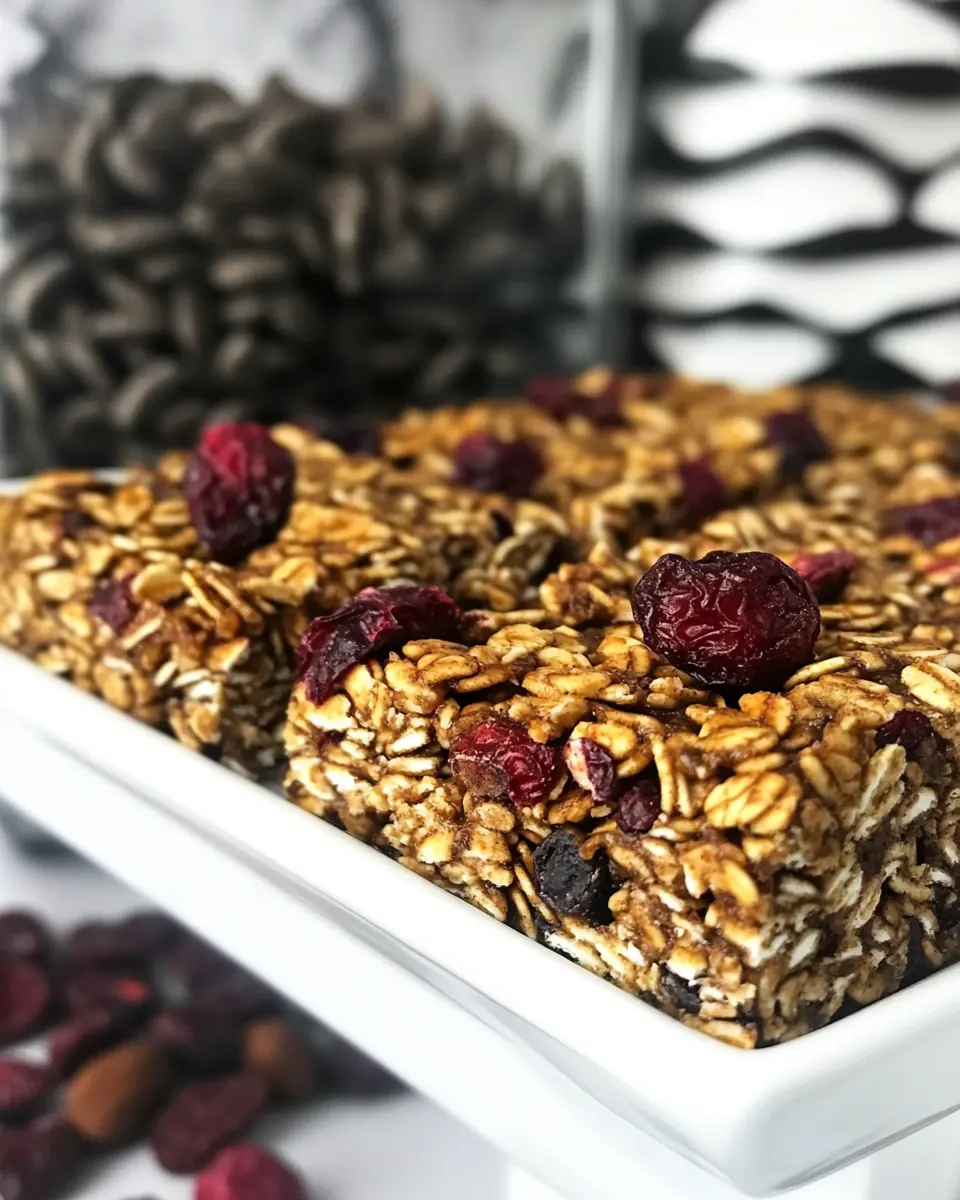
Gently lift the granola bars from the pan with the parchment paper and cut into desired number of bars. Store in an airtight container for up to 5 days.: During baking, watch for a uniform golden hue across the surface and a slightly fragrant caramel scent. The bars will set as the sugars cook and the butter interacts with the dry ingredients, creating a slightly crisp exterior while keeping chew inside. Overbaking will make them hard, while underbaking leaves them too soft to cut neatly. A good indicator is a light firming of the center and a fragrant nuttiness rising from the oven.
Remove from the oven and allow mixture to cool before covering with foil and transferring to the refrigerator to cool and solidify at least 2 to 4 hours: Cooling is crucial so the honey and butter fully set, giving bars structural integrity. As they cool, you will notice the scent mellow and the surface firm. Refrigeration accelerates solidifying and makes slicing much cleaner. Cutting before they are cold often results in ragged edges and crumbling, so resist the urge to slice hot.
Gently lift the granola bars from the pan with the parchment paper and cut into desired number of bars. Store in an airtight container for up to 5 days: Use a sharp knife and a gentle sawing motion for clean edges, wiping the blade between cuts if chocolate is tacky. In storage, the bars keep their texture best at cool room temperature or chilled for longer freshness. A common storage mistake is stacking warm bars tightly which traps steam and softens them, so let them cool completely before sealing.