Blend flour, milk, cinnamon, pumpkin spice, eggs and oil until smooth in the blender.: The moment you start blending, the batter shifts from separate ingredients into a unified silky base, with the warm aroma of cinnamon and pumpkin pie spice blooming as the blades work; this smoothness is crucial because a lump free batter makes crepes that spread evenly and cook uniformly. You should be able to hear an even, steady hum from the blender rather than a chattering clump of flour, and the batter will have a glossy sheen when it is ready. Why this matters, I have found, is that thin crepes depend on fluid batter that coats the pan in a single sweep. A common mistake at this stage is skimping on blending time, which leaves tiny dry specks that bake into rough patches in the crepe; if you see any flour streaks, blend an extra 15 seconds. Also, let the batter rest briefly if you have time, which calms the gluten, but do not let it separate into watery and thick layers; if that happens, give it a gentle whisk.
Heat a large nonstick pan on medium-low flame.: As the pan warms, listen for a faint settling hiss and watch the metal tone shift slightly to a uniform color, signals that the surface is approaching the right temperature; the pan should be hot enough that a drop of water lightly dances but not so hot that it smokes. The moderate heat prevents the crepe from browning too quickly at the edges while leaving the middle undercooked. I tend to test with a small splash of batter to gauge timing, noting how long it takes to set; this quick test helps you dial in your stove. A typical misstep is using too high heat which will produce a crispy, burnt outside and raw center, so keep it gentle and consistent for even cooking.
When hot, spray with buttered flavored spray to coat bottom of pan.: The spray gives a whisper of butter flavor and creates a nonstick barrier that helps the crepe release easily, without pooling or burning. Apply just a light coating and wipe any excess with a paper towel if it beads, because too much will make the batter fry rather than forming a thin pancake. The surface should gleam without slick puddles, and that thin sheen helps the batter spread smoothly. Avoid repeated heavy spraying between every crepe, as buildup can create spots that cook unevenly; instead use a light touch each time.
Pour 1/4 cup crepe mixture into pan, swirling pan slightly to make crepe thin and smooth.: When the batter hits the pan you should see it spread rapidly into a thin, translucent layer; by tilting and rotating the pan you encourage an even round and consistent thickness, which gives the crepe its classic delicate texture. The batter will lose its glossy shine as it sets, and the edges will lift slightly from the pan signaling readiness for the first side to finish. This swirling technique matters because it controls thickness and cooking time; uneven batter distribution causes thicker spots that stay doughy. A typical error is pouring too much batter, so stick to the 1/4 cup measure until you are comfortable adjusting for pan size.
Cook for 1 to 2 minutes or until bottom of crepe is light golden brown.: During this time you will notice small bubbles forming and the crepe color gently deepening to a pale gold; the surface will transition from wet and glossy to matte and set. The smell becomes subtly toasty and the edges may crisp slightly, both good indicators that the crepe is ready to turn. Cooking too briefly will leave the center underdone and fragile, while cooking too long will yield an overly firm crepe, so aim for that light golden cue. If you find the color is darkening too quickly, lower the heat and reset your timing with the next crepe.
Flip; cook 30 seconds to 1 minute or until light golden brown.: After flipping, the second side cooks much faster and develops a soft, even tan rather than strong browning, so watch closely and listen for a gentle sizzle rather than an aggressive crackle. The cooked crepe should feel slightly springy when touched with a spatula and will lift cleanly from the pan. This short finish helps maintain tenderness while ensuring the crepe is fully set. A common mistake is leaving the crepe too long after the flip, which makes it dry and less pliable for rolling; remove it promptly when the color is right.
Repeat with remaining buttered flavored spray and crepe mixture.: As you continue, the rhythm becomes soothing, and you will learn exactly how long your stove and pan take for each crepe; maintain consistent heat and a light spray before each batch to prevent sticking. The batter remaining in the blender or bowl may thicken slightly as it rests, so give it a quick whisk occasionally to keep it uniform. If you notice crepes becoming darker or cooking unevenly later in the batch, the pan temperature may have shifted, so briefly lower or raise the heat to recalibrate. Avoid crowding the pan or rushing the process, since speed often leads to tearing or uneven crepes.
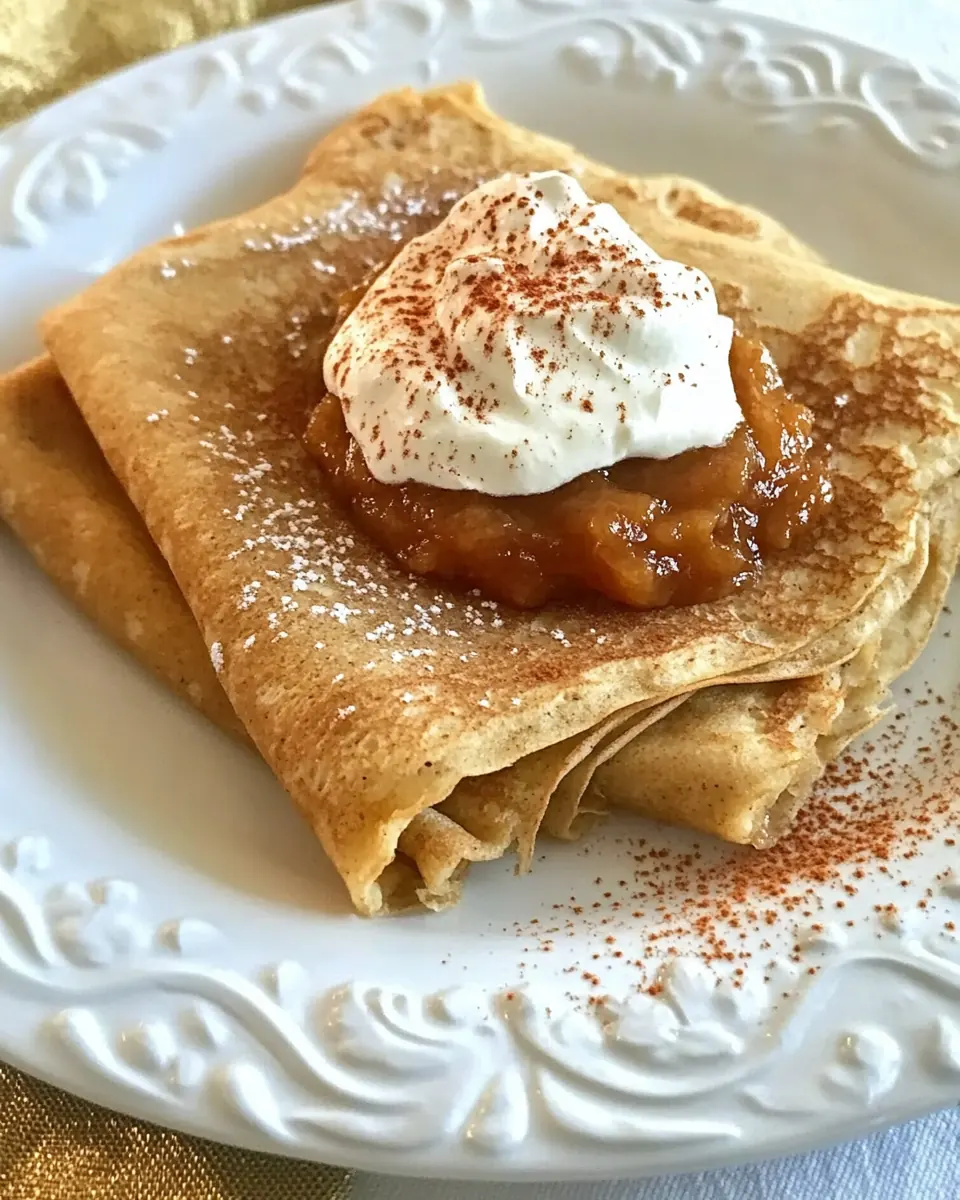
To serve, spoon 2 tbsp pumpkin butter into center of each crepe, fold the edge of crepe over filling and roll, placing the crepe on a plate seam side down.: The warm pumpkin butter should feel thick and jam like as you spoon it, releasing a cozy spice aroma; folding and rolling keeps the filling nestled inside so each bite pulls a ribbon of spiced pumpkin. Placing the crepe seam side down helps it hold its shape and presents neatly on the plate. It is important that the pumpkin butter is slightly warm so it spreads easily, otherwise it will clump and cool the crepe; if it is too hot, it can make the crepe soggy, so aim for gently warmed. When folding, avoid overstuffing, which can tear the crepe and make serving messy.
Sprinkle lightly with powdered sugar and a little more pumpkin spice or cinnamon.: The final dusting adds a visual lift and a hint of sweetness that balances the spice, while an extra whisper of pumpkin pie spice or cinnamon refreshes the aromatic profile. Use a fine sieve to achieve an even, delicate coating. Too much powdered sugar will mask the pumpkin notes, so keep the dusting light for best flavor contrast.
Serve warm.: Serving right away ensures the crepe is pliable and the pumpkin butter remains warm and spreadable, offering the ideal textural pairing. The aroma will be most pronounced, and the contrast of temperatures enhances the experience. If you must hold them briefly, keep crepes covered with a cloth to retain warmth and prevent drying, but prolonged holding will soften the edges and diminish the delicate texture.