Preheat your broiler on high and line a rimmed baking sheet with foil and lightly grease.: The broiler should be intensely hot to create rapid browning, which gives you that savory crust on the steak. When the oven rumbles with heat, you will notice a sharp, dry warmth and the metal rack will become almost too hot to touch, signaling readiness. Lining the rimmed baking sheet with foil makes cleanup simple and also reflects heat, while a light grease prevents sticking and encourages even browning. Use a thin, even layer of oil or spray so it does not smoke excessively under the broiler, because too much oil can lead to flare ups or burning. A common error is not placing the rack close enough to the heat source, which results in less browning and a paler steak. Take care to set the oven rack four to six inches from the broiler element depending on your oven's strength.
Lightly score 4 shallow cuts on both sides of the steak, two in each direction (per piece of meat if your sirloin is in smaller pieces).: Scoring creates texture that helps the heat penetrate evenly and prevents the steak from curling, while providing small edges that brown nicely. You will feel the blade glide just through the fat cap or surface, without cutting into the meat itself, producing a faint crosshatch that catches light and becomes crisp. The slight incisions also allow seasonings to nestle in, intensifying the crust flavor. Avoid deep cuts which will cause juices to escape, leaving the meat drier. If you score too aggressively, those meat juices will flow away during cooking, reducing succulence.
Sprinkle both sides generously with freshly cracked pepper and salt.: Seasoning just before broiling ensures the salt draws minimal moisture while still enhancing flavor, and freshly cracked pepper releases aromatic oils that bloom under heat. As you grind the pepper over the steak, you will notice the scent grow more pungent and lively, which predicts the taste after cooking. Salt helps form the crust and intensifies the beefy notes, so apply evenly to both sides for balance. One mistake is salting too early without resting time, which can draw out too much moisture on thinner cuts; for this quick broil, seasoning immediately before is ideal.
Place steak on the prepared baking sheet and broil for 4 to 6 minutes per side, until steak reaches your desired level of doneness. Remove from oven, tent with foil, and allow to rest for at least 5 minutes before slicing across the grain.: Under the broiler the steak will sizzle and darken quickly, creating audible crackles and a rising meaty aroma that fills the kitchen. Look for the surface to develop a deep caramelized color and edges that appear shrunken slightly, signs the heat has created a crust. Use an instant read thermometer for precision if you like, aiming for your preferred internal temperature, and remember the steak will continue cooking slightly while it rests. A frequent misstep is flipping too often; let the steak sit undisturbed to allow the crust to form. Also watch the broiler closely because thin steaks can go from perfect to overdone in moments.
While your steak is cooking, heat a medium skillet over medium heat and lightly grease with cooking spray or a small drizzle of olive oil. Add mushrooms and sliced green onions. Saute until mushrooms are lightly browned, 3 to 4 minutes. Add garlic and cook for 30 seconds.: Resting is where the steak regains its juices, which redistribute throughout the muscle rather than spilling out the moment you slice. You will notice the surface steam a bit and the meat relax, becoming slightly firmer to the touch, which means it is ready to be cut. Slicing across the grain shortens the muscle fibers, making each bite tender and easy to chew. If you skip resting, juices will run out onto the plate and the steak will seem drier. A common error is slicing too soon while the meat is still sizzling, which wastes its flavor.
Transfer vegetables to a plate and return pan to heat.: As the pan warms you will smell a faint toasted scent from the oil, and when you add the mushrooms they will release moisture, hissing softly as it evaporates. Watching for color change is key, the mushrooms should develop golden edges and a deeper, concentrated aroma after a few minutes. Adding the green onion early softens it and blends its fresh oniony notes with the mushrooms, while the garlic should be added last for just seconds so it becomes fragrant without turning bitter. Overcrowding the pan prevents caramelization, so give the mushrooms space or work in batches. Burning the garlic is a common trap; keep the heat moderate and move quickly.
Add beef broth to your pan and bring to a simmer. Simmer for 3 to 4 minutes until reduced by half. Remove from heat and whisk in sour cream and mustard. Add salt and pepper to taste (if you use full-sodium beef broth, you probably won't need salt). If not ready to serve, you can keep the mixture warm over very low heat--do not boil.: Moving the browned vegetables out of the pan gives you a clean surface to build the sauce and prevents them from overcooking. You will see brown bits stuck to the pan bottom, those fond pieces hold concentrated flavor that will dissolve once liquid is added, enriching the sauce. Leaving the pan on medium heat keeps it primed to simmer the broth without losing temperature. A frequent mistake is letting the pan cool too much, which can prolong reduction time and mutate the sauce texture.
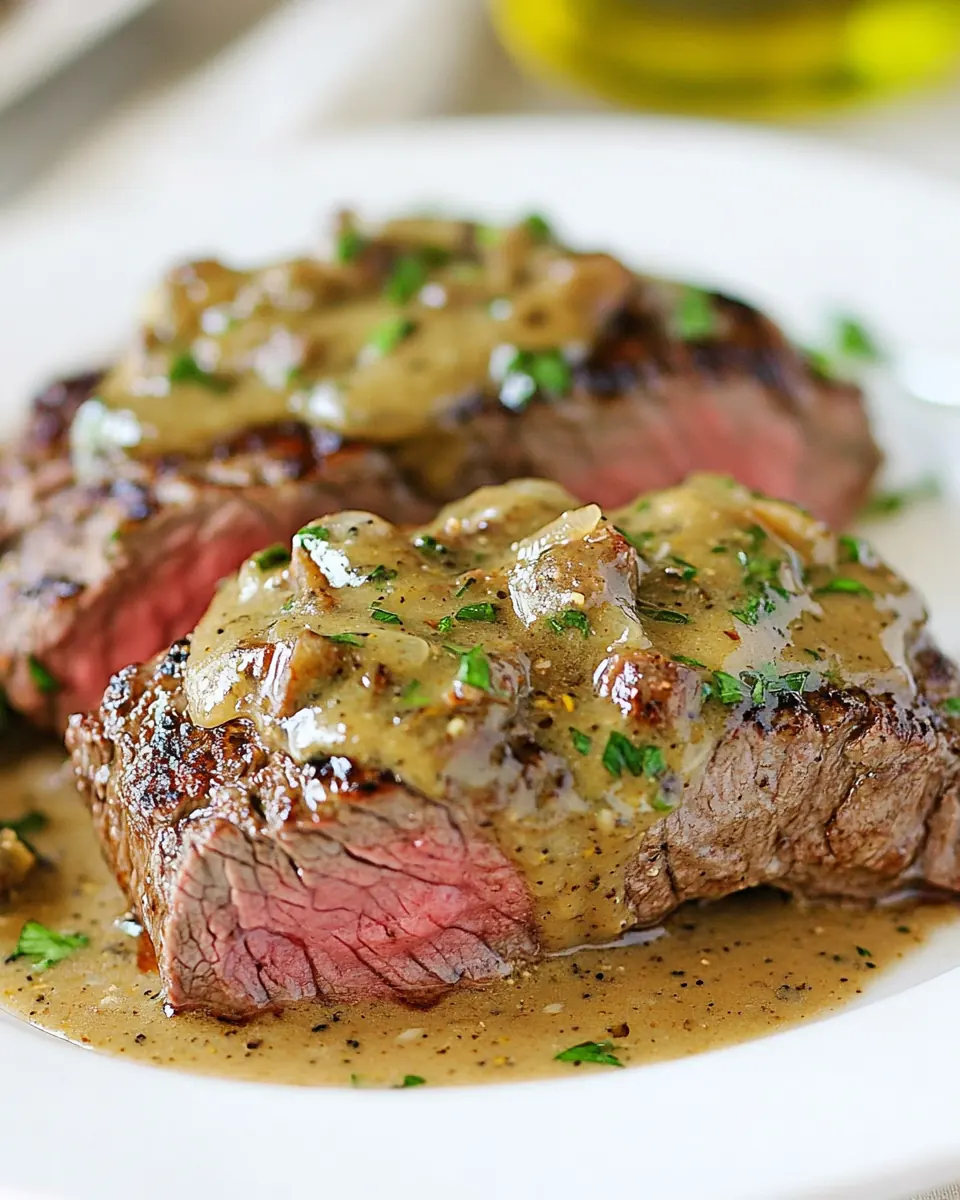
Serve steak alongside steamed green beans, with mustard sauce spooned over both. Enjoy!: When the broth hits the hot pan it will sizzle briefly and lift those browned bits into the liquid, releasing an intoxicating aroma. Simmering concentrates the flavor and reduces the broth, which is crucial for a sauce with body rather than a thin au jus. You will notice small bubbles forming at the edges and the liquid gaining a richer color as it reduces. Stir occasionally to scrape up the fond, which amplifies savory depth. A common misstep is boiling vigorously, which can reduce too quickly and concentrate saltiness; maintain a gentle simmer.
Simmer for 3 to 4 minutes until reduced by half Remove from heat and whisk in sour cream and mustard Add salt and pepper to taste If not ready to serve, you can keep the mixture warm over very low heat do not boil: As the liquid reduces it thickens slightly and the scent becomes more robust and beefy; this is the stage where the sauce builds flavor. Removing the pan from direct heat before adding sour cream prevents curdling and creates a smooth, silky finish when you whisk it in with the Dijon mustard . Whisking incorporates air and gives the sauce a glossy sheen, while a brief taste test lets you adjust seasoning carefully. The sauce should coat the back of a spoon, not run like water. Reheating too aggressively will split the dairy, so keep the temperature very gentle if you hold it before serving.
Serve steak alongside steamed green beans with mustard sauce spooned over both: The final presentation is satisfying, with the browned steak slices arranged beside bright, verdant steamed green beans and the mustard sauce draped over everything for unified flavor. You will notice how the sauce glossy sheen makes the plate look inviting, and the warmth of the steak slightly wilts the green beans where the sauce touches, creating a pleasing meld. Spoon the sauce deliberately so each element gets some, and encourage diners to take a bit of mushroom with their meat for added savor. A common error is over saucing, which can drown the textures, so apply judiciously and enjoy immediately.