Warm the olive oil in a large skillet over medium heat. Pour in the beaten eggs and scramble until fully cooked. Remove the eggs and set them aside on a plate.: As the oil heats, it should thin and shimmer, sending up a faint scent of fruitiness. This warming step primes the pan so proteins and vegetables sear instead of sticking. If you skip this and add ingredients to a cold pan, they will release moisture and steam rather than fry, which robs you of flavor and texture. A common mistake is using too high heat right away, which can cause uneven cooking and burn the oil, so aim for a steady medium warmth.
In the same skillet, add the diced carrots and onions, cooking until they begin to soften, about 3 minutes. Stir in the peas and garlic, seasoning with salt and pepper, and cook for another 2 minutes.: When the eggs hit the warm oil, you will hear a gentle hiss and see them set at the edges almost instantly. Stir with a spatula to form soft curds, removing them while they are still tender keeps them from becoming rubbery later. The eggs should be slightly glossy, not dry. Overcooking here makes the eggs tough and less pleasant in the final dish, so pull them off the heat a touch early.
Increase the heat to medium-high and add the cooked quinoa along with the green onions. Drizzle with soy sauce and toss to combine everything evenly. Fry the mixture, stirring frequently, for about 5 minutes until the quinoa is slightly crispy.: Setting the cooked eggs aside preserves their texture and prevents them from overcooking while you handle the vegetables and quinoa. This separation also allows you to focus on getting the veggies just right. Leaving the eggs in the pan will expose them to additional heat and can cause them to break down into fragments rather than staying as pleasant curds.
Fold the scrambled eggs back into the skillet, mixing well to distribute. Finish by stirring in the sesame oil and remove from heat.: The residual oil and fond in the pan will gently caramelize the diced carrots and onion , releasing sweet and savory notes. Look for the edges to become translucent and slightly golden, that indicates the sugars are starting to bloom. If you overcrowd the pan, the vegetables will steam instead of browning, so keep them in a single layer and stir occasionally.
DEVOUR!: Adding the thawed peas and minced garlic late preserves their fresh qualities; the peas should become tender and the garlic fragrant without browning. You will notice the aroma lift as the garlic hits the warm pan, which signals it is time-sensitive. Burnt garlic turns bitter, so keep the heat moderate and stir continuously.
Increase the heat to medium high and add the cooked quinoa along with the green onions: Cranking the heat creates quick evaporation and encourages the quinoa to develop a toasted, slightly crisp exterior. When the quinoa dances in the pan and starts to pick up flecks of golden color, you know you are on the right track. Adding everything cold will lower the pan temperature and lead to steaming, so make sure to give it that confident heat boost.
Drizzle with soy sauce and toss to combine everything evenly: The soy sauce serves as both seasoning and a flavor bridge, coating each grain so every bite tastes cohesive. Pour it around the pan so it hits the hot surface and emulsifies slightly into the oil and quinoa. A frequent error is adding too much at once; pour, toss, taste, then adjust as needed to avoid over salting.
Fry the mixture stirring frequently for about 5 minutes until the quinoa is slightly crispy: During this time, listen for a steady light sizzle and watch for the quinoa to form tiny toasted bits; that contrast makes the dish sing. Frequent stirring ensures even contact with the pan and prevents burning in hot spots. If you stop stirring for too long, some sections can char, so keep it moving to maintain balance.
Fold the scrambled eggs back into the skillet mixing well to distribute: Adding the reserved eggs at this stage introduces creaminess and adds protein. Use a gentle folding motion so the eggs incorporate without breaking down into fine bits, maintaining pleasant curds throughout the dish. If you stir too aggressively, the eggs can disintegrate and lose their texture.
Finish by stirring in the sesame oil and remove from heat: The sesame oil is aromatic and should be added off the heat so its fragrance remains bright. Give the pan a final toss to unite flavors, then transfer to plates promptly to preserve texture. Leaving the dish in a hot pan will keep cooking the ingredients further and can make the quinoa lose its crispness.
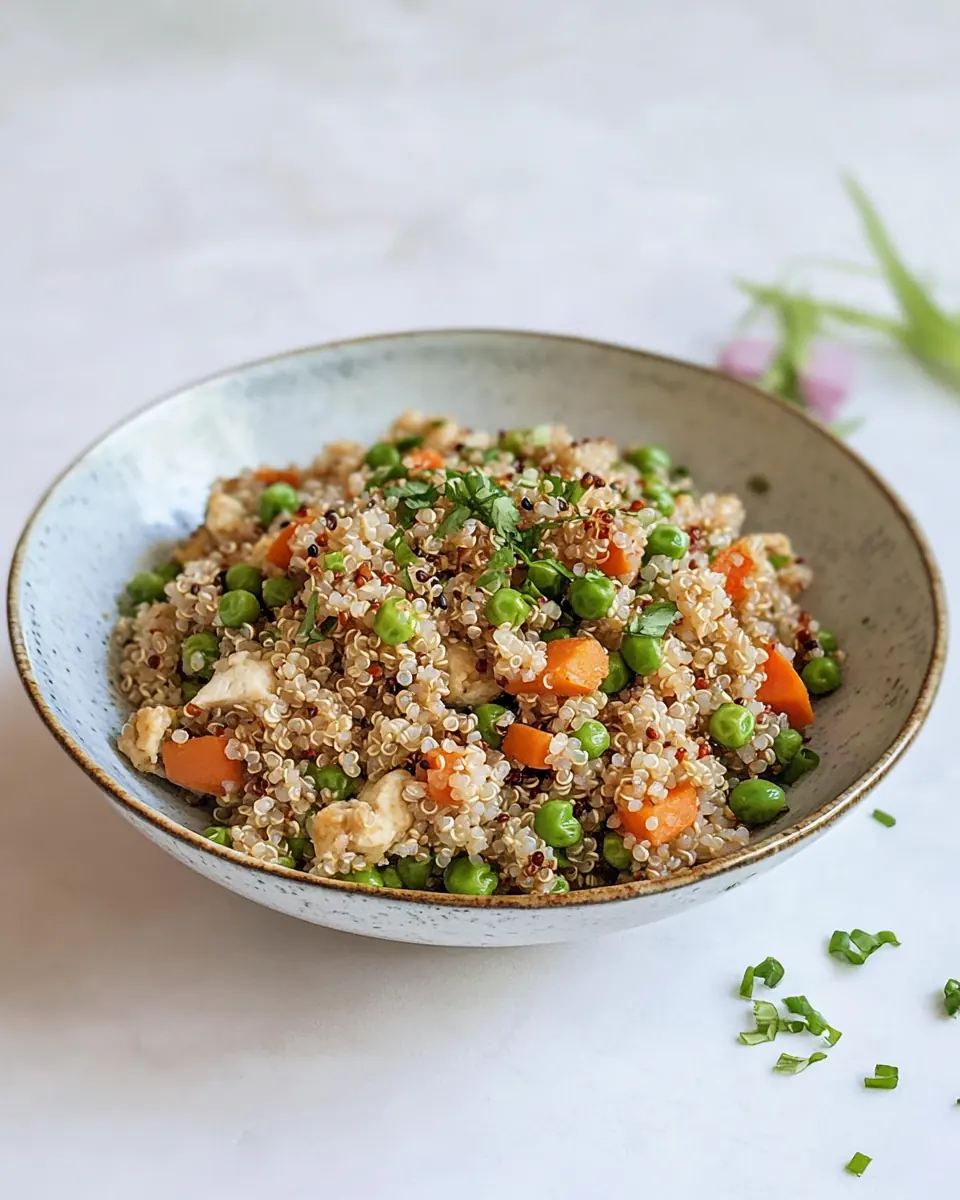
DEVOUR: When you bring the finished plate to your mouth, expect a blend of toasty, savory, and slightly nutty notes, with tender vegetables and fluffy egg pieces. Savor the contrast between the crisped quinoa and the softer components. A frequent misstep is letting the dish sit too long before serving, which dulls the textural highs, so eat while warm for the best experience.