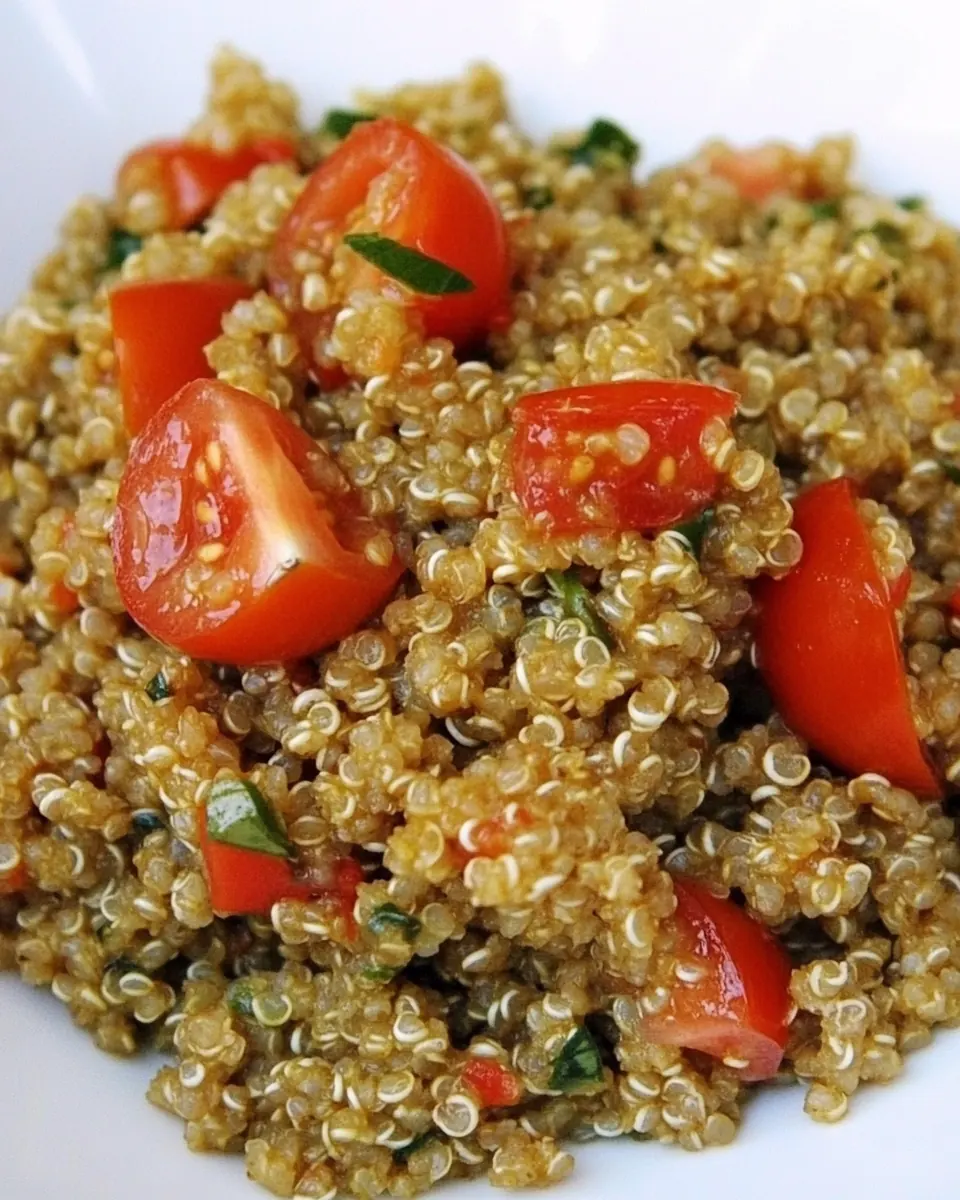
In a large skillet add oil, turn to medium-low heat and saute garlic until fragrant, about 1 minute. Add crushed red pepper flakes and tomatoes, saute one additional minute. Add remaining ingredients, cover, bring to a boil, reduce heat to and cook until liquid has been absorbed, about 15 minutes. Fluff with a fork and serve.: The moment the olive oil warms, you will notice a gentle shimmer across the pan surface and a faint fruity aroma. Let it heat on medium-low until it moves easily when you tilt the skillet, which helps the minced garlic release its fragrance without burning. You want a gentle sizzle when the garlic hits the oil. If the oil smokes, lower the heat right away, because overheated oil will make the garlic bitter. A common mistake is rushing with high heat, which scorches aromatics and ruins the base flavors.
turn to medium-low heat and saute garlic until fragrant about 1 minute: Shortly after the garlic hits the warmed oil you will smell an inviting, toasty aroma that signals readiness. The sound is subtle, a soft popping rather than an aggressive sizzle. Visually the garlic should remain pale golden, not brown. Cook for about one minute, watching closely so the tiny pieces do not darken. If they brown, remove the pan from heat briefly to cool, because burnt garlic adds unpleasant bitterness to the whole dish.
Add crushed red pepper flakes and tomatoes saute one additional minute: As you add the crushed red pepper flakes , you will notice a warm, spicy perfume that deepens when the tomatoes join the pan. The diced tomatoes will begin to soften and release juice, creating a gentle bubbling and a bright red sheen across the skillet. Stir to mix, letting the liquid loosen any browned bits for flavor. Avoid overcooking the tomatoes here, as you want some texture and freshness to remain; a common misstep is turning them into a lifeless paste.
Add remaining ingredients cover bring to a boil: Once the tomatoes have softened, add the pre-rinsed quinoa , low sodium vegetable broth , dried oregano , freshly ground black pepper , and salt to taste. You will see the liquid rise and become glossy as it envelops the grains. Cover the skillet to trap steam and bring the liquid to a lively but controlled boil, which creates pressure that helps the quinoa hydrate evenly. A frequent oversight is failing to stir briefly before covering, which can allow grains to stick to the bottom.
reduce heat to and cook until liquid has been absorbed about 15 minutes: After the pot reaches a boil, lower the heat to maintain a gentle simmer so the quinoa can absorb the broth slowly, becoming tender and fluffy. You will hear a soft, steady simmer and see the surface go from restless to mostly still as the liquid disappears. Tiny translucent rings will appear around the grains when they are nearly done. Resist the urge to lift the lid frequently, because trapped steam is doing the work. A typical mistake is cooking too fast on high heat, which can leave the center of the grains chalky while the liquid evaporates unevenly.
Fluff with a fork and serve: When the liquid is absorbed and the quinoa looks tender and slightly translucent, remove from heat and let it rest covered for a couple of minutes. Using a fork, fluff the grains gently to separate them and release steam, which keeps the texture light and airy. As you fluff, you will notice the aroma of garlic and tomatoes rise, and the dish will look glossy with bits of tomato distributed throughout. Taste and adjust salt or pepper if needed. Avoid mashing the grains during this step, as vigorous stirring will create a dense, pasty texture instead of the desired fluffy finish.