Mix all ingredients together until soft dough forms. The easiest way to do this is with a stand mixer.: The moment the ingredients come together you should hear a low whirring from your mixer and see a dough that pulls away from the bowl, touching it will reveal a soft but not sticky texture. This step matters because a uniformly mixed dough ensures even baking and consistent crumb. If you skip thorough mixing you risk pockets of dry flour or unblended shortening, which create uneven texture in the finished cookies. Common mistake to avoid, mixing too long at high speed, which warms the dough and makes it greasy rather than tender, so scrape the bowl and mix just until cohesive.
Knead the dough into a ball, place into a bowl, and cover with plastic wrap. Refrigerate for a few hours to overnight.: After forming a ball you will feel the dough firm up as it chills, and the surface becomes smoother. This chilling period relaxes gluten and helps the dough hold shape when rolled thin, which prevents excessive spreading. If you bypass chilling the dough it will be too soft to shape and may fill with air pockets during baking. A common problem is not chilling long enough, leading to sticky dough that tears when you roll it, so give it adequate time in the refrigerator.
Cut the cream cheese into small chunks. Mix together all filling ingredients until well combined.: When you cut the cream cheese into small pieces they incorporate more evenly, creating a filling that is smooth yet slightly textured. Mixing should produce a cohesive, scoopable mixture that smells tangy and lightly sweet. This technique prevents large pockets of cold cream cheese that would create molten surprises in baking. Avoid overbeating the filling because too much air will cause it to puff and potentially leak as it bakes.
Remove dough from refrigerator. If the dough has turned hard, allow to soften for 15-20 minutes. Divide the dough into four pieces. Pound each piece out, one at a time, then use a rolling pin to roll out the dough on a floured surface. The dough should be rolled quite thin, as cookies will puff up during baking. Note: As the dough warms it will become sticky. Keep your rolling pin lightly coated in flour to prevent it from sticking.: As you let the dough rest briefly it becomes easier to roll and less likely to crack. The tactile cue you want is a pliable dough that still holds its edges, and as you roll you will notice the surface smooth and the dough widening under the pin. Rolling thin is crucial because the dough puffs during baking and you want a delicate shell, this affects both texture and final bite. A trap many fall into is rolling too thick to save time, which yields dense cookies, so take the extra minutes to keep them thin and even, and keep a light dusting of flour on the board to prevent sticking.
Note: As the dough warms it will become sticky. Keep your rolling pin lightly coated in flour to prevent it from sticking.: When the dough warms you will feel tackiness on your fingertips; a lightly floured pin and surface restore control without adding excess flour which would dry the dough. Keeping the dough cool and handling it quickly preserves the tender texture and helps you cut clean circles. The common error is over flouring the dough to chase the stickiness, which makes the final product dry and crumbly, so work in short bursts and return dough to the fridge if needed.
Cut the dough into 3-4 inch circles. Place circles onto ungreased cookie sheet.: The sound of the cookie cutter releasing from the dough should be clean and quiet, and the circles should transfer onto the sheet holding their edges. Leaving the sheet ungreased encourages a slight grip that prevents excessive sliding or misshapen cookies as they bake. The size matters because larger circles can collapse or hold too much filling, while too small prevents a neat fold. A typical mistake is overcrowding the sheet which causes cookies to bake unevenly, so space them adequately.
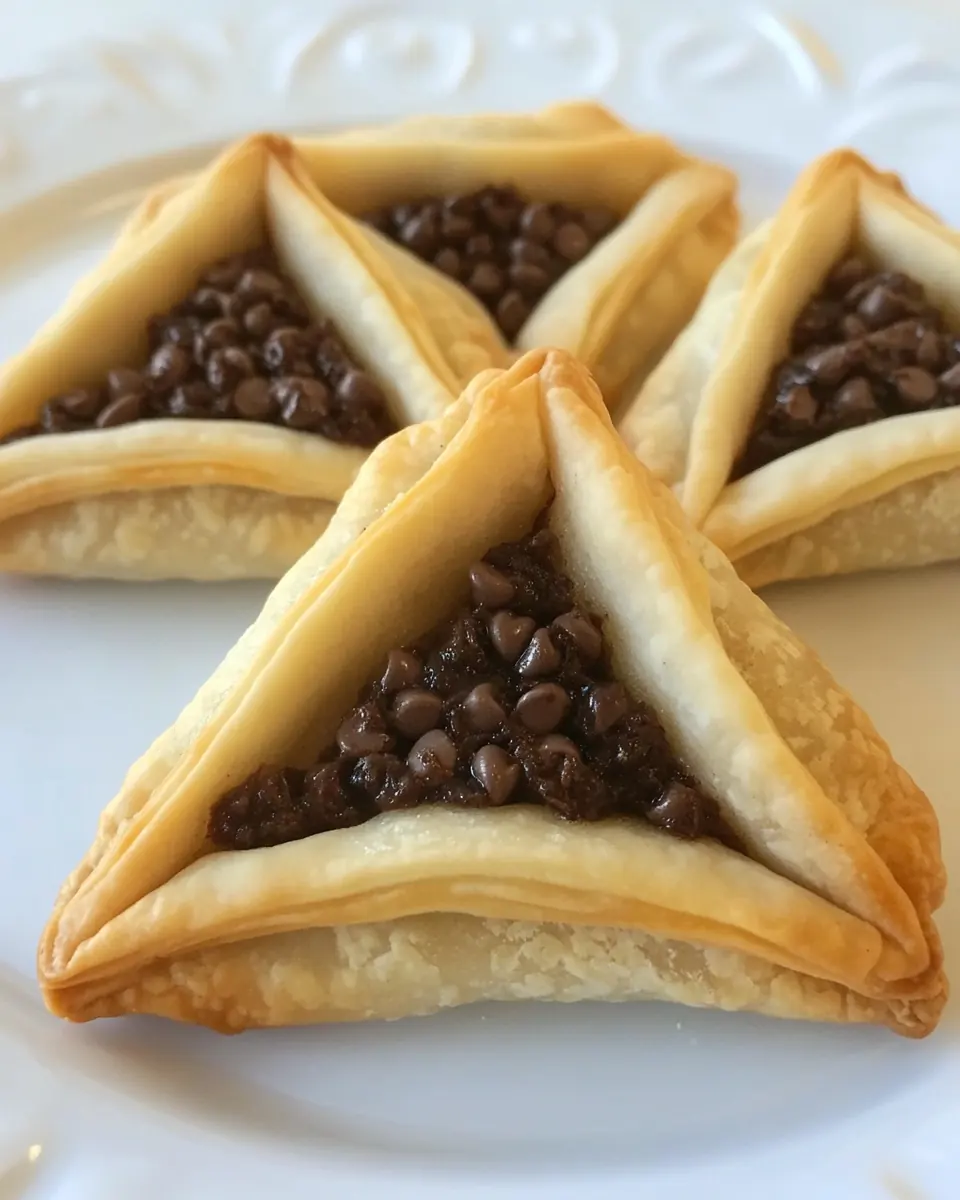
Place a teaspoon of filling into the center of each circle. Do not use more than a teaspoon of filling, or you run the risk of your hamantaschen opening and filling spilling out during baking.: A single teaspoon creates a concentrated pocket of flavor while keeping the pastry sealed. When you add the filling you should see a small mound that glistens slightly from the chocolate chips , and it should sit without flattening. Overfilling leads to leakage and messy trays, so measure carefully and keep the mound modest for best results. Watch for filling that is too loose, as it will spread during baking.
Assemble the hamantaschen in three steps. First, grasp the left side of the circle and fold it towards the center to make a flap that covers the left third of the circle.: When you fold the first flap you will feel the dough give and hold, creating the foundation for the triangle. This first fold sets the angle for the remaining flaps and must be neat to ensure a tidy final shape. Folding unevenly will make sealing harder and can cause the cookie to open, so take care to place the flap at the same height on each cookie to keep a uniform look.
Grasp the right side of the circle and fold it towards the center, overlapping the upper part of the left side flap to create a triangular tip at the top of the circle. A small triangle of filling should still be visible in the center.: As you fold the right side, aim for a slight overlap that creates a visible triangular tip with a center window of filling. That little peek of chocolate chips is both pretty and functional, letting steam escape without letting the filling spill. If the overlap is too tight the cookie can seal flat and steam can force the filling out, so leave a small exposed center for balance.
Grasp the bottom part of the circle and fold it upward to create a third flap and complete the triangle. When you fold this flap up, be sure to tuck the left side of this new flap underneath the left side of the triangle, while letting the right side of this new flap overlap the right side of the triangle. This way, each side of your triangle has a corner that folds over and a corner that folds under– it creates a “pinwheel” effect. This method of folding is not only pretty– it will help to keep the cookies from opening while they bake.: The pinwheel tucking method keeps each corner interlocked which visually looks charming and functionally prevents the cookies from unwrapping. As you tuck the edges you'll feel a small resistance then a satisfying snug fit, and the cookies will keep this shape through baking. If you press too hard the dough might tear, so be gentle and precise; torn edges invite leaks.
Pinch each corner of the triangle gently but firmly to secure the shape.: A gentle pinch produces a sealed edge that stays intact in the oven while keeping the pastry light. The tactile cue is a secure seam that does not crumble when pressed. Pinching too tightly can compress the dough and create dense corners, so aim for a firm but tender seal. If seams look loose later, a tiny dab of cold water can help adhere them before baking.
Repeat this process for the remaining circles. When all of your hamantaschen have been filled, bake them on the ungreased cookie sheet at 400 degrees F for 20-25 minutes till cookies turn light golden brown. Remove the cookies from the pan and cool them on a wire rack. Cool the cookie sheet completely before making more cookies.: As the cookies bake you will smell a warm, toasty aroma and see the edges take on a pale golden hue while centers remain slightly paler. The heat at 400 degrees F encourages a quick set on the edges, preserving shape while creating a tender interior. Watch closely near the 20 minute mark, because ovens vary and a few extra minutes can change the color from perfect to overdone. A frequent mistake is removing cookies too soon which results in a doughy center; trust the visual cues of light golden edges and set centers. Cooling on a wire rack prevents residual heat from making the bottoms soggy, and allowing the cookie sheet to cool before another batch ensures consistent results.