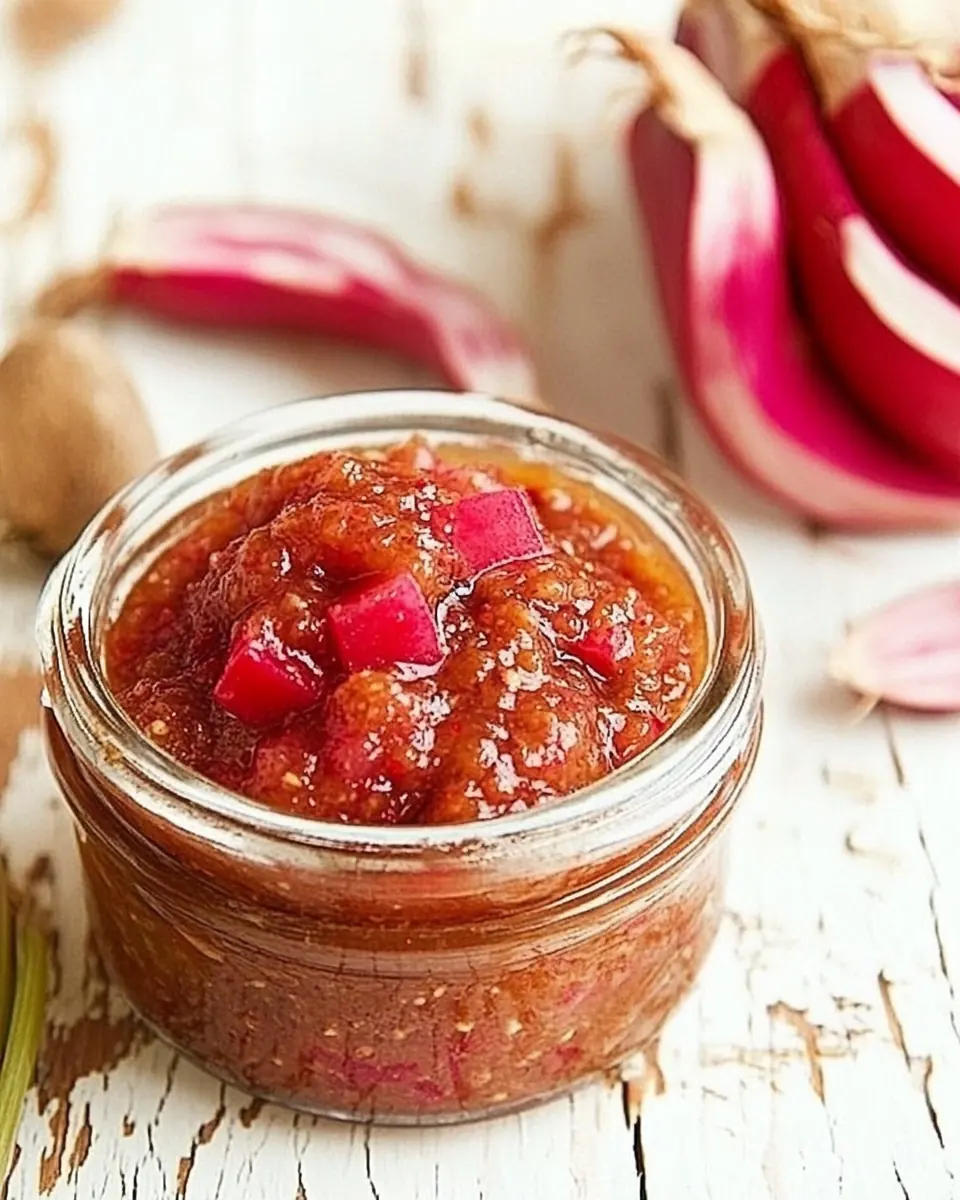
Boil chopped radish in a small amount of water until soft.: The boiling stage should produce a gentle, rolling simmer where the radishes soften and lose their raw bite. You will hear a faint bubbling and see the pieces shift from crisp to tender, slightly translucent edges. This softness is important so the chutney develops a cohesive texture, yet retains some bite. If you add too much water, the cooking will take longer and dilute the flavors, so keep it minimal. A common error is overcooking until the radishes disintegrate, which leads to a puree rather than a chunky chutney.
Semi mash the radishes with a fork. Set aside.: After draining any excess water, semi mashing creates a mix of tender pieces and softer bits that absorb spices well. You should feel resistance as the fork breaks some pieces, leaving irregular chunks. This texture gives the chutney its character, offering both body and spreadability. Avoid using a blender here, which will create a homogenous paste; the pleasant contrast of textures would be lost.
Heat oil on a separate pan.: Heat the tablespoon of oil until it shimmers gently and the surface moves smoothly when you tilt the pan. The oil is the flavor carrier, so warming it correctly extracts aroma from the whole spices. Too hot oil will smoke and scorch the spices, while oil too cool will not bloom them, yielding a flat profile. Aim for medium heat to strike the right balance.
Add garlic and sauté until fragrant.: Add the chopped garlic to the warmed oil and stir. You will smell its sharpness soften into a sweet, savory scent within seconds. The sound is a quiet sizzle, and the garlic should turn pale golden at the edges, not dark brown. Burnt garlic tastes acrid, so reduce heat immediately if it starts to brown too fast. The fragrant garlic forms a savory foundation that deepens the chutney.
Add panch foron.: When you add the panch foron the seeds will begin to pop and release their combined aroma, which is earthy, fennel like, and slightly bitter in a pleasant way. This spluttering is a cue to watch closely, as it can quickly move from aromatic to burnt. The oil will take on a nutty tint and an enticing perfume. Stir briefly and let the seeds infuse for only a few moments to prevent any bitter overtones.
Once panch foron starts to splatter, add the semi mashed radish.: Carefully add the semi mashed radishes to the pan; the oil will hiss as it meets the residual moisture. This is expected, and the sound should subside as the moisture integrates. Toss gently so each piece picks up the spice oil. Visually, the radishes will darken slightly and glisten, showing they are coating with the flavors. If the pan is too hot, the radish edges can brown unevenly, so moderate heat preserves an even, tender finish.
Add all other spices, sugar (stevia), tamarind paste, vinegar and salt.: Sprinkle the ground cumin , coriander , and red chili , then add the sweetener, tamarind paste , vinegar , and salt . As you stir, you will sense layers unfolding, from the earthy ground spices to the sharp tang of tamarind. The mixture should begin to smell fruity and warm. Mix thoroughly so the tamarind disperses and the spices coat the radish, preventing clumps. A common mistake is adding everything all at once without stirring, which causes uneven seasoning pockets. Taste and adjust gently; tamarind varies, so balance sugar carefully.
Cook at medium-low heat, mixing occasionally until water evaporates.: Reduce the flame to medium low and let the chutney simmer. You will hear a softer bubbling and see the mixture thicken as moisture evaporates. Stir occasionally to prevent sticking and to allow the chutney to reduce evenly. When it reaches a glossy, thick consistency and the oil separates slightly at the edges, it is done. Overcooking until it becomes dry and paste like will make it gluey, while undercooking leaves too much watery tang. Aim for a clingy texture that still spreads easily.