Preheat oven to 350 F. Line an 8-inch square pan with aluminum foil and spray with cooking spray; set aside.: When you open the oven to this temperature you should feel a warm, even heat; letting it fully preheat ensures the crust begins to set the moment it goes in. Preheating prevents underbaked centers which can happen if the pan enters a cold oven. A common mistake is placing the pan in too early, which results in uneven baking, so always wait until the oven reaches temperature.
To a large, microwave-safe bowl add the butter and heat on high power to melt, about 1 minute.: Proper lining makes lifting the bars out effortless and speeds cooling because the foil conducts heat away evenly. The cooking spray keeps the crust from sticking. Avoid skipping the lining, as attempting to remove bars from an unlined pan often shreds the edges and wastes the careful pressing work.
Add the sugars, vanilla, and whisk to combine.: As the butter melts you will hear a gentle sizzle and see it go from opaque to clear, fragrant and warm. Melting in the microwave is fast, but stir once to distribute heat and avoid hot pockets. Overheating can cause separation and steam, which changes texture, so heat in short bursts if your microwave runs hot.
Add the flour, oats, optional salt, and stir to combine. Mixture will have some larger, well-formed crumble pieces as well as some sandier, dryer bits.: Whisking will dissolve some of the sugars and distribute the vanilla evenly, producing a glossy, sweetened butter mixture. You should smell a vanilla whisper and see granules begin to mingle. If the sugars remain grainy, whisk a little longer, but avoid vigorous whipping which can incorporate air and change bake results.
Set 1 heaping cup mixture aside to be sprinkled on later as crumble topping.: Right away you will notice the mixture shift from wet to sandy and then clump into larger pieces, offering both sandy bits and formed crumbs. This texture is intentional, it yields a sturdier crust with crumbly topping. A common misstep is over stirring until completely smooth, which removes those desirable crumb clusters and makes the bars dense.
Transfer remaining mixture to prepared pan, and using a spatula or your fingers, hard-pack the mixture to create an even, smooth, flat crust.: Reserving this portion preserves chunkier pieces for the topping, which will crisp and brown attractively in the oven. You will see both coarse clusters and sandier fragments in the reserved cup. Do not press this reserved portion into a pan, or you lose the airy topping texture.
Evenly spread the raspberry preserves over the crust making sure there’s complete coverage. Preserves should be about 1/8-inch to 1/4-inch thick.: Pressing firmly will compact the base so it holds together when sliced; you should feel resistance under your fingertips and see a glossy, even surface. A flat crust ensures the jam layer spreads without cracking. If you pack it too loosely, the bars will crumble when cut, so apply steady pressure for a firm foundation.
Evenly sprinkle with the reserved heaping 1 cup crumble topping mixture. Before sprinkling, I squeeze the mixture in my palm to encourage bigger crumble pieces to form.: The preserves should glisten and run smoothly if spread to an even thickness, creating a uniform layer that seals the crust. Use the back of a spoon or offset spatula to smooth it to about an eighth to a quarter inch. Uneven spreading can lead to pockets that bubble over or dry spots, so take a moment for an even coat.
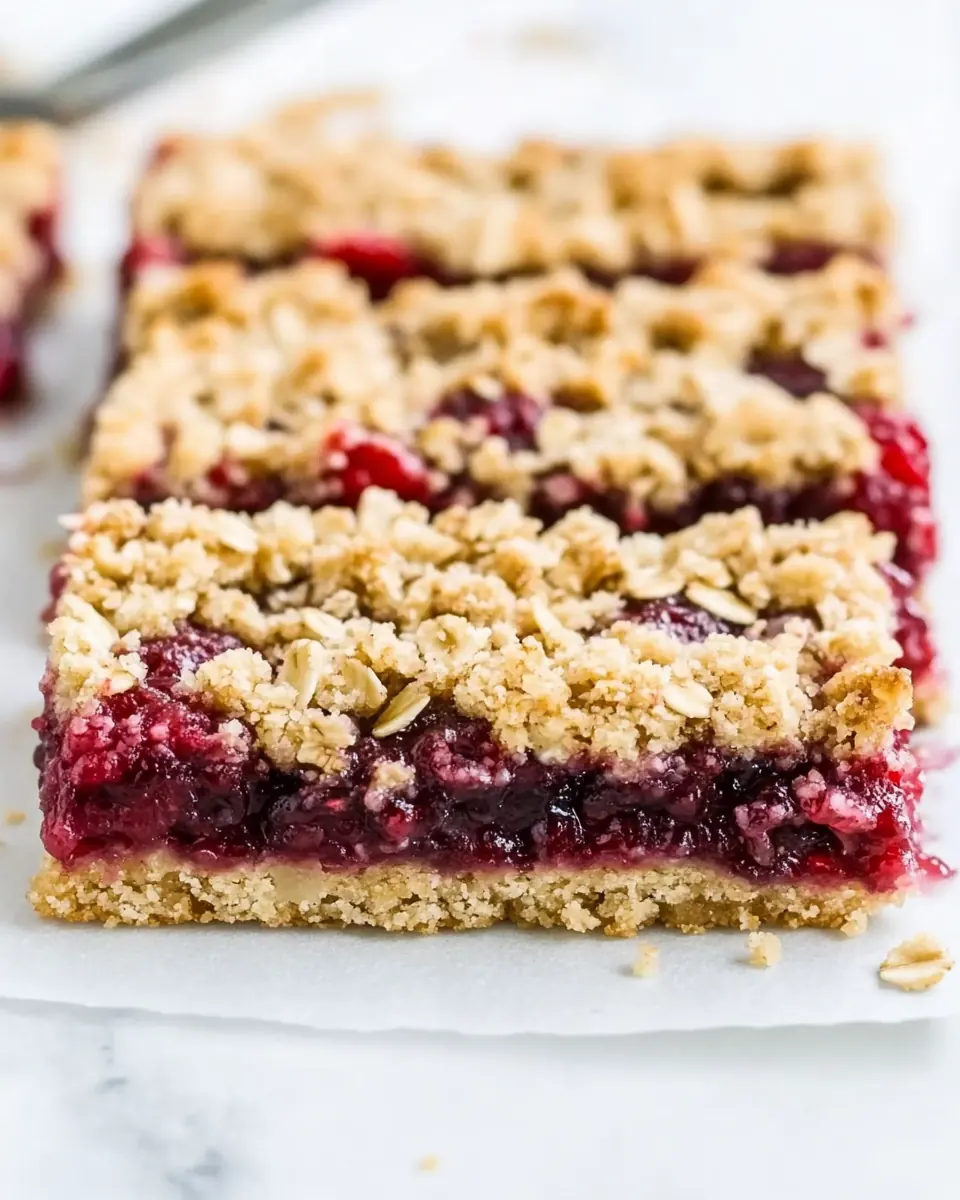
Bake for about 30 to 32 minutes, or until edges are set and center has just set and is lightly golden browned. Place pan on a wire rack and allow bars to cool for at least 2 hours before slicing and serving.: When you scatter the topping, you will hear the soft patter of crumbs landing on the jam, and the larger clusters will create pleasing peaks. I often squeeze some of the reserved mixture in my palm to encourage larger pieces before sprinkling, which yields a rustic, textured surface. If you press the topping down, it will lose its crunchy contrast, so leave it loose for the best finish.
Bake for about 30 to 32 minutes, or until edges are set and center has just set and is lightly golden browned: As the bars bake the butter and sugars will start to caramelize and you will smell nutty oats and warm jam. Look for golden brown edges and a center that is no longer glossy but gently set; a slight wobble is okay because it firms as it cools. A frequent error is overbaking which dries the bars, so check at 30 minutes and adjust by oven variances.
Place pan on a wire rack and allow bars to cool for at least 2 hours before slicing and serving: Cooling fully lets the jam settle and the crust firm so slices are clean and the texture balances between chewy and crisp. You will notice the aroma shift from baking warmth to a concentrated fruity scent as moisture evens out. Cutting too soon results in squashed bars and jamgy slices, so be patient and let them cool thoroughly.