For the crust:: The buttery, warm aroma of crushed graham cracker mixed with sugar is the first signal that you are building a solid foundation. As you stir the crumbs and 1 1/2 tsp granulated sugar with melted butter , notice how they clump together when pressed between your fingers, a tactile cue that they will hold once baked. Pressing about 1 slightly heaping tablespoonful into each paper lined muffin cup creates a compact base; you should feel resistance but not rock hard. Bake at 325 degrees for the short five minute par bake, during which you will smell the crackers toasty and the butter settling into the crumbs. A common mistake is overpacking the crust, which leads to a dense base, so aim for firm but even pressure.
Preheat oven to 325 degrees. In a mixing bowl, using a fork, stir together graham cracker crumbs and sugar, then pour in melted butter and stir until evenly moistened.: The steady, low heat is crucial because it allows the cheesecakes to set gently, giving you a creamy interior without overbrowning. You will notice a warm, dry oven smell as it reaches temperature, and maintaining that exact heat prevents uneven rising. If the oven runs hot, the tops can puff and crack; use an oven thermometer if you suspect your oven varies. Avoid opening the oven repeatedly, as that causes temperature swings which can affect texture.
Add 1 slightly heaping tablespoonful to 12 paper lined muffin cups. Press crust firmly into an even layer. Bake in preheated oven 5 minutes then remove from oven and allow to cool.: When you press the crumb into each cup, aim for an even layer that is level across all cups so the filling distributes uniformly. The crust should be compact enough that it does not fall apart when you transfer the pan to the oven. If the crumbs feel dry, a touch more melted butter will help, but do not oversaturate or the crust will be greasy. Watch for loose edges after baking, which signal underpacking.
For the raspberry swirl:: The bright, fruity perfume of fresh raspberries releases as you pulse them with 2 tbsp granulated sugar in the food processor. The puree should be glossy and fluid, not chunky, which makes it easier to strain. Pressing it through a fine mesh strainer removes seeds and leaves a silky sauce that rides on top of the filling. A slow, steady press with the back of a spoon helps extract color and juice without forcing seeds through. If you skip straining, you will notice a seed filled texture that changes the mouthfeel.
Add raspberries and 2 Tbsp granulated sugar to a food processor and pulse until well pureed, about 30 seconds - 1 minute. Press mixture through a fine mesh strainer into a bowl (basically until there are only seeds remaining in strainer, you should get quite a bit out of it). Set aside.: As you pulse, listen for the change in sound from big thumps to a more continuous hum, which indicates the fruit is breaking down. The sugar helps the puree liquefy and intensify in color, and after about 30 seconds to 1 minute you should see a uniform, deep pink mixture. When you press it through the strainer, expect a bright, fragrant bowl of sauce. Rubbing aggressively can force seeds through, so be patient and let the puree pass naturally.
For the cheesecake filling:: The kitchen will begin to smell like sweet dairy as you combine 3/4 cup granulated sugar with 1 tbsp all-purpose flour , then add softened cream cheese and 1 tsp lemon zest . With an electric hand mixer blend until smooth, scraping the bowl so no pockets remain. The mixture should be glossy and homogenous before you add the eggs . Adding them one at a time keeps the texture silky and prevents curdling. A typical pitfall here is working with cheese that is not softened, which leaves lumps; aim for room temperature blocks that yield to gentle pressure.
In a mixing bowl, whisk together granulated sugar and flour. Add cream cheese and lemon zest using an electric hand mixer, blend mixture just until smooth. Mix in eggs one at a time.: The dry ingredients distribute stabilizing structure through the batter, and whisking them first ensures there are no pockets of flour. This quiet step affects the final texture profoundly, because evenly distributed flour prevents striations or gritty spots. After adding the cream cheese , mix until the surface becomes smooth and satiny. If you notice a slightly grainy feel, keep mixing briefly to fully hydrate the flour and dissolve the sugar.
Stir in vanilla and sour cream just until combined. Tap bowl forcefully against countertop, about 10 times, to release large air bubbles. Divide mixture evenly among cups over crust layer, adding about 1/3 cup to each and filling nearly full.: You will see the batter transform from chunky to velvety, and that shine is your sign to stop mixing. Overworking at this stage introduces too much air, which increases the chance of cracking while baking. The small flecks of lemon zest should be visible, offering a scent of citrus when you lean in. If the batter splatters, reduce speed and scrape the bowl frequently.
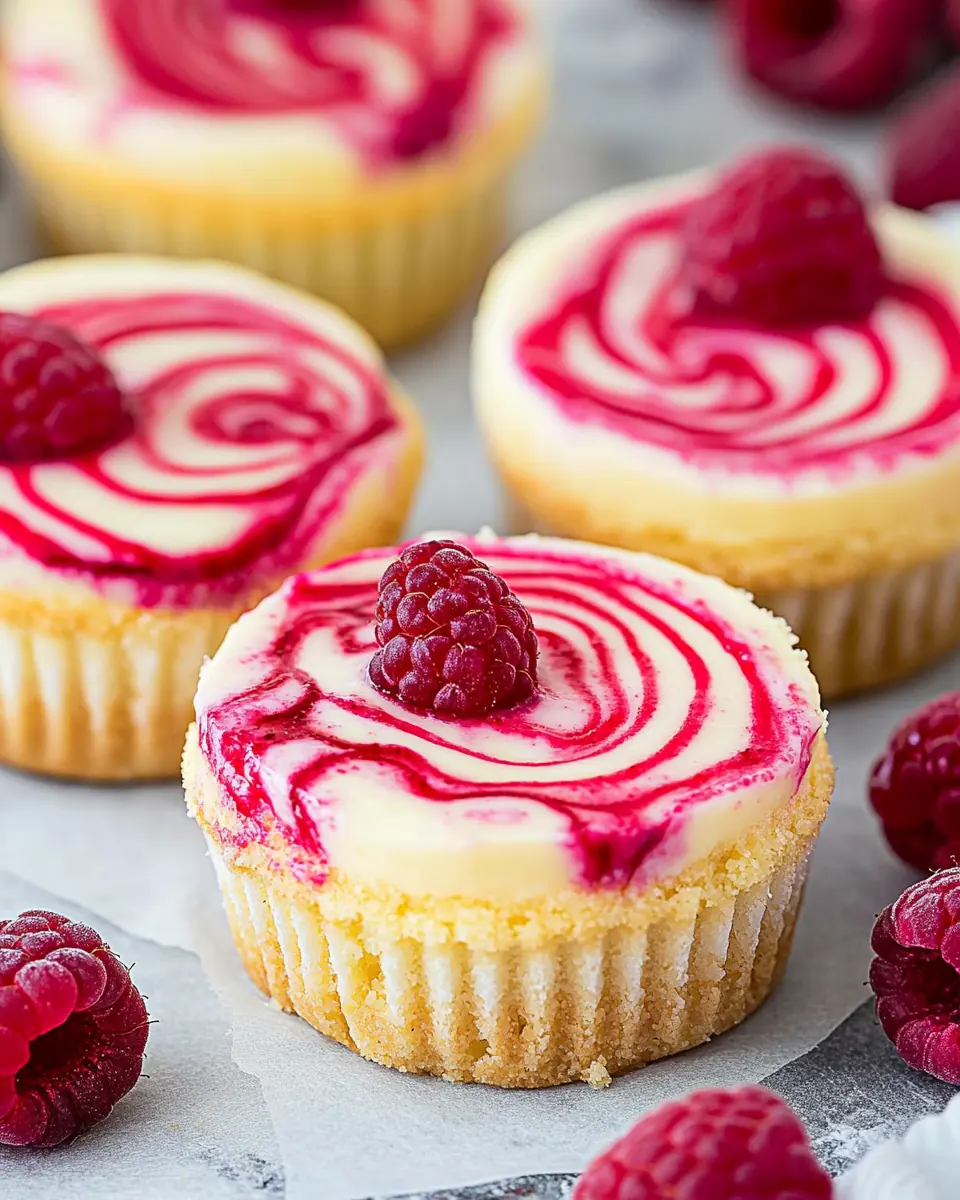
Jiggle pan to level cheesecake filling then dollop about 5 small circles of raspberry sauce over each cupcake, about 3/4 tsp total over each one. Using a toothpick, swirl raspberry filling with cheesecake mixture to create a marbled design.: Each egg should incorporate fully before adding the next; you will notice the batter loosening and becoming smoother with each addition. This measured approach creates a stable emulsion, which yields a creamy final texture. If you add eggs too quickly, you may create a lumpy or separated batter, so pause and scrape the sides between additions. The final batter should fall slowly off the beater with a ribbon like motion.
Bake in preheated oven 22 - 25 minutes until cupcakes are puffed and nearly set (they might crack a little but they will deflate while cooling and you won't even see it).: Adding vanilla and sour cream at the end gives the batter a silky finish and a subtle depth of flavor. The smell will become pleasantly rounded, and the batter should be smooth and slightly thick, easy to spoon. If the batter looks curdled, a few gentle strokes will usually bring it back together; avoid high speed mixing which would trap air.
Remove from oven and allow to cool completely, then chill in refrigerator 3 hours, until set. Store in refrigerator in an airtight container: This simple action sends large pockets of air to the surface so they pop, reducing the likelihood of large cracks or uneven puffing. You can also run a spatula through the batter to dislodge trapped air near the edges. A mistake is to skip this step, which often leads to visible bubbles or holes after baking. You want the batter to look smooth and even before portioning.
Divide mixture evenly among cups over crust layer, adding about 1/3 cup to each and filling nearly full: As you fill each cup, watch for consistency in level across all twelve so they bake uniformly. The weight should feel similar as you spoon the batter, and the surface should be glossy. Overfilling will cause spills and uneven baking, while underfilling changes proportion; aim to fill to the same height in each cup for even results.
Jiggle pan to level cheesecake filling then dollop about 5 small circles of raspberry sauce over each cupcake, about 3/4 tsp total over each one: The gentle jiggle helps any small pockets settle and creates a flat surface that is easy to swirl. Dollop the reserved raspberry sauce in small circles so you can create a marbled pattern rather than a single pool. Using too much sauce in one spot can sink into the filling and create an uneven set; small dollops spread more attractively when swirled.
Using a toothpick swirl raspberry filling with cheesecake mixture to create a marbled design: As you drag the toothpick, observe the way the sauce ribbons through the filling, forming delicate veins of color. The motion should be light and confident, not overworked, otherwise the colors will blend into a muddy pink. The visual contrast is important because it signals the balance of flavors, so aim for visible streaks rather than full incorporation.
Bake in preheated oven 22 to 25 minutes until cupcakes are puffed and nearly set: During baking you will see the minis rise and the edges set while the centers remain slightly jiggly, which is the cue they are done. The tops may develop tiny cracks; this is normal because they will deflate as they cool, leaving a smooth finish. Overbaking leads to a dry texture, so check for a slight wobble in the center rather than firmness.
Remove from oven and allow to cool completely then chill in refrigerator 3 hours until set: Cooling first on the countertop lets the temperature drop gently, preventing shock that can cause major cracks. Once cooled, chilling for at least 3 hours brings the filling to the right sliceable consistency. A frequent error is to rush refrigeration; insufficient chill time results in a runny center. Store in an airtight container in the fridge to preserve the delicate flavors and texture.
Store in refrigerator in an airtight container: Proper storage protects the soft filling and keeps the crust from absorbing too much moisture. These minis will keep well for several days, but I recommend consuming within three to four days for best texture and fresh raspberry flavor. Avoid stacking them without protection, as it can mar the beautiful swirls on top.