Blend the cashews and oats in a Vita-Mix, food processor, or high speed blender until they’re a fine powder. Don’t overblend or you’ll wind up with cashew butter very quickly.: Close your eyes and notice the dry, nutty scent that emerges as the blades reduce the raw cashews and oats into a sandy meal. You should see a uniform, crumb like consistency that still looks dry rather than oily. This texture is crucial because it gives structure to the dough while preventing it from turning into nut butter. If you push the blender too long you will hear the sound change to a smoother, heavier whir, and you will end up with cashew butter which will make the dough too wet. A common mistake is running the machine continuously; instead pulse in short bursts and scrape the bowl down occasionally so everything grinds evenly. If you find a handful clumping, that means you are approaching buttery stage, so stop and move to the next step.
Add the agave, maple, vanilla and blend until incorporated. Be careful to just blend in short bursts and only until combined; don’t over-process.: As the sweeteners meet the nut and oat mixture, you should notice a gentle gloss forming and a richer aroma of caramel and vanilla. The goal here is to hydrate the dry mixture just enough that it starts to hold together without becoming gummy. I like to add the liquids slowly while pulsing so I can feel the consistency shift. The reason this technique matters is that controlled hydration prevents the mixture from getting overly sticky, which would make shaping difficult. If you overdo it, the dough will be too soft and you will need more dry ingredients to rescue it. A good troubleshooting tip is to chill the bowl briefly if the mixture seems too warm or sticky before shaping.
Stir in the chocolate chips by hand.: When you fold chocolate chips in by hand you preserve their shape and keep little pockets of chocolate intact. Use a spatula to distribute them evenly, and you will notice small glints of dark brown across the dough. The contrast in texture and temperature is part of what makes each bite interesting. If you used the frozen cacao shards, be mindful that they can melt if the dough is too warm, so work quickly and keep your hands cool. A common pitfall is over mixing with the blender at this stage, which will break down the chips and distribute chocolate too uniformly, losing that delightful pop.
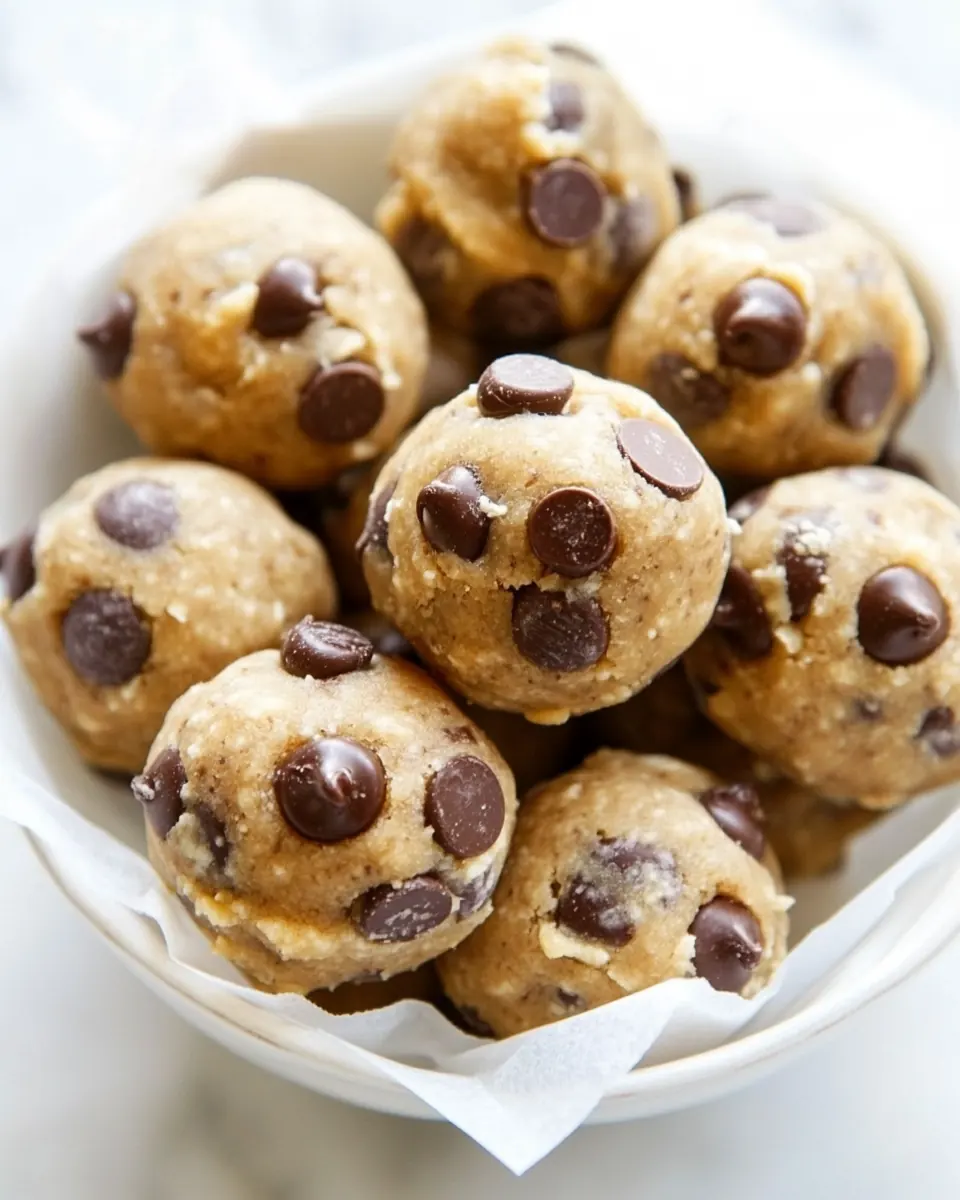
Form into balls and serve. If dough is sticky, chilling it in the refrigerator or flash-chilling it in the freezer helps make it easier to work with.: As you roll the mixture between your palms, pay attention to texture and firmness. The balls should hold shape, feel slightly cool, and have a tender interior. Rolling warms the dough slightly, which helps ingredients bind, but if they become too soft, pop them in the refrigerator for a few minutes. The smell at this point will be sweet, nut forward, with cocoa highlights. One why note: forming uniform balls ensures even mouthfeel and presentation. Avoid overhandling, as this can cause excess warmth and stickiness; if that happens, chill the dough briefly before continuing.
If dough is sticky chilling it in the refrigerator or flash chilling it in the freezer helps make it easier to work with: A quick chill firms the fats and makes handling simple, the exterior becoming slightly more matte and easy to roll. The freezer will harden the dough faster if you are in a hurry, but watch carefully because leaving it too long will freeze the interior and change the texture. The sensory shift is obvious when chilled, the aroma tightens and the texture becomes firmer to the touch. This step matters because proper chilling prevents the balls from flattening or sticking to your hands. A troubleshooting note is to wrap any unused dough and store in the fridge rather than leaving it exposed, which can dry the edges.