Preheat an electric non-stick griddle to 350 degrees. In a mixing bowl, whisk together flour, cocoa powder, baking powder, baking soda and salt, set aside. Measure out milk into a liquid measuring cup and whisk in vinegar, allow mixture to rest for 2 minutes.: You will notice the griddle warming and a faint dry metallic scent as it reaches temperature, and a drop of water should dance and evaporate quickly when the surface is ready. Proper preheating ensures even browning and consistent cooking, preventing pancakes from sticking or cooking too slowly which can make them greasy. A common mistake is starting on a surface that is too cool, which creates flat, oily pancakes, so wait until the griddle is fully up to temperature.
Pour milk mixture into a separate large mixing bowl and add in sugar, eggs, red food coloring, vanilla and melted butter. Whisk mixture until well combine. While whisking, slowly add in dry ingredients and mix just until combine.: The dry mix should smell faintly of cocoa with a clean, floury aroma, and the cocoa should blend into a uniform color without streaks. Combining the dry ingredients first ensures even distribution of leavening agents, so pockets of baking soda do not create odd flavor or uneven rise. Avoid compacting the flour when spooning into the bowl, and if you see lumps of cocoa, sift or press them through a sieve to keep the batter smooth.
Butter griddle if necessary and pour about a 1/4 - 1/3 cup batter (depending on how large you want your pancakes) at a time onto hot griddle (you can also use the back of measuring cup or spoon to lightly spread batter from center out to the edge a bit so they aren't thicker in the center then they are on the edges).: After two minutes the milk will thicken slightly and might show tiny curdled bits, giving a tangy scent similar to buttermilk, which improves tenderness and flavor. This reaction helps the baking soda lift the pancakes properly, creating a light interior. A common mistake is skipping the rest, which reduces the leavening reaction and can make the pancakes denser than desired.
Cook until bubbles begin to appear on the top surface of the pancakes then flip and cook opposite side until pancake is cooked through (I didn't want the tops of the pancakes to be brownish red so I flipped them a little earlier than I normally do with pancakes, I didn't wait for many bubbles).: The wet bowl should look glossy and streaked with red, and when whisked, it becomes smooth and slightly aerated, releasing a sweet aroma with cocoa and vanilla notes. The melted butter should be warm but not hot to avoid curdling the eggs, and whisking helps integrate the ingredients for even color and flavor. If the butter is too hot it can scramble the eggs, so cool it slightly before adding.
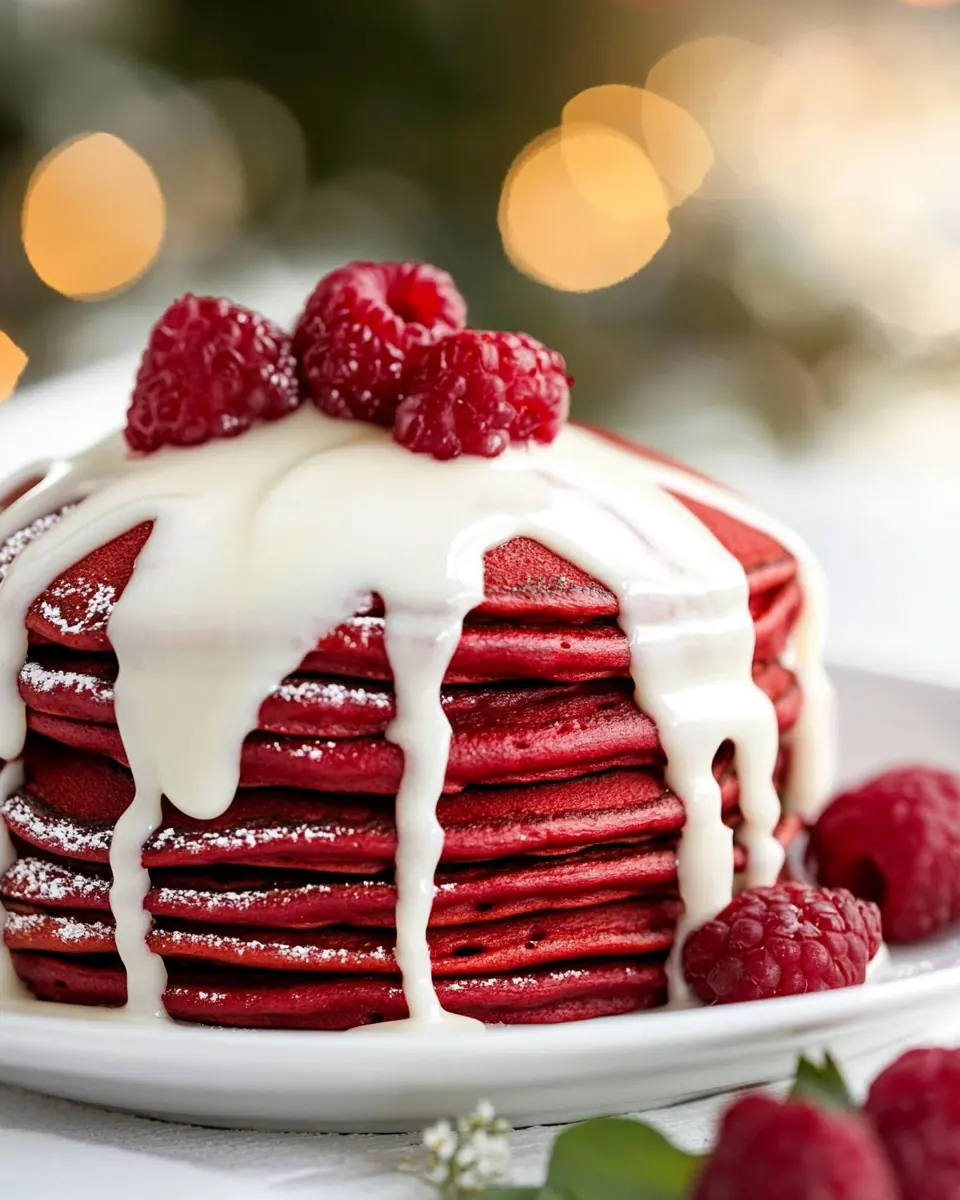
Serve warm with cream cheese glaze and garnish with fresh raspberries and mint leaves if desired.: As you whisk, notice the batter becoming homogenous and taking on a vivid red tone with tiny air bubbles forming on the surface, which helps create lift in the pancakes. A fully combined wet mix ensures uniform texture and flavor in each pancake. Over mixing at this stage is not the issue, but later when combining with dry ingredients you should be gentle to avoid tough pancakes.
For the cream cheese glaze: in a mixing bowl, using an electric hand mixer set on medium speed, blend together cream cheese and butter until well combine and fluffy, about 2 minutes.: You should stop mixing as soon as streaks of flour disappear; the batter will be slightly lumpy and smooth rather than completely silky, which protects the tender crumb. Gentle mixing keeps gluten formation minimal so the pancakes stay soft, and you will feel the batter thicken as the flour hydrates. A typical error is overworking the batter, which creates dense, chewy pancakes, so fold with a spatula rather than vigorous beating.
Add in remaining ingredients and mix about 1 minute until well combine, adding additional milk to thin if desired. Store in an airtight container in refrigerator.: As batter hits the hot surface you will hear a soft sizzle and see the edges set and tiny bubbles forming around the perimeter; use the back of a measuring cup or spoon to gently spread from center outward so the center is not thicker than the edges. Proper portioning and gentle spreading ensure even cooking and consistent pancake diameter. If you pour too much at once the interior may stay undercooked, so keep the portions moderate for even heat penetration.
Cook until bubbles begin to appear on the top surface of the pancakes then flip and cook opposite side until pancake is cooked through: The visual cue is small bubbles forming and the surface appearing matte rather than wet, with the edges lifting slightly from the griddle; flip when you see these signs and then cook until the underside is golden and the pancake springs back lightly when pressed. Flipping earlier, as I sometimes prefer to avoid a brownish red top, will give a paler surface but still cooked interior if you watch carefully. A common mistake is waiting for too many bubbles which can cause an over browned top or a dry texture, so trust the surface change over counting bubbles.
Serve warm with cream cheese glaze and garnish with fresh raspberries and mint leaves if desired: When plated, the pancakes will steam slightly and the glaze will soften into glossy ribbons, releasing a sweet tang that contrasts the cocoa. The raspberries add a bright tart pop, and mint leaves contribute a cool aroma, making each bite lively. A frequent oversight is letting pancakes sit too long before glazing, which prevents the glaze from melting slightly into the stack and blending flavors, so serve promptly.
For the cream cheese glaze: in a mixing bowl, using an electric hand mixer set on medium speed, blend together cream cheese and butter until well combine and fluffy, about 2 minutes : The mixture should transform into a light, aerated cream that smells mildly tangy and buttery, with a smooth texture that holds soft peaks. Whipping air in creates a softer, scoopable glaze that spreads easily and clings to pancakes. If your cream cheese is cold, it will not whip properly, so be sure it is at room temperature to avoid lumps and a dense glaze.
Add in remaining ingredients and mix about 1 minute until well combine, adding additional milk to thin if desired: As you blend in powdered sugar, milk, and vanilla the glaze will become glossy and pourable; adjust milk in small amounts until the texture matches your serving preference, whether slightly thick or more pourable. The powdered sugar sweetens and stabilizes the glaze while the milk controls flow for drizzling. Avoid adding too much milk at once, which can make the glaze runny and overly sweet; add small splashes until you reach the desired consistency.
Store in an airtight container in refrigerator: Cooled glaze will thicken and mellow in flavor, and you will notice a firmer texture after refrigeration; when ready to use, bring the glaze to room temperature or thin with a touch of milk to regain pourability. Proper storage keeps the glaze fresh for several days, preserving its flavor and texture. A common mistake is leaving the glaze out uncovered which can dry the surface and introduce off flavors, so seal it well.