In a large bowl, mix together the flour, sugar and salt. Using a box grater, grate the cold butter atop the flour mixture. Working quickly, and using your hands, break the butter bits into the flour until they’re evenly distributed and resemble the size of small peas.: The first sensations here are tactile, flour dust puffing slightly as you grate the cold unsalted butter , and a faint coolness on your fingers. You want small pea sized butter bits because they create distinct layers as they melt in the oven, producing flakiness. The why is straightforward, those butter pockets steam during baking and separate the dough into tender layers. A common mistake is letting the butter soften too much, which yields a greasy, dense crust; keep the butter chilled and work quickly, returning the bowl to the fridge if your hands get warm.
Add 3/4 cup of water and mix. The mixture will be shaggy at this point. From here, add 1 tablespoon of water at a time until the dough comes together (I usually need to add 3 to 4 tablespoons). Flour your counter and dump the dough onto it. Knead a few times more until it comes together. Divide the dough by setting aside 1/3 of the dough (eye ball this measurement; this will act as the bottom of the pie, you want more for the top). Forming two discs, one smaller than the other. Wrap the discs in plastic wrap and transfer to the refrigerator to chill for at least 1 hour, ideally overnight.: You ll notice the dough transition from dry crumbs to a shaggy mass as the very cold water is incorporated. The trick is to stop adding liquid once the dough holds, because overworking or overhydrating creates gluten, making the crust tough. Kneading is minimal, just enough to bring it together, then divide into one larger and one smaller disc for bottom and top. Chilling firms the butter and relaxes gluten, which is why overnight is ideal. A frequent error is skipping the chill step, which can lead to shrinkage and a tougher crust; plan ahead and rest the dough in the fridge.
Remove the first disc of dough from the refrigerator and allow to come to room temperature for 10 minutes. Liberally flour your work surface and rolling pin. Begin to roll the dough, being sure to rotate it every so often to avoid sticking, to a 13 x 10 inch rectangle. Use your quarter baking sheet as a guide. Wrap the dough around the rolling pin and unroll it over the baking sheet. Gently fit the dough into the bottom and up the sides. Trim the dough around the pie tin, leaving a 1-inch overhang. Add your filling and transfer the pie to freezer while you roll out the second disc of dough.: As you roll, you ll feel the dough relax and the surface smooth. The flour prevents sticking but use it sparingly to avoid drying the dough out. The rectangle shape should match your 9 by 13 inch quarter baking sheet, and wrapping the dough around the rolling pin makes transferring far easier than trying to lift it. When fitting it into the pan, press gently so the crust adheres to the corners without tearing. Leaving a 1 inch overhang creates enough pastry for crimping later. Pop the assembled bottom into the freezer briefly to firm up before adding the top, which reduces distortion when you handle the pie. One common pitfall is overstretching the dough into the pan which causes shrinkage during baking; if it resists, let it rest a few minutes to relax.
Remove the second disc of dough from the refrigerator and repeat the rolling process as you did with the first disc. You have a couple of options, I chose to do an intricate thick lattice meets braided situation. For this, I rolled about a quarter of the dough into 7 x 9 inch rectangle. I sliced that into thick strips and placed them atop the pie. I transferred it to the fridge while I worked on the braids.: Working with the second disc is where creativity or simplicity comes into play. Rolling it to a similar thickness keeps baking times even, and experimenting with strip widths changes the look and crispness. Cooling strips on a sheet in the fridge prevents them from sagging when you lay them over the filling. The why is mostly aesthetic, but a chilled top also helps the crust bake evenly. A common misstep is handling warm dough which becomes sticky and loses shape, so chill strips if your kitchen is warm.
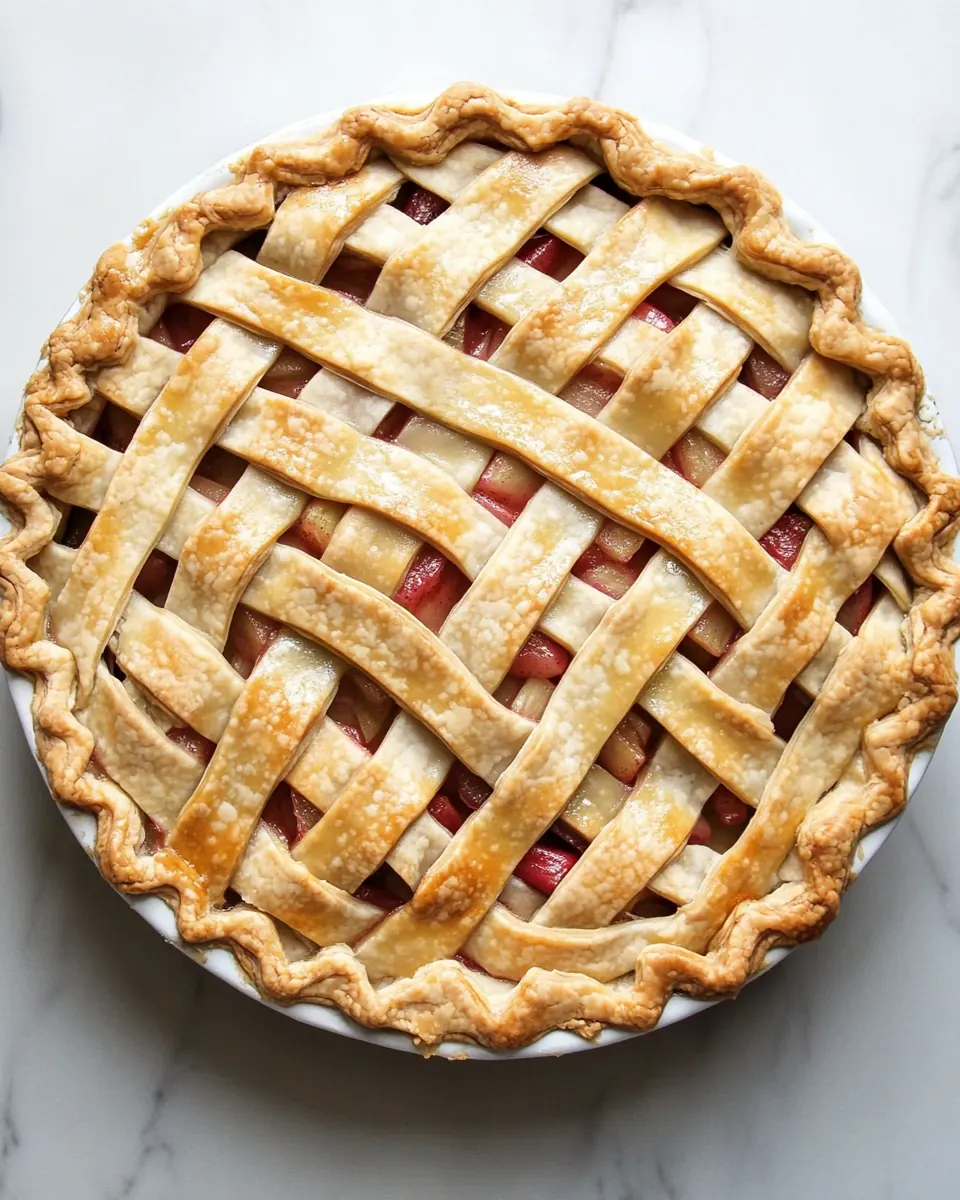
I rolled the dough into a big rectangle and sliced thin strips with a sharp knife. I took three of the strips and braided away. I continued this process until I was stressed and got through the dough. I then latticed the big strips with the thin braids. My biggest advice is that the freezer is your friend. If the dough ever gets too soft, transfer it to the fridge on a cutting board. Tuck the edges under or over and then crimp the edge all the way around the slab pie. Put it in the freezer to chill for 30 minutes. Preheat the oven (see below for more instructions) and brush the entire thing with egg wash and sprinkle with turbinado sugar.: The sensation of braiding gives a satisfying tactile rhythm, and the contrast between thick wide strips and delicate braids creates a bakery style finish. Tucking the edges under strengthens the rim and makes a neat crimp possible. Chilling the fully assembled pie for 30 minutes firms everything so it holds its shape in the oven, and brushing with the egg wash produces a glossy, golden crust while the coarse turbinado sugar adds crunch. Avoid skipping the chill, which can cause the top to slump or separate during baking.
In a medium bowl, mix together the rhubarb, pear, brown sugar, corn starch, lemon zest, vanilla extract and salt. Allow to stand, about 10 to 15 minutes, while you assemble the pie crust.: As the fruit and light brown sugar mingle, juices begin to draw out and the corn starch starts to swell slightly. This resting time lets flavors meld and the starch start to absorb liquid, creating a thickened slurry that will become the filling. You ll see glossy fruit coated in sugar, with the lemon zest releasing fragrant oils. A common mistake is adding too much starch which can make the filling pasty, so stick to the recipe s measure and allow the natural juices to do the work.
Pour the filling into the slab pie crust (see above for assembling instructions). Roll the second half of dough and make any sort of design that you like. I chose a few wide strips of pie dough, weaved with a few strands of braided pie dough. Get as fancy as simple as you like. Tuck the edges under and crimp around the entire slab pie. Transfer to the freezer to chill for 30 minutes. Meanwhile, preheat the oven to 400 degrees F. Brush the top of the pie with a generous amount of egg wash and sprinkle with about a teaspoon of turbinado sugar.: Pouring the filling should feel slightly heavy as the fruit settles. As you arrange the top, notice how chilled dough lays neatly over the filling and how the egg wash gives the surface a wet sheen before baking. The 30 minute freeze firms the structure and prevents shrinkage, while the oven preheat to 400 degrees F sets the crust quickly. If you skip chilling, the top can slump and leak juice; patience at this stage pays off.
Place the slab pie on a half baking sheet and transfer to the oven to bake for about 20 minutes, until the crust is lightly golden brown. Turn the oven’s heat down to 350 degrees F and bake for an additional 20 to 30 minutes, until the crust is golden brown and the filling is bubbling. Transfer to a cooling rack and allow to cool to room temperature, about 3 hours. If you cut into it before cooling it down, the filling will spill out, but is that the worst thing in the world? Nah. Serve with ice cream or whipped cream.: The initial blast at 400 degrees F helps set the crust and starts browning, which you can see as edges go from pale to a warm honey color. Reducing the oven to 350 degrees F lets the filling cook through without burning the top. Look for bubbling in the center and a rich golden tone on the pastry. Transferring to a cooling rack lets air circulate so the filling firms; waiting about 3 hours gives neat slices, though warm spoonfuls with ice cream are irresistible. A common blunder is slicing too soon and ending up with a runny, under set pie; patience prevents puddles.