Add half of the beans to the food processor and pulse until smooth. If you need to, you can use some of the broth from the recipe to make it a smoother texture. Set aside.: You will smell the earthy, delicate aroma of the cannellini beans as they break down, and the texture should shift from whole beans to a creamy, slightly coarse puree that will thicken the broth. Use a spatula to scrape the bowl so everything is evenly processed, and if the puree seems too stiff add a splash of the stock to loosen it. This technique matters because the puree creates a silky body that binds the soup, and a common mistake is overprocessing until it becomes gluey, so pulse in short bursts to control the texture. If your food processor struggles, swap to an immersion blender in a tall jar to maintain control.
In a medium pot, set over medium heat, add the olive oil. When the oil is warm, add the onion, celery and carrots. Cook for 5 to 7 minutes, until very softened. Mix in the garlic, along with the crushed salt, a few rounds of black pepper, red pepper, salt and thyme; cook until fragrant, about 1 to 2 minutes.: As the olive oil warms you will see a slight shimmer and you may detect its fruity scent. Keep the heat steady, because too low will not coax flavors, and too high can burn the next ingredients. A good rule is to wait until the oil moves easily across the bottom of the pot before adding aromatics, otherwise they will soak and not sizzle properly.
Add in the tomato paste and mix until the paste turns a deep brick red color, about 2 minutes. Mix in the reserved Parmesan-Reggiano rind, bean puree, beans, stock and kale. Reduce the heat to low, cover the pot and cook for 15 to 20 minutes, until the soup’s flavors merry.: You should hear a gentle sizzle as these vegetables hit the pan, and within a few minutes their edges will become translucent and the pot will begin to smell sweet and savory. Stir occasionally, ensuring even contact with the warm oil, and cook until very softened which usually takes about 5 to 7 minutes. This slow softening is crucial, because it releases sugars and builds the soup base; rushing with high heat will brown them unevenly and can introduce bitter notes. If pieces start to crisp or brown too quickly, lower the heat and add a splash of stock to regulate temperature.
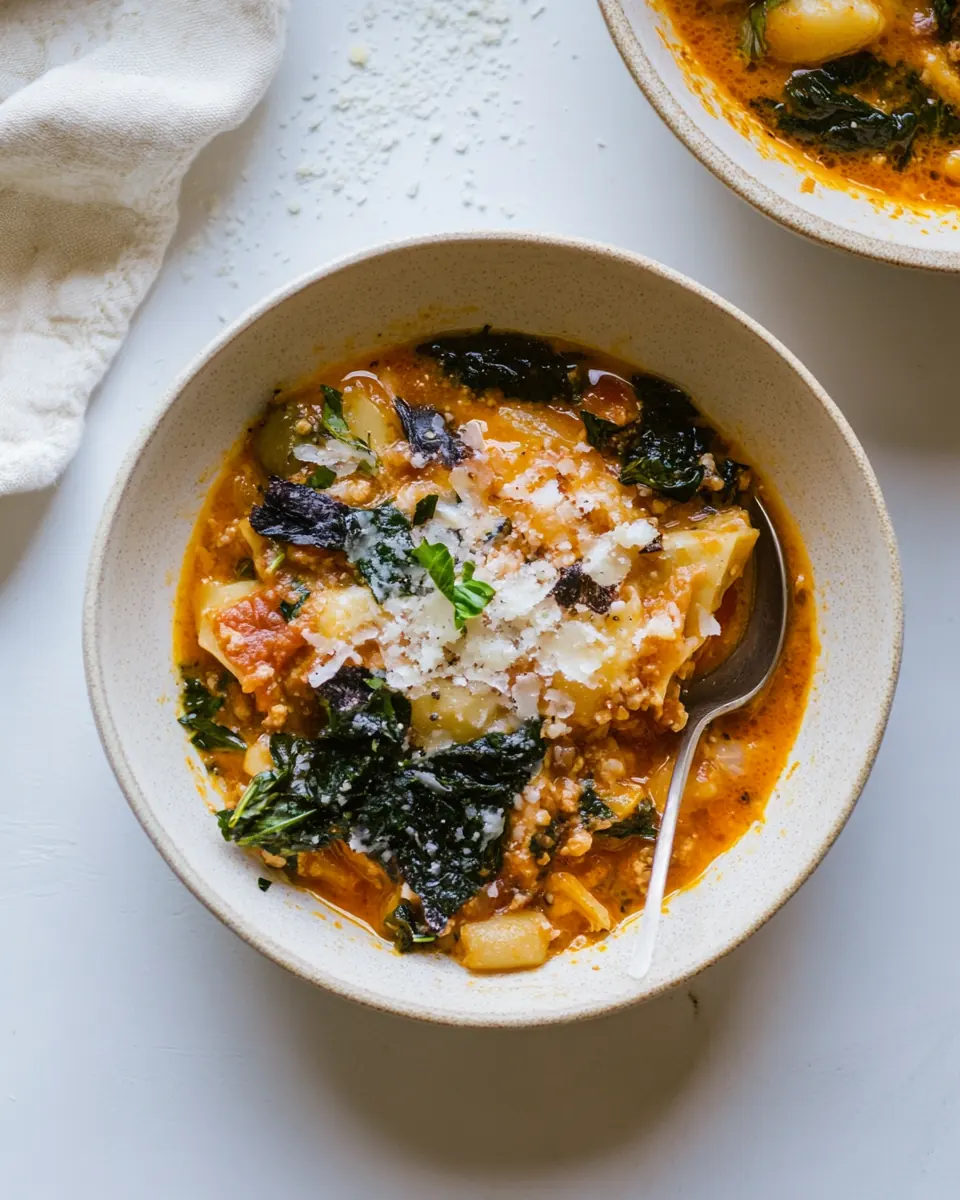
Meanwhile, tear up half of the baguette and place on top of the soup in the pot. Top with a grating of parmesan and divide the soup amongst bowls. Garnish with a drizzle of olive oil and more parmesan, if you like.: At this stage the mixture should look glossy and the vegetables should give under the edge of a spoon, releasing an aromatic sweetness. The sound will shift from a sharp sizzle to a subtler, contented simmer, and the color should be warm and inviting. This step matters because properly softened vegetables integrate into the final texture, and undercooking leaves crunchy bits that confuse the rustic smoothness of the soup. If you find uneven cooking, stir more frequently and tilt the pot to redistribute heat.
This soup is great heating up. Store in an airtight container and will last up to 3 to 4 days in the fridge.: When the garlic hits the warm vegetables the aroma will bloom immediately, sharp and bright, and the thyme will release tiny floral notes. Cook just until fragrant, about 1 to 2 minutes, because garlic goes from fragrant to burnt very quickly; burnt garlic tastes bitter and will taint the whole pot. Keep the heat moderate and stir constantly to keep the garlic moving and prevent sticking.
Cook until fragrant, about 1 to 2 minutes: You'll notice the scent shift from raw garlic to a softer, roasted garlic perfume that hints of caramel and warmth. The tiny bubbles at the edge of the pot will slow and the mixture will smell decidedly rounded. This burst of aromatics is essential as it layers complexity, and a common error is letting it brown, so watch closely and have the next ingredient ready to go.
Add in the tomato paste and mix until the paste turns a deep brick red color, about 2 minutes: As you stir the tomato paste into the vegetables it will darken and concentrate, shedding any canned tinny notes and developing a deep, umami richness. You should see the paste cling to the vegetables and the pot will smell fuller and slightly sweeter. This browning step amplifies complexity, and skipping it leaves the soup flatter; avoid stirring too briefly or the paste will not develop its full flavor.
Mix in the reserved Parmesan-Reggiano rind, bean puree, beans, stock and kale: When you add the Parmesan-Reggiano rind and both the pureed and whole beans , along with the stock and chopped lucinato kale , the pot will go from thick sauté to a bubbling, aromatic stew. The rind melts slowly, releasing savory depth, while the kale wilts and the beans soften into the mix. This combination creates contrast between creamy and toothsome textures, and it is important because each component contributes a different sensation on the palate. A common pitfall is adding cold stock straight from the fridge which can temporarily lower the pot temperature and stall melding; keep stock near room temperature if possible.
Reduce the heat to low, cover the pot and cook for 15 to 20 minutes, until the soup’s flavors merry: As it simmers quietly the aroma will become cohesive, and you will notice the broth thickening as starch from the beans integrates. Cooking low and slow allows flavors to marry without breaking down delicate textures; if you simmer too hard the kale can become overly soft and the liquid may evaporate too quickly. Stir occasionally from the bottom to prevent sticking, and taste near the end to adjust salt and pepper as needed.
Meanwhile, tear up half of the baguette and place on top of the soup in the pot: Tearing the baguette into rustic pieces ensures irregular edges that soak up brothy goodness while maintaining some chew. As the bread rests on top it will begin to absorb steam and soften, creating layers of soaked bread pockets when combined into bowls. If the bread gets soggy too quickly it can dissolve, so prefer slightly stale slices that hold structure while still yielding when spooned.
Top with a grating of parmesan and divide the soup amongst bowls: Freshly grating Parmesan-Reggiano over the top releases a nutty, salty aroma and creates an inviting finish. Each bowl should be garnished right before serving so the cheese melts slightly into the surface and adds savory lift. A common mistake is pre-grating too far in advance, which can dry the cheese and reduce its aromatic impact.
Garnish with a drizzle of olive oil and more parmesan, if you like: A final drizzle of good olive oil brightens and rounds the bowl, adding a silky sheen and aromatic top note, while an extra grating of cheese amplifies umami. This finishing move transforms a good bowl into a memorable one, and resist the urge to skip it because it truly elevates the final mouthfeel. Avoid using too much oil, which can make the soup greasy rather than glossy.
This soup is great heating up: Once cooled, storing the soup in an airtight container concentrates the flavors overnight and reheating brings it back to life, often tasting even better the next day. Heat gently over low to medium heat to keep the texture balanced, stirring occasionally to reincorporate any settled solids. A frequent misstep is boiling it vigorously on reheat, which can break down beans and turn the texture grainy, so warm slowly and taste as you go.
Store in an airtight container and will last up to 3 to 4 days in the fridge: Proper storage helps maintain texture and safety, and keeping it sealed prevents the broth from oxidizing or absorbing other fridge odors. For longer keeping, freeze portions in well sealed containers and label with the date. When defrosting, do so in the refrigerator overnight and reheat gently to protect texture and flavor.