Melt the butter in a large saucepan over low heat.: You should smell a warm, slightly nutty aroma as the butter softens, and you will see it turn glossy and pool around the pan, which signals it is ready. Low heat prevents browning, which keeps the flavor clean and buttery. Stir occasionally to ensure even melting, using a silicone spatula to scrape the bottom so nothing sticks. A common mistake is turning the flame too high, which will brown the butter and change the taste, so maintain a gentle simmer and patience while it liquefies.
Add the marshmallows and stir constantly until completely melted and smooth.: As you introduce the marshmallows , you will hear a gentle popping of air as they collapse, and your arm will get a little workout from continuous stirring. Watch for a uniformly glossy, silky mass with no visible lumps, that is the visual cue you want. Stirring constantly distributes the residual heat and prevents scorching. If you stop stirring, the marshmallows can seize or burn at the pan edge, so keep a steady motion until fully smooth.
Remove from heat and stir in the vanilla extract.: Once the marshmallow mixture is homogeneous, the aroma becomes sweet and comforting. Removing from heat prevents the vanilla's volatile aromatics from evaporating, so add the vanilla extract now and stir briefly to incorporate. The mixture should smell fragrant and rich. A mistake to avoid is leaving it on heat while adding vanilla, which dulls the delicate flavor note you want to preserve.
Add the Rice Krispies cereal and stir until well coated.: When you pour in the Rice Krispies cereal , listen for a soft crackling as the dry cereal meets the warm marshmallow, and see each flake become glossy and slightly translucent where it is coated. Fold the cereal with gentle, sweeping motions to avoid crushing the pieces, ensuring an even distribution of the binder. Overmixing or using aggressive force will compress the cereal and yield dense squares, so stop when the flakes look uniformly coated.
Using a buttered spatula or wax paper, press the mixture evenly into a 13×9 inch pan coated with cooking spray.: The tactile step of pressing is sensory and precise, you will feel the mixture compact under your palm while the surface glistens. Press firmly but not so hard that you squeeze all the air out and make the bars tough. A buttered spatula or a sheet of wax paper prevents sticking, and visually you want a smooth, level top with no large gaps. One common error is pressing too aggressively, which compresses the texture and leads to pasty squares, so aim for evenness with moderate pressure.
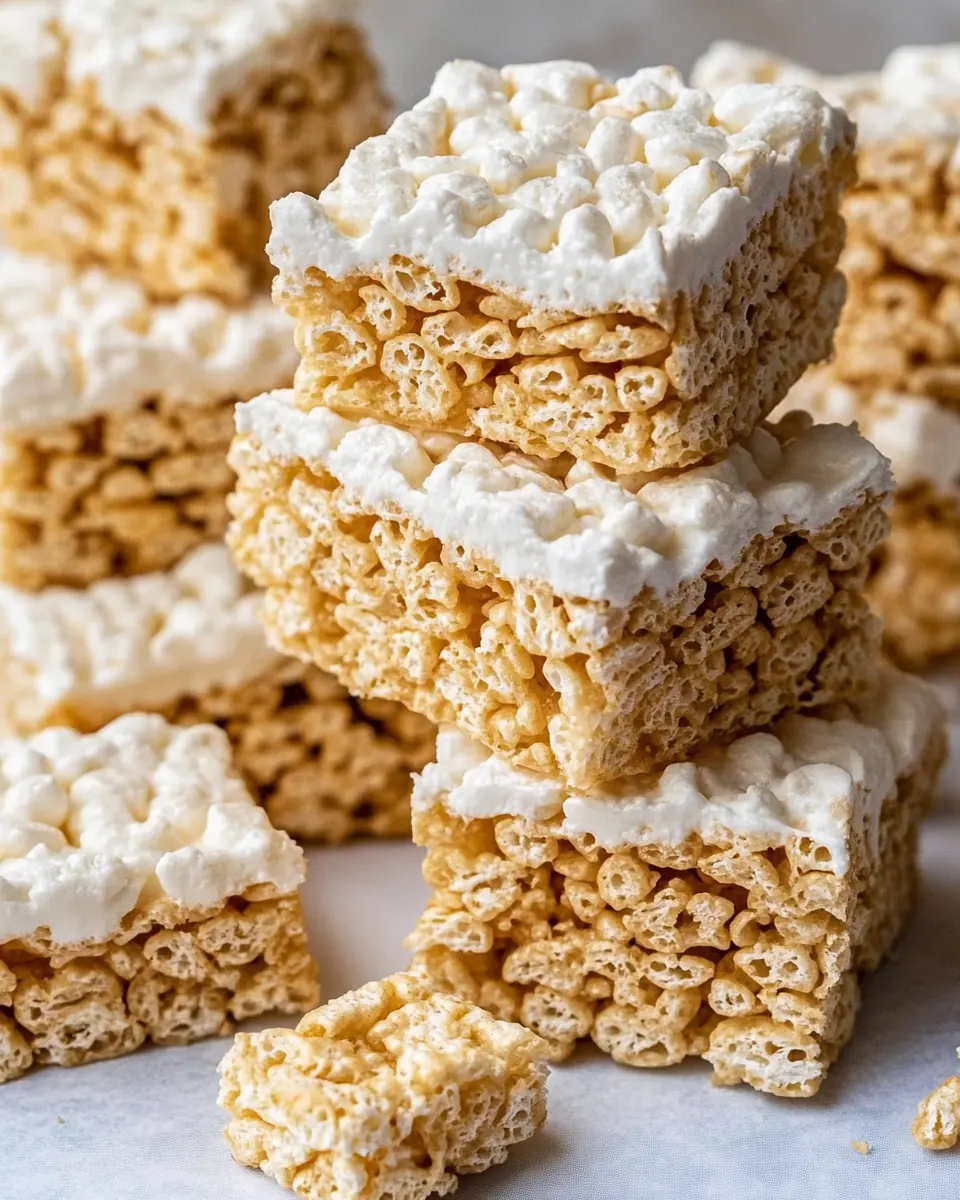
Allow the mixture to cool completely and set, about 1 hour, then cut into squares and serve.: As the pan rests, the aroma mellows and the surface firms, going from glossy to matte, which signals it is ready to slice. Cooling lets the structure stabilize so your cuts are clean. Use a sharp knife and warm it under hot water then dry it between cuts for neater edges. Cutting too soon yields sticky, misshapen pieces, so honor the cooling time and resist the urge to slice while still warm.