Preheat the oven to 425 degrees F.: Warm air and high heat are what create the satisfying charring and caramelization on the broccoli and cabbage . You should feel the oven heat build and hear the faint hum of the fan if you have convection, which helps with even browning. The smell of heating metal and a faint toasty scent when the oven reaches temperature is normal. This temperature matters because lower heat will steam the vegetables, giving a softer, less flavorful result, so avoid reducing it. A common mistake is not preheating long enough, which leads to uneven color.
On a parchment-lined baking sheet, toss the broccoli and cabbage with 1/4 cup olive oil and 1 teaspoon salt. Arrange in an even layer and bake until charred and caramelized, tossing once halfway through, about 25 minutes.: The tactile step of massaging the oil into the vegetables ensures every surface is coated, which encourages crisp edges. You should see a glossy sheen on each piece and feel slight tackiness from the oil. The salt will start drawing moisture out, which helps with browning. If pieces are clumped, they will steam rather than roast, so spread into a single layer. Avoid using too much oil, as puddles prevent crisping.
Meanwhile, make the gremolata: zest the lemon and set aside.: When the vegetables hit the hot sheet, they will hiss slightly, and after 10 to 15 minutes you will notice browning at the edges and a sweet, toasty aroma. Tossing halfway promotes even color and exposes hidden sides to the heat. The visual cue is deep golden to dark brown on tips and edges, with tender centers. If you see only pale color after 20 minutes, the oven may not be hot enough or the pan is overcrowded; correcting that early avoids soggy results.
In a small food processor, combine the sunflower seeds, chives, parsley, mint and capers. Pulse until coarsely ground. Add the juice of half the lemon (about 2 tablespoons), 1/4 teaspoon salt and 1/4 cup olive oil. Pulse a few more times until the texture of a chunky pesto. Taste for seasoning and add more salt as needed.: zest the lemon and set aside. : The bright citrus oil released by zesting is aromatic and immediately lifts the remaining prep. You should smell the citrus oils as they are worked from the peel, a fresh, floral note that complements herbs. Zesting first ensures you have the garnish ready when the dish is assembled. Avoid removing the bitter white pith while zesting, as that will add an unpleasant flavor.
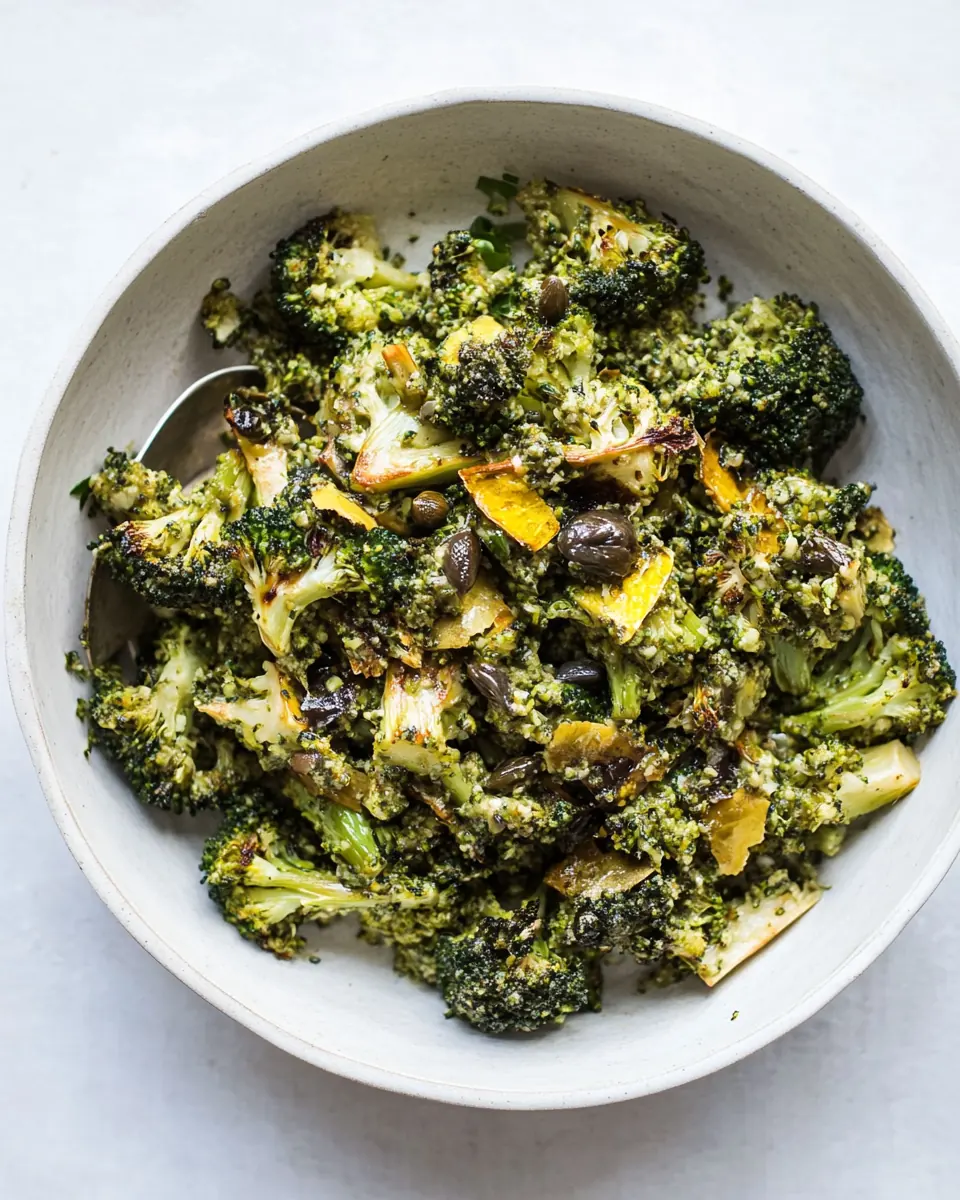
To serve, pile the broccoli on a serving plate and dot with the herby caper pesto. Garnish with the lemon zest and serve warm or at room temperature.: As you pulse these ingredients, the scent will shift from raw herbs to an herbaceous, nutty mixture. The seeds will break down into tiny fragments, adding body, while the herbs release green, peppery aromas. Pulse in short bursts to keep some texture, aiming for coarse bits rather than a smooth paste. Overprocessing will yield a too soft pesto and lose textural contrast, so pause to check consistency often.
Pulse until coarsely ground.: Watch as the mixture changes texture, from whole leaves to a rough, slightly granular mass. The sound of the processor will change as the motor finds resistance from smaller pieces. Coarse grinding helps the pesto cling to the roasted pieces without becoming slick. If you over-pulse, the mixture will become paste like and less interesting, so stop when you still see small bits.
Add the juice of half the lemon about 2 tablespoons, 1/4 teaspoon salt and 1/4 cup olive oil.: When you add the lemon juice and oil, the aromas open up and the texture becomes looser, but still chunky. The acid brightens the herb flavors and the oil emulsifies components so the pesto is spreadable. Start with the smaller amounts and taste before adding more, because acidity and salt are easier to increase than to remove. A common misstep is adding too much liquid at once, which thins the pesto excessively.
Pulse a few more times until the texture of a chunky pesto.: The final pulses marry the flavors and achieve the desired rustic texture. You should be able to see flecks of herb, seed, and caper throughout, and the mixture should hold together when scooped. The smell should be vibrant, with lemon, herb, and brine notes. If the pesto looks too wet, let it rest briefly so the seeds absorb some liquid, or add a few more seeds to thicken it. Overblending here will remove textural interest.
Taste for seasoning and add more salt as needed.: A careful taste will reveal if the pesto needs balance. If it tastes flat, a pinch more sea salt or a touch more lemon juice will brighten it. Adjust slowly, trying to maintain the harmony between the herbaceous, nutty, and briny elements. Remember that the roasted vegetables will pick up salt from the pesto, so avoid over salting at this stage. Too much salt is the easiest error to make and the hardest to correct.
To serve, pile the broccoli on a serving plate and dot with the herby caper pesto.: The final assembly is where textures meet; the warm roasted broccoli and cabbage should still be steaming slightly, and the pesto will look glossy against the charred pieces. Spoon the pesto in small dollops so every bite can combine roasted and herby elements. The scent of warm vegetables and bright herbs should be inviting. If you put the pesto under the vegetables too early, it will lose vibrancy, so spoon it on at serving time.
Garnish with the lemon zest and serve warm or at room temperature.: The finishing zest adds a perfumed citrus top note and a visual pop of color. Serving warm emphasizes the roasted aroma, while room temperature highlights the herb flavors in the pesto. Both are valid choices depending on the meal. A frequent mistake is skipping the zest, which robs the dish of its last bright element, so always finish with it.