Preheat the oven to 350°F.: The oven warming sends a dry heat that slowly coaxes sweetness from the fennel . You'll notice a gentle warm air scent from the oven as it reaches temperature. This moderate heat is intentional, allowing the fennel to tenderize without burning, which keeps the texture silky. A common mistake is using too high a temperature, which can char the edges and leave the interior undercooked, so give it time to come to temperature first.
Cut the fennel bulb in half lengthwise, then cut each half into 3 wedges. Add to a small baking dish, drizzle with olive oil, then sprinkle with a big pinch of kosher salt. Pour in 1/4 cup water, cover tightly with foil, and bake until fork tender (when an inserted fork meets no resistance, about 1 hour). Uncover and let cool completely.: As the fennel roasts you will detect a sweet, mellow aroma, almost like roasted onions with a whisper of licorice. The added water and tight foil create steam so the wedges soften evenly, producing tender layers rather than dry, charred slices. Letting them cool fully is vital, because warm fennel will continue to break down the texture and could make the guacamole watery. Avoid peeking too often, which releases steam and prolongs cooking time.
Transfer the fennel to a cutting board, and remove the core from each wedge. Discard cores. Also remove any outer layers that are more fibrous than the inner layers. Finely chop the remaining fennel. You want this to be as fine as possible, so the fennel gets well-distributed into the guacamole. Set aside half of the chopped fennel for the guacamole, and store the remaining half in the refrigerator for another use.: When you chop the cooled fennel , the pieces should be soft and easy to slice, emitting a mellow sweetness. Finely chopping ensures the texture disappears into the guacamole rather than leaving large strings. Keeping half for another use is a smart waste saving choice. A common error is leaving the pieces too large, which makes the guacamole feel inconsistent, so aim for a fine dice.
Add apple and lime juice to a small bowl, tossing to combine. Set aside while you prepare the avocado.: The tossed apple will release a bright citrus perfume as the lime juice coats each piece, which prevents oxidation and keeps the color fresh. This pre-toss also marinates the fruit slightly, integrating acid into the crisp flesh so it harmonizes with the creamy avocado . If you skip the lime, the apple will brown and the overall flavor can feel flat, so do not omit this step.
Slice open each avocado lengthwise, and carefully remove the pit. Using a sharp knife, make diagonal cuts down the avocado. You want to cut just the flesh, not the skin. Turn the avocado and make another set of diagonal cuts, forming a cross-hatch pattern. Scoop the flesh into a large bowl. The flesh should come out in a nice dice.: The sound of the knife through ripe avocado is soft and satisfying, and the flesh should glide out cleanly when properly ripe. Those small diced pieces are key for texture because they give you occasional creamy pockets rather than a uniformly mashed dip. A blunt knife or an underripe avocado will resist cutting and can lead to a stringy texture, so choose ripe fruit and a sharp blade.
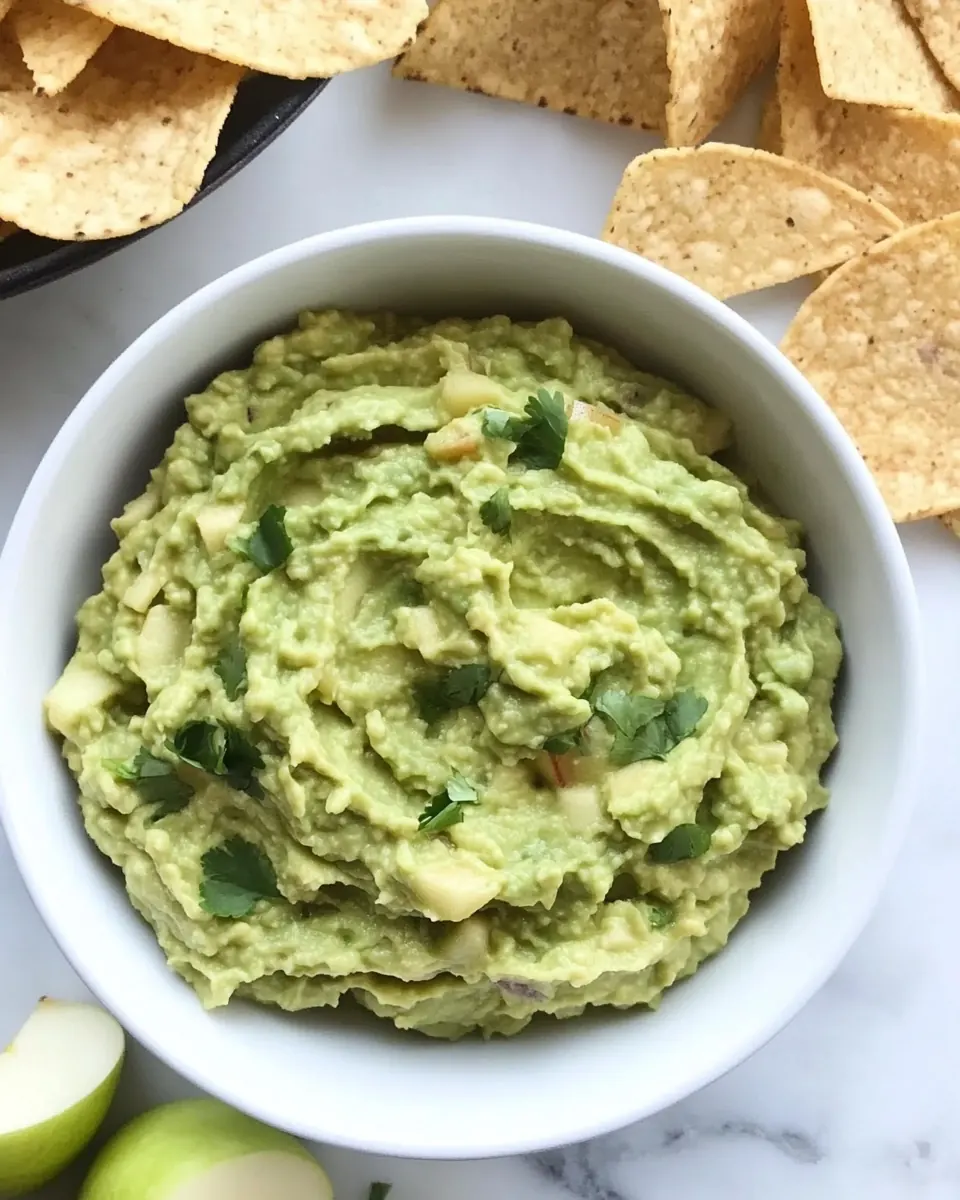
Add the apple (with lime juice), cilantro, jalapeno, 1 teaspoon of kosher salt and reserved fennel to the bowl with the avocado. Using two forks, roughly mash the ingredients together. Add additional salt, lime juice and cilantro to taste. Serve with tortilla chips.: As you mash, the bowl will begin to smell of citrus, herb, and a subtle roasted sweetness. The sound is gentle, and you will notice occasional little pieces of apple and fennel within the creamy mass. This rough mash maintains a pleasing variety of textures. Taste and adjust with more salt or lime juice to sharpen flavors. The main mistake here is overmashing, which removes the textural contrast that makes the recipe special, so aim for a balanced, slightly chunky consistency.